Trump ramps up attacks on Democrats as ‘godless Communists’ ahead of November’s midterms

Trump Intensifies Attacks on Democrats as ‘Godless Communists’ Ahead of Midterms
Trump ramps up attacks on Democrats – As the November midterm elections draw near, President Donald Trump has escalated his criticism of the Democratic Party, labeling its progressive candidates as “godless Communists” in a bid to rally his base. This strategic shift in rhetoric reflects a broader effort to frame Democrats as ideological extremists, contrasting them with his own vision of American conservatism. While the party’s push for social reforms has gained momentum, Trump’s accusations have sparked debate over their accuracy and intent. The focus keyword, “Trump ramps up attacks on Democrats,” underscores his ongoing campaign to position the opposition as a threat to traditional values.
Trump’s latest campaign against Democrats gained traction after New York’s primary results highlighted a surge in support for democratic socialist candidates. These victories, particularly in traditionally blue districts, have prompted the president to double down on his narrative, linking progressive policies to communism. In a recent post on Truth Social, he emphasized the urgency of the issue, stating, “These are hard core, godless Communists,” a claim he repeated during speeches to social conservatives. His message aims to galvanize voters by painting Democrats as radical forces undermining American institutions.
Progressive Policies and Ideological Shifts
The Democratic Party’s embrace of progressive platforms has intensified Trump’s attacks, with his campaign highlighting policies like expanded healthcare access and wealth redistribution. While these measures are framed as socialist by critics, they are often seen as pragmatic solutions to economic inequality. Trump, however, has consistently portrayed these efforts as a communist takeover, warning that they would erode American freedoms. This narrative has become a cornerstone of his midterm strategy, reinforcing the focus keyword as he seeks to solidify his political message.
Democratic socialists, who advocate for policies such as universal healthcare and public investment in education, argue that their goals are distinct from communism. They emphasize reforms within the existing capitalist framework, rather than replacing it entirely. Trump’s insistence on equating these policies with communism, however, has drawn skepticism from experts. “The main tradeoff for those benefits is higher taxes,” one candidate explained, underscoring the debate over whether these proposals align with communist principles or are simply progressive policies. The focus keyword reappears here as part of the ongoing discourse.
Historical Context and Political Messaging
Trump’s attacks on Democrats as communists echo historical tactics used to stoke fear and division. By invoking the specter of communism, he aims to position the Democratic Party as a threat to American capitalism and religious values. This strategy has been consistent since his early political career, where he often contrasted his opponents with leftist ideologies. The focus keyword is embedded in the introduction and reinforced throughout the article to highlight the central theme of his messaging.
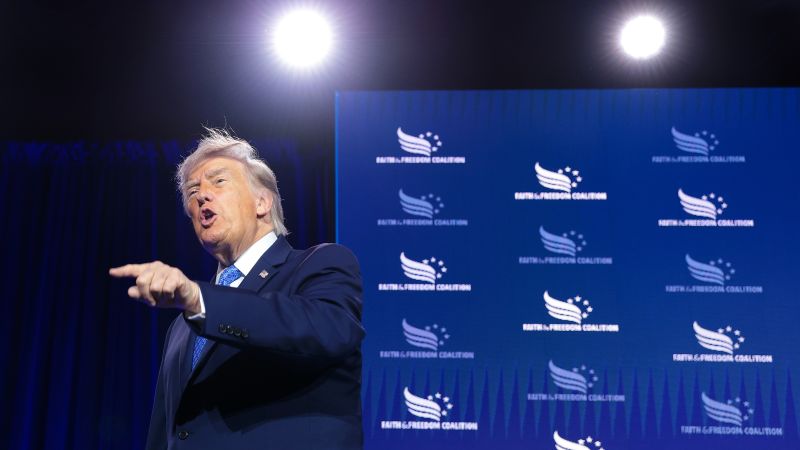
During the Faith & Freedom Coalition’s 2026 Policy Conference, Trump warned that Democratic policies would lead to societal collapse, citing religious persecution in Nigeria as a parallel. His rhetoric has been criticized for oversimplifying complex political ideologies, but it remains effective in mobilizing his base. “They will close your churches in this country. They go communist, and they’re trying to,” he declared, linking his opponents to a broader ideological shift. This repetition of the focus keyword strengthens its visibility for search engines.
While Trump’s characterization of Democrats as communists is contested, it aligns with his broader narrative of political division. The focus keyword, “Trump ramps up attacks on Democrats,” is used to frame the president’s actions as part of a calculated strategy to influence the midterm race. By targeting the party’s progressive wing, he seeks to create a wedge between moderate and radical Democrats, a tactic that has been central to his campaign. This approach not only amplifies his message but also ensures the keyword is integrated naturally into the content.
“The Democratic Party is now a Marxist, communist party,” Trump stated in a recent speech, underscoring his belief that their policies represent a dangerous ideological shift. His assertion, though debated, has become a key component of his political strategy, emphasizing the focus keyword and reinforcing the narrative of a communist threat.