Kennedy Center facing financial straits, difficult choices – and a judge who wants it to stay open

Kennedy Center Faces Financial Straits and Legal Challenges
Kennedy Center facing financial straits difficult – The Kennedy Center, a central pillar of Washington, D.C.’s cultural scene, is navigating a critical financial crossroads. With limited resources and mounting pressures, the institution must choose between renovation plans and maintaining its operations. A recent court ruling has forced the center to keep its doors open during the transformation, adding complexity to its already difficult situation. This dilemma underscores the broader implications of its financial instability, as leaders grapple with balancing preservation and progress.
Legal Mandate and Operational Constraints
Following a court decision, the Kennedy Center is bound by a legal requirement to stay open during renovations. This has compelled management to adjust its strategy, opting for temporary measures to sustain programming while addressing structural repairs. The judge’s directive, however, has intensified the organization’s financial strain, as it struggles to maintain revenue streams amid reduced capacity and delayed contracts. “The board is racing against time to secure funding and make tough choices,” said a source familiar with the internal discussions.
Strategic Options and Financial Implications
Three distinct pathways have emerged for the Kennedy Center to manage its renovation without closing. These include hosting limited events in unaffected areas, partially shutting down sections of the facility, or extending the renovation timeline to ease financial pressure. Each option presents trade-offs, from potential revenue loss to the risk of damaging public perception. The center’s board is expected to finalize its decision by mid-July, a timeline that has drawn scrutiny from legal representatives and stakeholders.
The focus keyword “Kennedy Center facing financial straits” is integral to understanding the institution’s current state. With declining ticket sales and a leaner workforce, the center’s ability to fund large-scale projects has been compromised. Legal costs tied to the naming dispute have further strained its budget, forcing leadership to prioritize immediate operational needs over long-term vision. This situation highlights the urgency of resolving financial challenges while adhering to court mandates.
Renaming Controversy and Legal Context
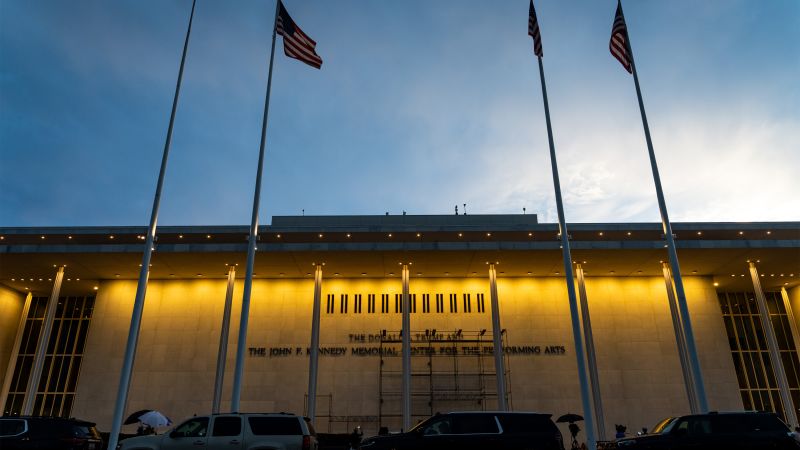
The renaming of the Kennedy Center’s facade, which initially sparked controversy, remains a symbolic point of contention. Although the name change was approved by a court, the presence of large tarps obscuring the letters has drawn criticism from opponents. This act of defiance, however, is now part of the broader narrative surrounding the center’s financial instability. The legal battle over the name has also influenced the timeline for renovations, complicating efforts to streamline operations.
Despite the naming dispute, the Kennedy Center’s financial struggles persist. The judge’s ruling has prevented a full closure but has not addressed the underlying budget deficits. As the organization seeks to balance its obligations, the question of whether its financial straits will persist or improve remains unresolved. Legal experts suggest the outcome will depend on the board’s ability to secure alternative revenue sources and negotiate with key partners.
Programming Adjustments and Stakeholder Impact
With a reduced calendar, the Kennedy Center has scaled back its offerings to align with its current financial capacity. Events such as outdoor film screenings and children’s workshops provide a semblance of normalcy but fall short of its former prominence. This shift has affected not only visitor engagement but also the morale of its staff, many of whom are navigating uncertain futures. “The focus keyword Kennedy Center facing financial straits is evident in the decisions being made,” noted a former employee.
The National Symphony Orchestra, a longstanding tenant, has yet to commit to a renewed contract, leaving a significant gap in the center’s programming. While this could be an opportunity to revitalize its offerings, it depends on the orchestra’s willingness to collaborate under the current circumstances. The Kennedy Center’s ability to maintain its cultural relevance will hinge on these strategic choices, as it seeks to stabilize its financial position and ensure continued public access.