Trump’s role as LIV Golf host renews scrutiny over conflicts of interest

Trump’s Hosting of LIV Golf Sparks New Debate on Ethical Dilemmas
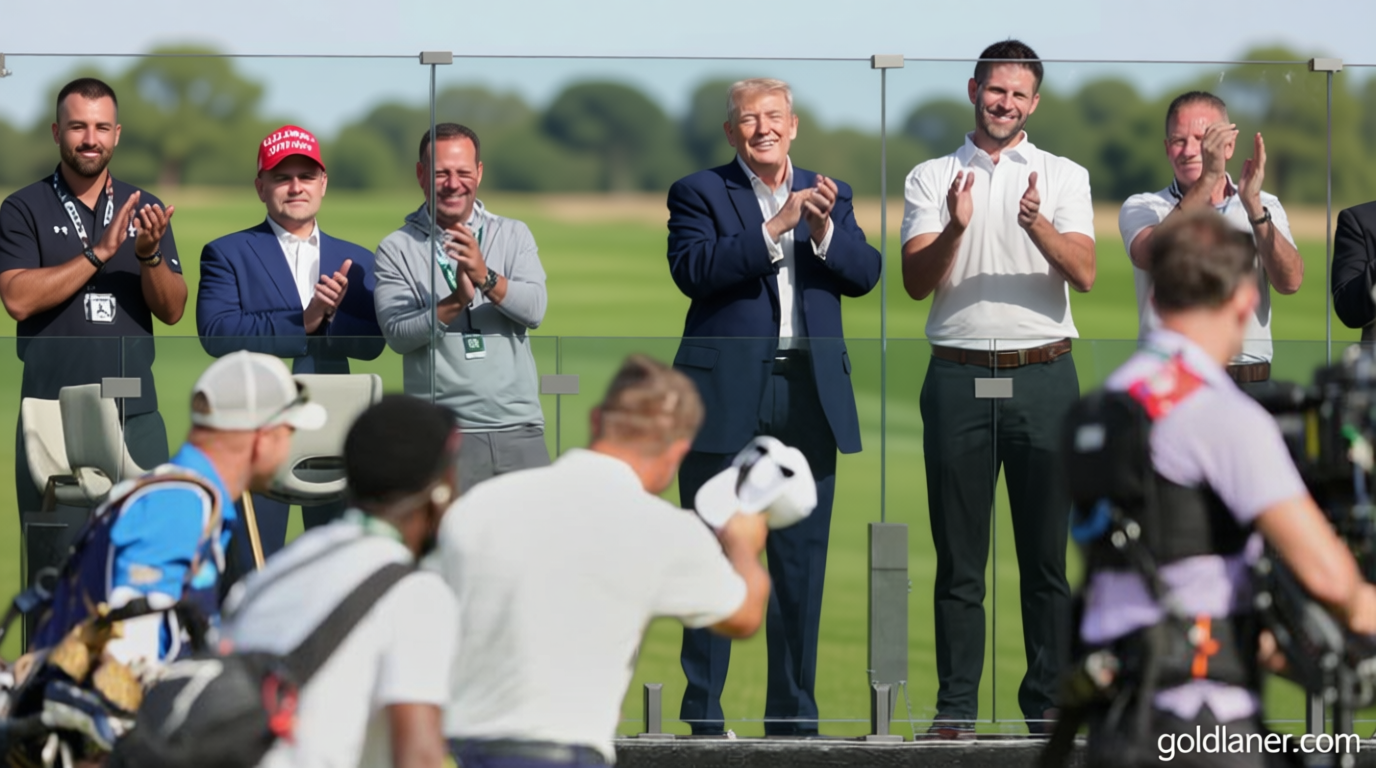
Trump s role as LIV Golf – Recent events have intensified discussions about potential ethical dilemmas involving President Donald Trump, following his weekend participation in a LIV Golf event at his Virginia estate. This move has drawn renewed attention to concerns regarding conflicts of interest, as critics question whether the Trump family is leveraging their political influence to gain financial advantages while endorsing a sports league tied to Saudi Arabia—a nation under scrutiny for its human rights record.
The Saudi Connection to LIV Golf
For years, Trump’s golf courses have served as both a platform and a venue for LIV Golf, a league backed by the Saudi government. The kingdom’s funding has long been central to the league’s operations, even as accusations of human rights violations against its leadership persist. This month, the Saudi government announced it would cease financial support for LIV Golf after the 2026 season, a decision that has not silenced critics who argue the league remains a tool for public relations.
LIV Golf’s presence in Trump’s business network has created a focal point for ethical scrutiny. The league, which aims to challenge traditional golf structures, has been accused of helping Saudi Arabia divert attention from its controversial policies. Notably, the 2018 murder of Jamal Khashoggi, a Saudi journalist critical of the government, has fueled ongoing debates about the kingdom’s motives in funding global sporting ventures.
“Sportswashing” and Political Alignment
The Saudi government’s strategic investments in sports have been dubbed “sportswashing” by analysts, a term describing how nations use high-profile events to mask political or social controversies. Beyond LIV Golf, Saudi Arabia has expanded its footprint in global sports, securing a 10-year partnership with Formula 1 in 2021 and acquiring a major English soccer team through a consortium. These efforts have been accompanied by aggressive marketing campaigns featuring international athletes, further embedding the kingdom’s image in global consciousness.
Professor Kathleen Clark of Washington University in St. Louis emphasized the symbolic significance of Trump’s involvement. “Saudi Arabia is a murderous, authoritarian, anti-democratic regime,” she told CNN. “(Trump’s) willingness to do this is actually a really nice example about what his priorities are.” The professor’s comments underscore the perception that Trump’s actions align with Saudi Arabia’s broader geopolitical strategy, even as the kingdom continues to deny allegations of wrongdoing.
Transparency and Business Ties
While the Trump administration has asserted there are no conflicts of interest, ethicists have raised doubts about the transparency of financial arrangements. The president’s assets are managed by a trust controlled by his children, and he has claimed to avoid direct involvement in business decisions during his tenure. However, critics argue that hosting events at his properties creates a subtle yet significant overlap between private interests and public office.
“This is just going to be the tip of the iceberg,” said Richard Painter, a corporate law professor at the University of Minnesota Law School. “The message has been said all over the world that if you want to get along with the Trump administration, do business with the Trump family or with his golf courses or with his son.” Painter’s remarks highlight the broader implications of Trump’s business ties, suggesting they could influence policy decisions or public perception of the administration’s priorities.
Experts also pointed to other instances where Trump’s personal interests intersected with his presidential duties. These include the acceptance of a $400 million luxury jet from Qatar, the hosting of dinners with cryptocurrency investors, and the promotion of Trump-branded products. Each of these actions has been viewed as a potential opportunity for the Trump family to profit from the administration’s decisions, raising questions about the separation between public service and private gain.
Reactions and Denials
Despite the criticism, Saudi Arabia has maintained that its support for LIV Golf is a legitimate investment in global sports, not an attempt to obscure human rights issues. Officials have repeatedly denied accusations related to Khashoggi’s murder, with the Saudi Foreign Ministry in 2021 issuing a statement that called the report on the incident “negative, false and unacceptable.” The ministry also noted that the report contained “inaccurate information and conclusions,” framing the controversy as a media-driven narrative.
During a high-profile meeting with Crown Prince Mohammed bin Salman last year, Trump displayed a dismissive attitude toward Saudi Arabia’s human rights record. When questioned about Khashoggi’s killing, the president described the journalist as “extremely controversial” and suggested the issue was used to target the crown prince. He also claimed Prince bin Salman had “nothing to do” with the murder, a stance that has drawn skepticism from many observers.
Trump’s position on the matter aligns with his broader approach to international relations, where he has often prioritized economic partnerships over diplomatic scrutiny. This mindset has led to criticism that his administration is more focused on securing business deals than addressing human rights concerns. The recent LIV Golf event, however, has added another layer to this debate, with some arguing that the president’s endorsement of the league reflects a deeper alignment with Saudi interests.
Meanwhile, the White House has defended Trump’s actions, with spokespersons reiterating that the administration is free from conflicts of interest. “President Trump’s assets are in a trust managed by his children,” a White House spokeswoman said in a statement to CNN last year. “There are no conflicts of interest.” Yet, this reassurance has not quelled the concerns of many ethicists, who argue that the lack of transparency surrounding the Trump family’s financial gains remains a key issue.
The ongoing scrutiny of Trump’s business dealings during his second term underscores the challenges of maintaining ethical boundaries in politics. While the president has emphasized his commitment to independence, the combination of his personal investments and his role in promoting Saudi Arabia’s global ambitions has sparked a broader conversation about accountability and influence. As the LIV Golf event highlights, the intersection of business and politics continues to be a flashpoint for debate in the current administration.