A Supreme Court skeptical of death row appeals has recently sided with three inmates

Daftar Isi
Supreme Court Decision in Florida Death Penalty Case Sparks Debate
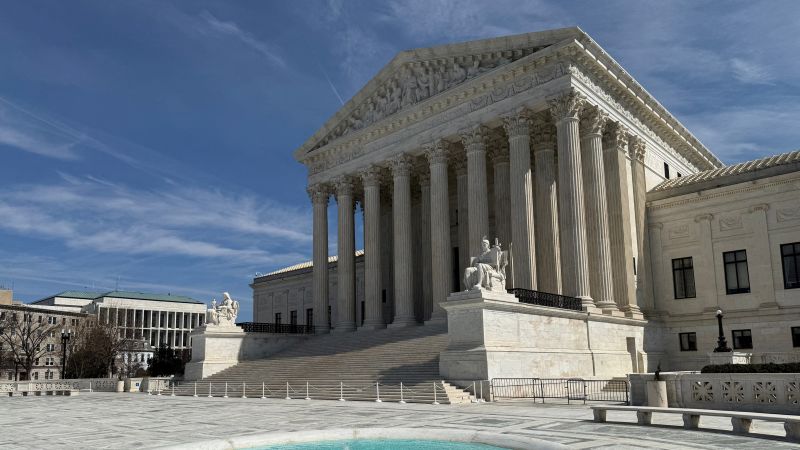
A Supreme Court skeptical of death – On Monday, the U.S. Supreme Court ruled in favor of Gary Richard Whitton, a death row inmate in Florida, overturning a federal appeals court decision that had supported the state’s position. This marks the third instance in recent weeks where the conservative-leaning high court has aligned with a defendant facing capital punishment. The Court’s unsigned opinion criticized the lower judges for incorporating DNA evidence that had not been presented during the original trial, arguing that this expanded the scope of their review. The ruling sets the stage for the federal appeals court to reconsider the case, despite a sharp dissent from two conservative justices.
Controversial DNA Evidence and Legal Disagreement
The case centers on a key piece of evidence—a DNA retest conducted in 2002 that linked blood found on Whitton’s boots to the victim, James Maulden. However, the original trial in 1992 had not included this test, which was performed a decade later. The federal appeals court acknowledged that prosecutors had failed to disclose Jake Ozio’s juvenile arrest history, even though Ozio claimed on the stand that he was not involved in the crime. Yet, the appeals court deemed the DNA evidence sufficient to override the oversight, leading to its decision in favor of the state.
“The Court of Appeals did something peculiar: It considered not only the evidence that was presented to the jury at Whitton’s trial, but also evidence the jury never saw,” the Supreme Court wrote in its decision.
The majority’s stance created a split among justices, with Clarence Thomas and Samuel Alito offering a dissent. Thomas argued that the Court had overstepped by emphasizing the DNA testing, which he believed was not as critical as other overlooked factors in the case. He also pointed out that the majority had intervened in Whitton’s appeal despite not doing so in similar cases he considered equally significant.
A Historic Legal Journey Over Three Decades
Whitton’s case has spanned nearly three decades, navigating through multiple layers of the Florida and federal judicial systems. Convicted in 1992 for the 1990 murder of his friend James Maulden at the Sun and Sand Motel in Destin, Florida, Whitton’s attorneys have consistently challenged his conviction. The victim, Maulden, was found dead in his room, with his skull fractured and his body stabbed multiple times. Court records indicate that blood on Whitton’s boots was a central piece of evidence, though the DNA specialist who testified at trial claimed it did not match the victim’s profile.
Whitton’s legal battle has included two prior unsuccessful appeals to the Supreme Court. His current case hinges on the credibility of Jake Ozio, a witness who initially testified that he had not been arrested as a juvenile. However, lower courts later discovered that Ozio had indeed been arrested for a prior offense. Despite this, the federal appeals court dismissed the issue, citing the weight of other evidence against Whitton.
Florida Officials and Federal Legal Constraints
Florida prosecutors defended the decision, asserting that the DNA evidence was not central to the case and that the appeals court had appropriately applied federal laws limiting the review of state convictions. They emphasized that the boots, which were seized the day after the murder, were not the sole basis for the conviction. “The Court of Appeals focused on DNA testing, but the boots themselves were a minor detail in the overall case,” a state official stated in a press release.
Whitton’s attorney, however, contended that the federal court’s inclusion of the 2002 DNA test was an error. “This evidence was introduced after the trial and should not have been used to overturn a verdict that relied on earlier, more reliable testimony,” the lawyer argued. The trial had heard conflicting accounts of the blood evidence, with the jury presented with an analysis that suggested it did not match the victim. Two of Whitton’s co-inmates also testified that he had confessed to the crime, but both later recanted their statements, raising doubts about the reliability of the testimony.
A Pattern of Conservative Alignment in Death Penalty Cases
This latest decision follows a series of high-profile cases where the Supreme Court has leaned toward defendants on death row. Last week, the Court supported a Black man in Mississippi who alleged racial bias in jury selection. Earlier, it upheld an Alabama case where a man’s execution was delayed due to his likely intellectual disability. These rulings contrast with the Court’s more interventionist approach in previous years, when it had ordered a new trial for Richard Glossip, a case that garnered national attention and support from the state’s conservative attorney general.
Despite these recent victories, the Court’s record remains mixed. In May, it denied requests to halt executions in Tennessee and Florida, reinforcing its position that the death penalty should proceed unless there are clear legal grounds for reversal. However, the Dick Cheney case—now revealed through newly released documents—demonstrates a different side of the Court’s approach. Justice Antonin Scalia played a pivotal role in that case, which was reviewed on an emergency basis. The decision highlighted the Court’s willingness to act swiftly when necessary, but also its tendency to prioritize certain cases over others.
Whitton’s case underscores the complexities of death penalty appeals. While the federal appeals court emphasized overwhelming evidence, the Supreme Court’s intervention suggests a broader scrutiny of how evidence is interpreted. The ruling may signal a shift in the Court’s approach to capital punishment, particularly in cases involving DNA testing and witness credibility. As Whitton’s attorneys prepare to argue again, the outcome could have far-reaching implications for how similar appeals are handled in the future.
Broader Implications for Capital Punishment
Legal experts note that this decision reflects the Supreme Court’s evolving role in death penalty cases. While the Court has traditionally acted as a check on state executions, its recent trend of supporting defendants highlights a divide within its conservative majority. The ruling may embolden inmates to challenge their convictions more aggressively, particularly when DNA evidence or witness testimony is in question. However, it also raises concerns about the Court’s consistency, as some justices have shown reluctance to intervene in cases they deem less urgent.
For Whitton, the outcome means another opportunity to prove his innocence. His attorneys will now push for a reevaluation of the 2002 DNA test and its impact on the jury’s original decision. Meanwhile, Florida officials remain focused on maintaining their position, arguing that the state’s legal process is robust and that the federal court’s review should not disrupt it. The case continues to illustrate the ongoing debate over the fairness and reliability of the death penalty in the United States.