Election denier Tina Peters released from prison

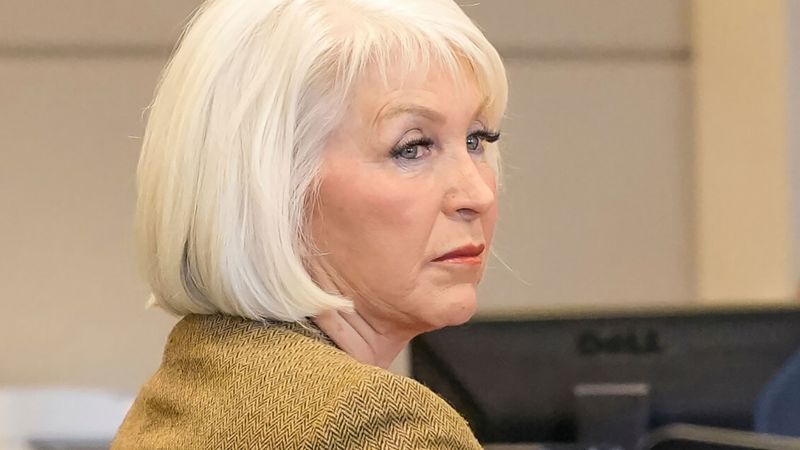
Election Denier Tina Peters Released from Prison
Election denier Tina Peters released – On Monday, Tina Peters, a prominent election denier, exited the Colorado prison system after a controversial decision by state officials. This release came weeks following a contentious commutation order by Colorado’s Democratic governor, who slashed her prison time by nearly half. The move has sparked widespread debate, with critics accusing the governor of undermining the justice system to favor political allies.
Conviction and Reduced Sentence
In 2024, Peters was found guilty of state-level felonies for conspiring with other election deniers to infiltrate her county’s voting infrastructure. The charges stemmed from her role in a scheme to manipulate election outcomes, which she claimed was aimed at exposing alleged fraud in the 2020 presidential race. Her original sentence, nearly nine years, was halved by Governor Jared Polis last month, resulting in a four-and-a-half-year term. Peters served approximately one year and eight months before her release, partly due to Colorado’s parole policies.
Governor’s Justification for the Commutation
Polis, whose term ends next year, defended his decision by highlighting a recent appeals court ruling that found the trial judge had violated Peters’ First Amendment rights. The court ruled that the judge improperly penalized Peters for her speech about the 2020 election, which she described as a “fight for truth.” However, the governor also cited a series of misleading statements regarding her case, which have drawn scrutiny from legal experts and opponents of the commutation.
“It was a straightforward decision because, after reviewing the facts, and reading the Appeals Court decision, I concluded that her sentence was simply too long,” Polis wrote in a Substack post. While he acknowledged the legal basis for the reduction, his comments were seen by some as an attempt to align with the broader narrative of election fraud skepticism. This decision has been criticized as a political maneuver, with bipartisan groups of officials and lawmakers condemning the move as setting a dangerous precedent.
Backlash and Political Implications
The early release of Peters has drawn sharp criticism from across the political spectrum. A coalition of election officials, state prosecutors, and lawmakers from both major parties have called Polis’ action a betrayal of the rule of law. The Colorado Democratic Party even censured the governor, calling the commutation “a dangerous and disappointing precedent” that weakens public trust in the justice system.
Peters’ case has become a symbol of the ongoing fight against the 2020 election results, with her supporters viewing it as a victory for the movement. Her release marks the end of her incarceration, which had been the last remaining legal action against Trump allies in Colorado. The governor’s decision, however, has been framed as a political compromise, with critics arguing that it prioritizes ideological loyalty over judicial fairness.
Statements and the Path to Redemption
Shortly after her release, Peters appeared on a podcast hosted by Steve Bannon, a key figure in the election denier movement. During the interview, she reiterated her belief in the 2020 election’s integrity while defending her actions. “I know that the Democrats are going to cheat, and no one’s really addressing the problem that I spent my time in prison as retribution for,” she stated, referring to the widely debunked claim that Dominion Voting Systems’ machines can flip votes systematically.
Despite her earlier defiance, Peters admitted to wrongdoing in a clemency application submitted to Polis. She wrote, “I made a mistake four years ago. I misled the secretary of state when allowing a person to gain access to county voting equipment. That was wrong. Going forward, I will make sure that my actions always follow the law.” Polis praised her statement in a letter granting clemency, calling it “a demonstration of taking responsibility for your crimes.”
Yet, her lawyer, Peter Ticktin, offered a different perspective. “I don’t think she indicated that she was feeling contrition and remorse,” Ticktin told CNN. “She basically was admitting to the fact that she could have done it better.” He emphasized the distinction between regret and genuine contrition, suggesting that Peters’ acknowledgment of error was more of a strategic concession than a heartfelt apology.
Continued Advocacy and Legal Battles
Throughout her imprisonment, Peters remained a vocal presence in the election conspiracy movement, leveraging social media and allies to promote her narrative. She continued to assert that the 2020 election was unfairly influenced by “election machines” that allowed votes to be altered, a claim that has been repeatedly refuted by evidence and experts.
Her early release has also reignited discussions about the broader implications of her case. While the governor claimed to be guided by legal principles, opponents argue that the decision was influenced by political pressure from former President Donald Trump, who had previously issued a symbolic federal pardon for Peters. Despite this, she had remained under state supervision, as the commutation only applied to her Colorado conviction.
Peters is now appealing her convictions, insisting that she is innocent. “I still have a fight to clear my name and bring out the truth of why they came after me the way they did,” she said in her recent interview. Her ongoing legal battle and public advocacy reflect the persistent influence of the election denier movement, which continues to challenge the legitimacy of the 2020 election results even as the evidence against it grows stronger.
Legacy of the Case
The case of Tina Peters has become a focal point for the 2020 election denier movement, symbolizing their determination to challenge the outcome of the presidential race. Her release has been celebrated by Trump supporters as a testament to the power of political pressure, even as critics question the fairness of the process. As she steps back into the public eye, her story remains a lightning rod for debates about the balance between free speech and electoral integrity.