Doctors warn that children are microwaving NeeDoh toys – and risking serious burns

Doctors Warn Children Are Microwaving NeeDoh Toys
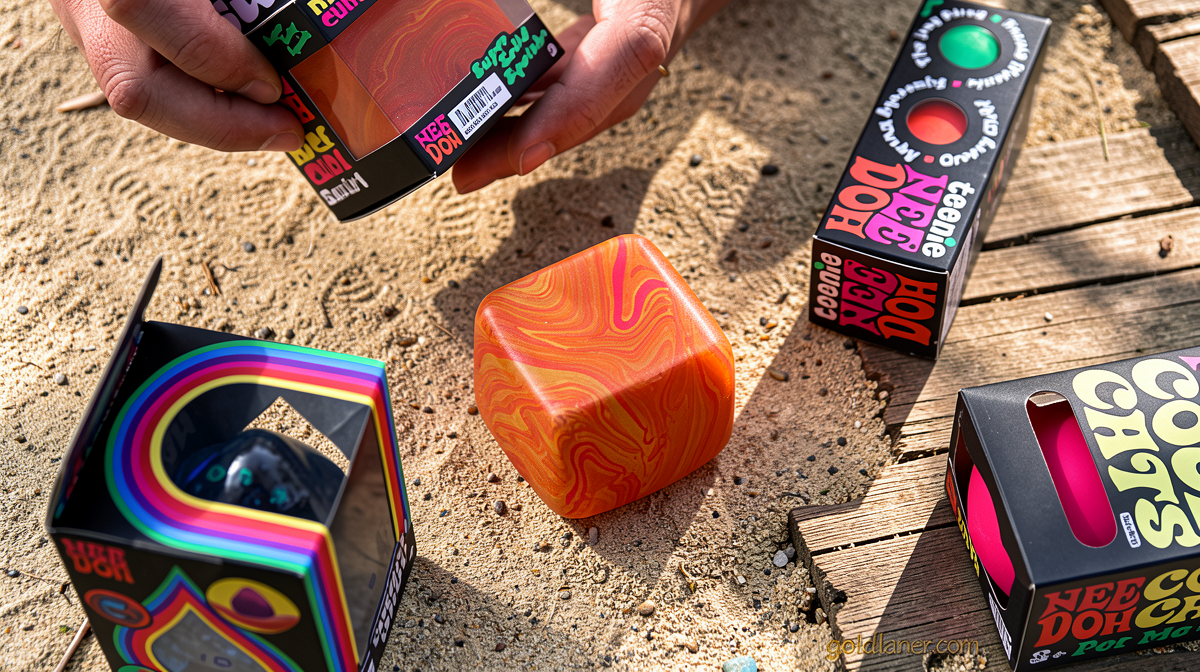
Doctors warn that children are microwaving NeeDoh toys in growing numbers, leading to a surge in pediatric burn injuries across the country. Healthcare providers report an alarming increase in cases where young patients suffer serious burns from heating the popular gel-filled sensory toys. Dr. Emily Werthman, who leads the Johns Hopkins Burn Center in Baltimore and holds certification as a Burn Registered Nurse, estimates she has treated approximately twelve young patients with this specific type of injury in recent weeks. “We’ve seen a handful of these cases just in our burn center alone, and if you ask burn centers throughout the country, they will tell you the same thing,” Werthman explained. “Unfortunately, those handfuls at every burn center add up to an unfortunately large number of kids who are getting injured.”
A Mother’s Shocking Discovery
Whitney Hand, an Atlanta resident, was attending to laundry when her daughter’s piercing cries echoed from the kitchen. “It was a sound I’d never heard her make before, and she just kept screaming, ‘Mom!,’ so I went in there, and I didn’t really understand what was going on at first, but she was clearly in a ton of pain,” Hand recalled. The fifth-grader had attempted to warm her NeeDoh SplootSplat toy in the microwave, a practice the manufacturer specifically advises against. Upon removal, the gel-filled container burst open, splattering scalding contents across the child’s face and arm. “It’s so viscous, it’s like glue, and so for it to be boiling hot and on her skin, I started to try to wipe it off, but it was pulling her skin off with it,” Hand described.
Social Media’s Influence on Children
This incident represents one of numerous similar occurrences emerging nationwide as youngsters follow online tutorials. Many families have reported severe burns affecting hands, arms, faces, and laps. Hand admitted she was unaware of the phenomenon until her daughter explained her actions. “I was like, ‘Why did you even think to do this?’ And she said that, you know, she’d seen it on YouTube and that that’s where she learned to do it,” Hand noted. “She said other kids at school had talked about doing it, and so it just is a trend that she tried.”
The NeeDoh manufacturer, Schylling, maintains clear guidance on their official website. The warning states: “NeeDoh products are designed to stay sealed and should not be cut open, eaten, heated, frozen, or microwaved, as misuse can damage the toy and create safety risks.”
Broader Safety Concerns and Industry Response
Beyond microwave incidents, Dr. Werthman highlighted that these gel-filled containers can rupture when exposed to heat in vehicles or direct sunlight. “We have to talk to kids about how unsafe it is to be microwaving these toys and how to be careful with them if you leave them in the car,” she advised. “We should be really teaching them not to leave them in the car, or on the pool deck, or wherever it’s going to be overheated.”
Consumer advocacy groups have also taken notice. Last year, Consumer Reports petitioned the Consumer Product Safety Commission to examine NeeDoh products following multiple burn reports. While the CPSC declined to comment on potential investigations, Schylling’s chief financial officer, Meghann Ellis, expressed concern. “We are disappointed to see there has been a trend on social media demonstrating misuse of our NeeDoh® products,” Ellis stated. “Misusing a NeeDoh® product by microwaving, heating, or freezing is dangerous and could cause injury to the consumer.”
Ellis confirmed that the company is collaborating with platforms like TikTok to remove videos promoting improper use. A TikTok search for the toy now displays a safety notice rather than instructional videos. YouTube similarly reported monitoring the trend and enforcing policies against dangerous activities involving minors.
Medical Perspective on Treatment Challenges
Dr. Maneesha Agarwal, a pediatric emergency medicine specialist and associate professor at Emory University School of Medicine, has treated several children with similar injuries. She emphasized that the issue extends beyond the NeeDoh brand to any gel-filled sensory toy. “The problem is when it’s a sticky residue, it’s hard to actually get that material off very quickly,” Agarwal explained, noting the difficulty medical staff face when treating affected patients. The combination of high temperature and adhesive consistency makes these burns particularly challenging to manage promptly.
Doctors warn that children are microwaving toys as social media trends spread. Medical experts urge parents to monitor their kids’ play habits and ensure proper toy safety.