
WHO chief reassures ‘worried’ Tenerife residents ahead of hantavirus ship arrival expected Sunday
WHO Chief Assures Tenerife Residents About Hantavirus-Affected Cruise Ship Arrival
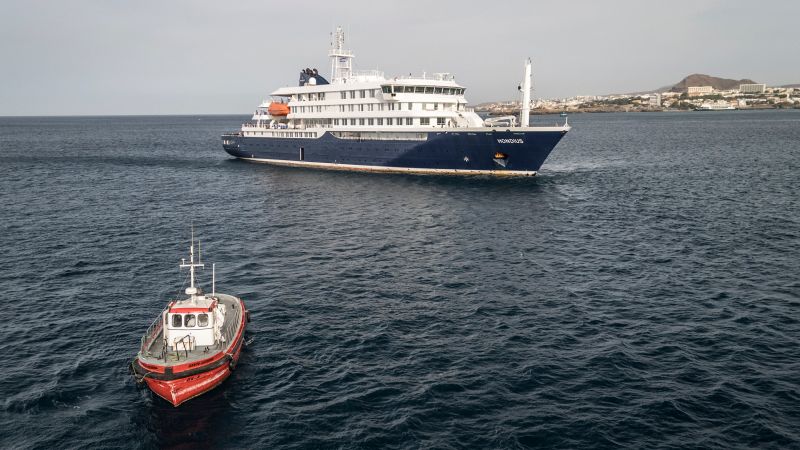
WHO chief reassures worried Tenerife residents – The World Health Organization’s (WHO) director general, Tedros Adhanom Ghebreyesus, has made efforts to calm anxieties among Tenerife residents as a cruise ship carrying hantavirus cases prepares to dock on Sunday. The MV Hondius, which is expected to arrive early Sunday morning, has raised concerns due to the deaths of three individuals from the virus. Tedros, who is present on the island to oversee the safe removal of nearly 150 passengers, acknowledged the worries but emphasized that the outbreak is not a repeat of the Covid-19 pandemic. In a communication to the local population, he stated, “The present public health threat posed by hantavirus remains minimal,” noting that the WHO made this evaluation with careful consideration.
As part of the coordinated effort, Spanish officials have outlined a detailed protocol for the ship’s arrival at Granadilla port. Tedros praised the preparation, highlighting that the operation is designed to ensure the passengers are not exposed to the local community. According to the cruise operator Oceanwide Expeditions, the vessel will reach the port at 5:30 a.m. local time. From approximately 8 a.m., groups of guests and a small number of crew members will disembark under controlled conditions. The process involves transporting them in vehicles equipped with barriers and supervision to maintain safety during the transition to land.
“You will not come into contact with them. Your families will not come into contact with them,” Tedros stated during a press briefing. His remarks followed a visit to the port, where he assessed the readiness of the team handling the evacuation. The WHO chief also recognized Spain’s Prime Minister Pedro Sanchez for his decision to allow the ship to dock, calling it an expression of solidarity and a sense of responsibility.
Tedros underscored that Tenerife was selected for its advanced infrastructure and medical facilities, which are essential for ensuring the passengers reach safety. The island’s health ministry confirmed that upon arrival, individuals will be isolated in individual rooms, restricted from receiving visitors, and subjected to PCR testing both immediately and after seven days. Daily temperature checks will also be conducted to monitor for any signs of illness.
Spain’s interior minister, Fernando Grande-Marlaska, revealed that 358 security personnel from various forces will be involved in the operation. The military hospital, where 14 Spanish passengers will be treated after initial evaluations, has been designated as a central point for care. Meanwhile, international cooperation is being extended, with Germany, France, Belgium, Ireland, and the Netherlands planning to send aircraft to repatriate their citizens from the vessel. The U.S. Centers for Disease Control and Prevention (CDC) is also sending experts to conduct assessments on American passengers, ensuring the risk to the broader public remains “extremely low,” according to a spokesperson from the U.S. Department of Health and Human Services.
Despite the organized plan, the arrival of the MV Hondius has sparked some local unrest. Earlier in the week, Fernando Clavijo, the leader of the Canary Islands, voiced opposition to the ship’s docking. Port workers in Tenerife have also taken to the streets, protesting over a lack of clear communication about the risks associated with the vessel. However, Clavijo later softened his stance, stating that his government “will no” [likely incomplete sentence] in the final statement, indicating a shift in attitude or a need for further clarification.
The cruise ship, which is infected with hantavirus, will anchor at a specific location within the port, determined by maritime and port authorities as the most secure for the operation. This site was chosen to minimize potential spread of the virus to the surrounding area. Once on land, passengers will be separated by nationality, with each group moving through inflatable boats for disembarkation. The CDC’s involvement is crucial, as it has deep experience with the Andes variant of hantavirus, which has been identified as the cause of the outbreak on board.
Organizations such as the CDC are focusing on individual risk assessments, ensuring that every American passenger is evaluated for their health status. This includes not only testing but also monitoring symptoms, which could help identify cases early. According to a statement from the Spanish health ministry, passengers will be kept away from residential zones until they are ready for direct return to their countries. The plan includes using a charter aircraft with a biocontainment unit, similar to those utilized during the pandemic, to transport those requiring further care.
Public health officials have taken steps to manage the situation, ensuring that the MV Hondius’s presence in Tenerife is as safe as possible. The WHO’s presence on the island has provided a sense of reassurance, with Tedros collaborating closely with Spain’s Minister of Health, Monica Garcia, to ensure all procedures are followed. The evacuation process is not just about moving people from the ship but also about safeguarding the community’s health and minimizing disruption.
As the world continues to monitor emerging health threats, the arrival of the MV Hondius highlights the importance of preparedness and international coordination. The WHO and Spanish authorities are working together to implement a strategy that balances the need for rapid response with the precaution of preventing any possible spread of the virus. While the situation is concerning, the measures in place aim to provide a clear and controlled path for the passengers to return home without endangering others.
Residents of Tenerife have been informed of the plan through public statements and meetings, with efforts to maintain transparency about the risks involved. The health ministry has emphasized that the outbreak is localized and that the steps taken are designed to contain it effectively. This includes isolating infected individuals, monitoring their health closely, and ensuring that all interactions on land are managed with strict protocols in place. The collective effort by Spanish and international agencies demonstrates a commitment to public health and safety, even in the face of unexpected challenges.
With the MV Hondius set to arrive, the focus is now on the execution of the evacuation plan. The coordination between multiple agencies, including the WHO, CDC, and Spanish health officials, ensures that every aspect of the process is covered. From the initial arrival of the ship to the final steps of repatriation, the goal is to maintain order and prevent any transmission of the hantavirus. This collaborative approach is vital in addressing the situation with both efficiency and care, providing a model for handling similar crises in the future.
