
30 years after Kristin Smart vanished, a new search renews hope for answers. Here’s what we know
30 years after Kristin Smart vanished, a new search renews hope for answers. Here’s what we know
The Disappearance and Conviction
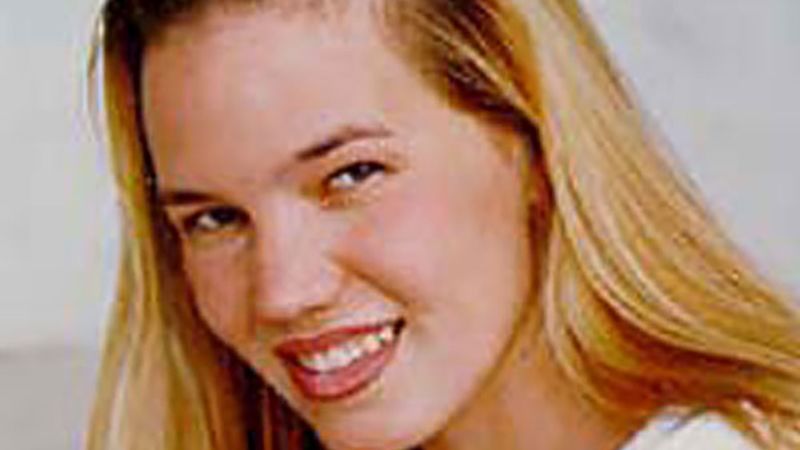
30 years after Kristin Smart vanished – Three decades have passed since Kristin Smart’s family last witnessed her bright smile. The college freshman disappeared from California Polytechnic State University’s San Luis Obispo campus during the 1996 Memorial Day weekend, initiating a lengthy probe that would eventually culminate in the 2022 trial and conviction of Paul Flores for her murder. Despite the legal resolution, her body has never been recovered, and she was declared dead in 2002. This lack of physical evidence has kept the case in the spotlight, with renewed efforts in recent days as investigators uncover new leads.
Authorities announced Friday that recent soil testing at the residence of Paul Flores’ mother, Susan Flores, revealed potential signs of human remains. While the search concluded Saturday, the sheriff’s office emphasized that the findings remain significant. “We believe that based on what we’re looking at evidence-wise … that human remains were there at one time or still there,” said San Luis Obispo County Sheriff Ian Parkinson during a news conference. Though the remains could not be definitively identified as Kristin’s, the discovery has reignited hope among the family and the broader community.
New Clues and Ongoing Search
The latest investigation at Susan Flores’ Arroyo Grande home marks a pivotal moment in a case that has spanned over three decades. This time, the team employed advanced techniques, including ground-penetrating radar and improved soil science methods, which were not available during earlier searches. “We’ve proven already that Paul did it,” Parkinson noted in an interview with podcast host Adam Montiel. “We believe Kristin, at one time, was on Paul Flores’ father’s property. We know she’s been moved, so where she moved to … we’re hunting that down.”
Parkinson highlighted that the current search focused on the backyard, an area that had previously been scrutinized but now offered fresh possibilities. “It’s a very small space back there to search, but also, as you can see, it’s quite crowded with stuff,” he said, noting the challenges posed by the cluttered environment. The sheriff’s office obtained a search warrant, citing “investigative leads and evidence” as the basis for their return to the property. This warrant also allowed access to the neighbor’s home, enabling investigators to examine soil samples from both locations.
“We can’t call it Kristin, but you know, we think there’s evidence to support human remains.”
Tim Nelligan, a soil vapor testing expert, provided insight into the methodology used during the search. He described how his team collected samples from Susan Flores’ yard and a neighboring property, applying techniques developed to assess soil vapor and its connection to human decomposition. While Nelligan declined to discuss the specifics of the investigation, his work underscores the evolving science behind the search, which could offer new perspectives on where Kristin might have been hidden.
The Family’s Perspective
Kristin Smart’s family has remained steadfast in their belief that Paul Flores continues to hinder their quest for closure. “We continue to pray for the day when we can finally lay her to rest in the presence of those who love her,” they wrote in an open letter on their website. The family feels that Flores’ actions and the lingering uncertainty about Kristin’s fate have kept her spirit alive in their hearts, even as the investigation moves forward.
Parkinson acknowledged the emotional weight of the case, emphasizing that the search for Kristin is not just a legal endeavor but a deeply personal one. “Until we have Kristin, everything is still wide open,” he stated, underscoring the determination of the sheriff’s office to pursue every possible lead. Despite the conviction of Paul Flores, the family maintains that the search for her body is essential to complete the journey of justice.
Evolution of the Investigation
Over the years, the Smart case has seen shifts in strategy and technology. The initial disappearance in 1996 left the campus and community in shock, with a relentless pursuit of answers. The 2022 trial established Paul Flores as the primary suspect, but the absence of a body has kept the mystery alive. Recent advancements in forensic tools, such as ground-penetrating radar, have allowed investigators to revisit familiar ground with fresh eyes.
The search at Susan Flores’ home is described as “extremely thorough” and may take several days to complete. “Just because somebody’s house was searched doesn’t mean we’re not going back there,” Parkinson explained. “She could have been moved back there thinking it’s a safe place.” This statement reflects the belief that Kristin’s remains might still be hidden within the familiar confines of her family’s property. The sheriff’s office has not yet accused Susan Flores of any wrongdoing, though she remains a person of interest in the case.
The Path Forward
Authorities remain resolute in their commitment to uncovering the truth. After the conclusion of the latest search, the sheriff’s office reiterated its dedication to finding Kristin. “We’re still looking for her,” Parkinson said. “Every piece of evidence, no matter how small, brings us closer to the answers we need.” The team is also analyzing soil samples gathered from the neighbor’s yard, which could provide additional clues about the movement of Kristin’s remains.
Paul Flores, who was 19 when Kristin vanished, has been central to the investigation since its inception. His family’s home has become a focal point, with multiple searches conducted over the years. While the conviction in 2022 solidified his role as the perpetrator, the search for the body continues, driven by the belief that the final piece of evidence is still within reach. The sheriff’s office has not yet secured a lawful reason to detain Susan Flores, but the investigation is far from over.
The case has also highlighted the importance of collaboration between law enforcement and experts in fields like soil science. Nelligan’s work on soil vapor testing represents a step forward in the effort to trace the movement of remains. As the search continues, the community watches closely, hoping that the breakthroughs in technology and persistence of investigators will finally bring Kristin home.
With renewed efforts and updated methodologies, the Smart case stands as a testament to the enduring quest for justice. The family’s unwavering hope, combined with the sheriff’s office’s determination, ensures that even after 30 years, the search for answers remains active. As investigators analyze the latest evidence, the possibility of uncovering Kristin’s fate keeps the case in the public eye, proving that some mysteries persist long after the initial events have faded into memory.
