Clive Davis, monumental music producer and record industry titan, has died

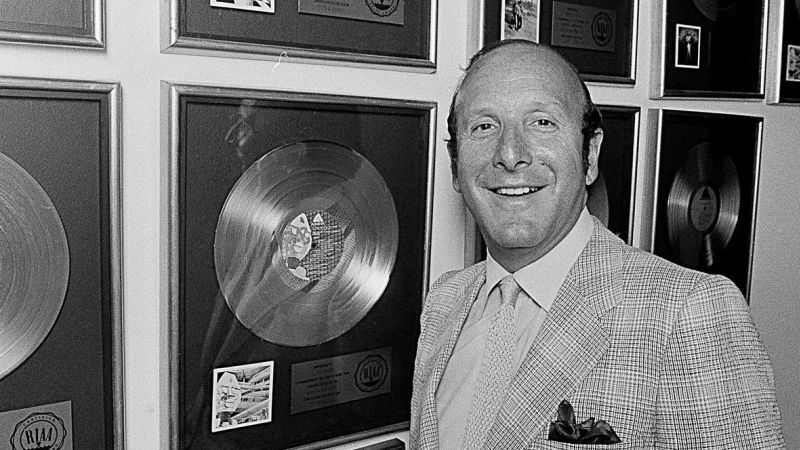
Clive Davis, Legendary Music Producer, Passes Away at 94
Clive Davis monumental music producer and record – The iconic figure who revolutionized the music industry, Clive Davis, has died at the age of 94. Known for his unparalleled ability to identify and cultivate talent, Davis was affectionately called “the man with the golden ears” by peers and fans alike. His passing was confirmed by his family through a social media announcement, with his publicist also verifying the news to CNN. Davis was remembered by loved ones as a visionary who left an indelible mark on the world of music, as well as a compassionate leader who guided his family with unwavering support.
From Law to Legacy: A Career Shaped by Chance
Though Davis initially pursued a legal career, his path took an unexpected turn when he entered the record industry. Born in Brooklyn, he graduated from Harvard Law School but found himself drawn to the world of entertainment after his parents passed away during his teenage years. In 1960, he joined Columbia Records, where he quickly rose through the ranks to become the label’s top lawyer. By 1965, Davis had been appointed president of the company, a role he would hold for years, shaping the sound of an era.
When asked about his entry into the music business in a 2013 interview, Davis reflected on the serendipity of his journey. “I was thrust into it,” he recalled, “Never knowing I had a natural ear and gift for music that,” he added, “would become the passion of my life.” This passion was evident in the artists he championed, from Janis Joplin to Whitney Houston, each of whom became a defining voice of their time.
Discovering the Stars: A Portfolio of Musical Icons
Davis’s career was marked by an uncanny ability to spot raw talent and bring it to the forefront. His first major breakthrough came in 1967 when he signed Janis Joplin, whom he encountered at the Monterey Pop Festival. In his memoir “The Soundtrack of My Life,” Davis described her performance as a revelation: “Her body seemed to vibrate with the modulations of her voice, which struck with equal impact whether she was wailing at the top of her lungs or delivering an intimate whisper.”
His influence extended beyond Joplin, as he became instrumental in launching the careers of numerous legends. Bruce Springsteen, Carlos Santana, Chicago, Earth, Wind and Fire, Aerosmith, and Barry Manilow all rose to fame under his guidance. Springsteen himself paid tribute to Davis in a social media post, calling him a “close friend” who transformed his life. “He treated me with the same respect and kindness as a 22-year-old nobody as he did after all my success,” Springsteen wrote.
“A great man.”
Billy Joel’s rise to prominence was similarly tied to Davis’s faith in his potential. At the time, Joel was struggling to make a name for himself, but Davis’s decision to sign him in 1973 proved transformative. Joel’s debut album “Piano Man,” released under Columbia Records, became a cornerstone of his success. Davis later recounted how the album’s impact gave him the confidence to persist. “When they all hit, one after another and I was there, making that judgment… it obviously gave me confidence to keep going,” he said.
A Heartbreak and a Triumph: Whitney Houston’s Impact
The 1980s brought Davis one of his most celebrated achievements: the discovery of Whitney Houston, the young pop sensation who would become a global icon. Their collaboration produced a string of chart-topping hits, including “Saving All My Love for You,” “How Will I Know,” and “I Wanna Dance with Somebody (Who Loves Me).” However, Houston’s tragic death in 2012 left Davis devastated. She had passed away in her Beverly Hills hotel room just days before the Grammy Awards, where Davis had been preparing for a pre-gala event. “She was vital, optimistic, looking forward to the future,” Davis said in 2024, capturing the essence of his relationship with the artist.
Davis’s legacy as a talent scout was further solidified by his work with Simon and Garfunkel, The Grateful Dead, Dionne Warwick, Miles Davis, Rod Stewart, and Luther Vandross. Even when artists like Aretha Franklin faced challenges in their careers, Davis stepped in to reinvigorate their sound. His collaboration with Franklin on the 1987 duet “I Knew You Were Waiting (For Me)” with George Michael marked a revival of her career, bringing her back to the top of the Billboard Hot 100 after years of stagnation.
Navigating Scandals: A Test of Resilience
Despite his success, Davis’s career was not without turbulence. In 1973, he was ousted from Columbia Records amid accusations of misusing company funds for personal purposes. While he maintained that the expenses were always intended to be reimbursed, the scandal coincided with a federal investigation into alleged payola practices at the label. Davis was cleared of the payola charges but still faced tax evasion accusations, which were later reduced to five of six charges.
“This virtually complete exoneration received nothing like the coverage of all the baseless charges, rumors, and guilt-by-association whispers that I had lived with since leaving Columbia,” Davis wrote in his 2013 memoir. The experience taught him the importance of resilience in the music industry, a theme he would carry forward. Responding to the controversy, he founded Arista Records, where he continued to dominate the charts with a new wave of artists.
Continuing the Vision: Arista Records and Beyond
Davis’s leadership at Arista Records saw the label become a powerhouse, particularly in the 1980s and 1990s. The label’s expansion into country music in 1989 was a pivotal move, yielding hits with Alan Jackson and Brooks & Dunn. His ability to adapt and innovate ensured that his influence remained relevant across decades. “You’ve got to be a survivor,” Davis once remarked, encapsulating his philosophy. “You’ve got to rise above cold periods, you’ve got to come back stronger.”
From his early days as a lawyer to his later years as a record executive, Davis’s story is one of perseverance and artistic intuition. His impact on the music world is still felt today, with his roster of artists and his innovative strategies leaving a lasting imprint. As the industry mourns the loss of a titan, his contributions continue to shape the legacy of countless musicians and the evolution of pop culture.