Artists are bailing on a Trump-backed concert series for America’s 250th. Now he’s hosting his own ceremony

Artists Withdraw from Trump’s 250th Concert Series; He Hosts Own Ceremony
Artists are bailing on a Trump-backed concert series celebrating the U.S. 250th anniversary, with the former president now taking charge of the event. The initiative, which initially aimed to feature a diverse lineup of musicians, has seen a wave of cancellations as performers express concerns about its political alignment. Trump’s decision to host his own ceremony at the Great American State Fair has intensified scrutiny over the event’s purpose, raising questions about its intent to honor American history or advance his ideological agenda.
Disillusionment and Withdrawals
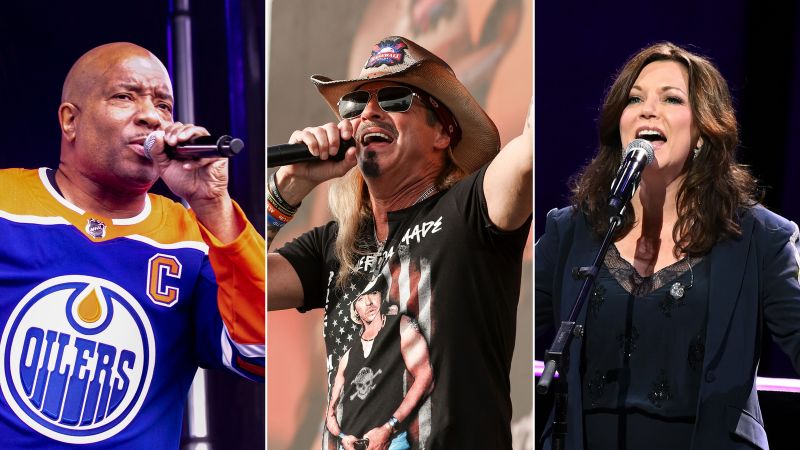
Multiple high-profile artists have distanced themselves from the Trump-associated event, citing dissatisfaction with its partisan tone. Among those who have pulled out are Morris Day and the Time, Bret Michaels, and Young MC, all of whom were previously linked to the National Mall concerts. These musicians claimed they were not fully informed of the event’s political leanings, leading to accusations of being misled. “I thought this was a cultural celebration, but it’s become something else entirely,” said one artist, reflecting the growing discontent within the music community.
Trump’s critics argue that the concert series has been transformed into a platform for his political message, overshadowing its original goal of commemorating the nation’s 250th birthday. The event’s lineup, dominated by performers with strong ties to his administration, has been seen as a calculated move to bolster his legacy. As a result, some artists have expressed frustration, feeling their artistic contributions are being politicized. This shift has sparked debates about the role of entertainment in political campaigns and the balance between cultural expression and ideological support.
Freedom 250 and the Semiquincentennial Commission
The Freedom 250 organization, which partnered with the Semiquincentennial Commission to host the 250th anniversary events, has been criticized for its overtly Trump-centric approach. While the commission sought to create inclusive programming, Freedom 250 has leaned heavily on legacy acts, including Morris Day and the Time, Bret Michaels, and Vanilla Ice. All these performers share a booking agent, Jeff Epstein of Universal Attractions, who has remained silent on the recent exits.
Trump himself has mocked the artists who left, calling them “untrustworthy” and questioning their commitment to the nation’s 250th celebration. “Why would anyone want to support this when it’s not about America anymore?” he tweeted, reflecting his frustration with the lineup. The former president also expressed a desire to replace the current performers with his own selection, emphasizing his belief that the event should align with his vision of national pride. This sentiment underscores the political motivations behind the event’s organization and its broader implications for public perception.
Milli Vanilli’s Role in the Controversy
The inclusion of Milli Vanilli in the lineup has drawn additional criticism, with some viewing it as a symbolic choice for Trump’s 250th concert series. The pop duo, known for their 1990 Grammy win and subsequent scandal over alleged lip-syncing, has faced scrutiny for their participation. Jodie Rocco, a real vocalist who once worked with Milli Vanilli, expressed surprise at the group’s inclusion, noting the irony of their involvement in an event meant to honor American ideals. “This feels like a step back in time,” she remarked, highlighting the tension between nostalgia and contemporary political messaging.
Despite the controversy, Morvan, one of the original Milli Vanilli vocalists, is expected to perform at the Great American State Fair. He will sing the group’s songs himself, which has sparked further debate about the event’s authenticity. While Vanilla Ice, a vocal Trump supporter, remains committed to the concert, his enthusiasm contrasts with the more critical perspectives of other artists. This divergence in opinions underscores the broader divide over the event’s purpose and the extent to which it has been influenced by Trump’s political goals.
Public Reaction and Political Implications
The artists’ withdrawals have ignited a mixed reaction among the public. Supporters of Trump argue that the event’s political alignment is a natural extension of his efforts to promote national unity. “This is about celebrating our country’s greatness,” one fan claimed, highlighting the event’s slogan. However, critics see the cancellations as a sign of growing resistance to Trump’s influence on cultural events. “When artists leave, it’s a signal that the message is no longer aligned with the people,” said a spokesperson for a music advocacy group.
As the 250th anniversary approaches, the event’s fate remains uncertain. While Trump insists on proceeding with his own ceremony, the lack of musical support has raised concerns about its appeal and impact. The controversy serves as a microcosm of the broader debate over the role of art in politics, with some arguing that the 250th should be a neutral celebration and others believing it is an opportunity to highlight Trump’s enduring influence. The outcome of this situation will likely shape how the event is perceived in the months to come.