
What makes the Trojan Horse sequence in ‘The Odyssey’ so incredible
The Immersive Power of the Trojan Horse in Nolan’s *The Odyssey*
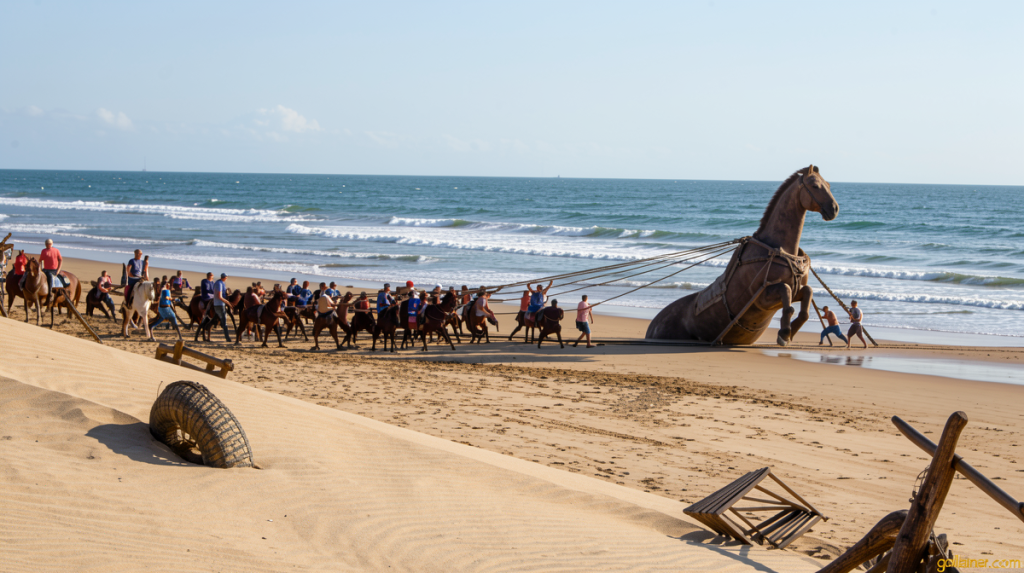
What makes the Trojan Horse sequence in Christopher Nolan’s highly anticipated film *The Odyssey* so captivating is its transformation from a simple plot device into a living, breathing entity. During the New York premiere held on July 14, audiences were immediately struck by the visual grandeur surrounding the event. Dominating the celebrity walkway in Manhattan was a colossal wooden equine figure, standing nearly forty feet tall. This massive prop serves as the centerpiece of an extensive promotional campaign that has seen similar horses traveling through various cities in both the United Kingdom and the United States. The sheer size of the structure creates an instant connection to the epic scale of the story being told on screen.
A Central Character in the Narrative
While the original ancient Greek poem provides only a fleeting mention of the famous deception, Nolan’s interpretation elevates the wooden beast to the status of a central character. Viewers who have experienced the film understand that this is not merely a vessel for soldiers, but a symbol of hidden danger and triumph. The presence of the horse in the promotional materials signals to fans that this element will play a pivotal role in the storytelling. It bridges the gap between the mythological past and the cinematic present, creating a sense of awe before the credits even roll. The horse is no longer just a prop; it is a silent guardian of the war’s outcome.
By treating the wooden beast as a central character, the film transforms a static object into a dynamic force within the narrative.
What makes the Trojan Horse sequence particularly effective is the immersive nature of the direction. Rather than relying on wide shots to show the exterior of the statue, the camera plunges the audience directly into the belly of the beast. The resulting segment captures the suffocating atmosphere experienced by the warriors concealed within. The tight framing and intense lighting convey the claustrophobia of the moment, making the viewer feel the weight of the wood and the tension of
