
Ships took advantage of an opening in the Strait of Hormuz. But it may be closing
Ships Took Advantage of an Opening in the Strait of Hormuz. But It May Be Closing
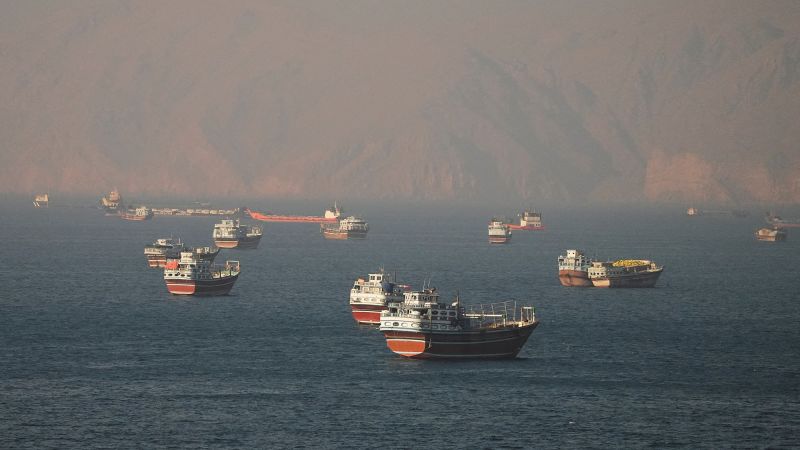
Ships took advantage of an opening – Recent days have witnessed a notable uptick in maritime activity through the Strait of Hormuz, a vital chokepoint for global oil trade. However, this surge appears to be temporary, as the International Maritime Organization (IMO) and its partners have halted the evacuation of vessels from the region. On Wednesday, 73 ships navigated the narrow waterway, marking the highest number in three months, according to data from MarineTraffic. This increase is more than double the traffic recorded the previous day, signaling a cautious shift in shipping patterns.
The uptick in vessel movement coincides with the United States lifting sanctions on Iranian oil, a decision tied to a ceasefire agreement between the two nations. This development has allowed some ships to resume transit, but the situation remains fragile. The IMO, in collaboration with the United Nations and Iran, initiated a humanitarian mission to relocate 11,000 stranded seafarers and 500 vessels out of the strait. Gene Seroka, executive director of the Port of Los Angeles, explained that the current traffic surge is driven by ships that had been anchored in the Gulf for weeks, moving to prioritize the evacuation of personnel and a select group of tankers once the sanctions were removed.
“What we’re seeing are the ships that were sitting in the Gulf for this elongated period of time starting to move out with a focus on humanitarian aid to get the seafarers out and then a couple of chosen tankers when sanctions were lifted,” said Seroka, who spent half a decade working for a major shipping line in the Middle East. “So this is not just a full-fledged green flag, everybody start running through the strait.”
Before the conflict erupted in late February, the strait typically saw between 110 and 160 vessels passing through daily. The war disrupted this flow, reducing average daily traffic to fewer than ten ships. The pause in hostilities and the easing of sanctions have led to a tentative recovery, but the recent halt in evacuation efforts has cast doubt on the sustainability of this trend.
Ship traffic began to rise over the weekend as shipping companies regained confidence in the ongoing diplomatic talks between the US and Iran. This progress was further supported by the creation of two new shipping lanes by the IMO, along with Iran and Oman. The northern route, near Iran, and the southern corridor, closer to Oman, were cleared of mines and other hazards. These lanes aimed to gradually and safely move vessels out of the region, with agencies coordinating directly with ships scheduled to transit.
However, the momentum was short-lived. On Thursday, the IMO suspended its evacuation plan after a vessel was struck in the Gulf of Oman. A US official confirmed the attack was likely carried out by an Iranian drone, though no additional details were released. Iran has yet to claim responsibility for the incident. The suspension led to a sharp decline in traffic on Friday, as the country warned that ships should avoid the southern lanes and only use routes approved by its authorities. This directive has heightened fears of future attacks, particularly for vessels entering or exiting near Oman.
IMO Secretary-General Arsenio Dominguez acknowledged the precautionary step, emphasizing that the vessel targeted “did not transit under IMO’s evacuation framework.” Despite this, the pause has created uncertainty for the shipping industry. For months, companies have operated in a cautious state, balancing the risks of mine-laden waters and potential missile strikes. The threat has been so severe that insurers have withdrawn coverage for some ships, citing wartime clauses that limit liability in conflict zones.
Despite the renewed lanes, the situation remains tense. Major shipping lines, such as Hapag-Lloyd, have relied on US naval escorts to navigate the strait, but this support has been inconsistent. Flexport’s president, Sanne Manders, noted that the current traffic is still dominated by Iranian-flagged vessels and a few Taiwanese Evergreen ships. Global carriers have not yet returned to full operations, meaning the strait’s usage remains closer to pre-war levels than a major transformation.
“The ships actually transiting Hormuz this week are still mostly Iranian-flagged and some (Taiwanese) Evergreen ships. The major global carriers haven’t returned yet, so it’s closer to status quo than a real shift,” Manders said.
The temporary slowdown underscores the delicate balance between progress and risk. While the initial increase in traffic suggests a tentative reopening, the pause in the IMO’s initiative has forced a reassessment of safety protocols. Dominguez highlighted the organization’s commitment to re-evaluating the guarantees in place for ships in the evacuation list and those operating in the region. The goal is to ensure continued safe passage, but the recent incident has exposed lingering vulnerabilities.
Industry experts warn that the psychological impact of the attack could prolong the cautious approach. The threat of missile strikes and mines continues to deter larger cargo operations, even as smaller vessels navigate the strait. With 46 attacks on ships and 14 fatalities documented by the IMO, the risks remain significant. Companies have remained hesitant, waiting for clear signs of stability before committing to increased traffic.
The Strait of Hormuz, a 21-mile-wide passage between Iran and Oman, has long been a critical artery for oil exports, with about 20% of the world’s maritime crude oil passing through it daily. The recent fluctuations in traffic highlight how geopolitical tensions can disrupt this lifeline. While the initial signs of improvement offer hope, the IMO’s decision to pause its plan signals that the return to normalcy may take longer than anticipated.
As the situation unfolds, the focus will remain on securing safe passage for both cargo and personnel. The IMO’s next steps will determine whether the strait can maintain its role as a key shipping route or if the disruption will persist. For now, the movement of vessels appears to be a careful dance between necessity and fear, with the future of traffic hinging on the stability of the ceasefire and the confidence of the global shipping community.
