
Almost every Russian region hit by fuel crisis, as Ukraine escalates drone attacks
Ukrainian Drone Campaign Intensifies, Sparks Nationwide Fuel Shortages in Russia
Almost every Russian region hit by fuel – As Ukraine intensifies its aerial assaults, Russia now faces a severe fuel crisis that has spread to nearly every corner of the country, according to a detailed CNN investigation. With over 50 regions officially reporting supply issues and countless others experiencing informal disruptions, the nation’s gasoline distribution network is under unprecedented strain. This crisis, which first erupted in Crimea and triggered a state of emergency, has now extended across Russia’s vast 11 time zones, creating a ripple effect that challenges both infrastructure and public morale.
Escalating Threat to Energy Infrastructure
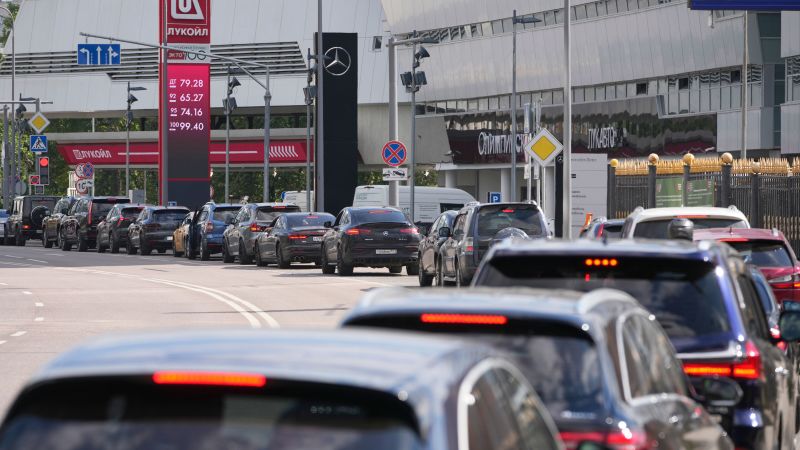
The conflict has shifted from conventional warfare to a high-stakes game of attrition, with Ukraine targeting critical energy facilities. Refineries, vital to Russia’s fuel production, have become prime objectives. Regional officials, including mayors and governors, have issued statements detailing the damage, while local media reports highlight the growing difficulty in maintaining consistent fuel availability. The situation has deteriorated to the point where many gas stations are now enforcing rationing measures, forcing drivers to queue for hours and compete for limited supplies.
Putin’s Response and the Fading Illusion of Control
Despite the mounting pressure, Russian President Vladimir Putin attempted to project calm during a televised address on Sunday. “We are currently seeing certain shortages, although they are not critical,” he stated, as part of what appeared to be a last-minute public relations effort. Yet his reassurance was overshadowed by a revealing admission: the urgent need to “rapidly and significantly increase production of air defense systems.” This remark underscored Russia’s vulnerability to sustained drone strikes, which have disrupted operations in refineries and other strategic sites.
“The most urgent task is to rapidly and significantly increase production of the air defense systems,” said Putin during his Sunday interview, hinting at the escalating threat from Ukraine.
Analysts argue that the current crisis is more dire than previous incidents. In August 2025, Ukrainian attacks caused temporary supply issues, but the ongoing assaults have led to persistent disruptions. Sumit Ritolia, a leading expert in refining supply at Kpler, noted that the scale and frequency of strikes now far exceed earlier levels. “The key difference is the scale and persistence of the attacks,” he explained, emphasizing the cumulative impact on Russia’s energy sector.
Industry Struggles and Unrest Among the Public
Russian oil and gas professionals, many of whom have witnessed the crisis unfold over the past year, describe a race against time. Sergey Vakulenko, a senior fellow at the Carnegie Russia Eurasia Center, highlighted that Ukraine has not only increased attack frequency but also the number of drones deployed. “The Russian oil industry’s resilience is being stretched dangerously thin,” he wrote in a recent analysis, pointing to the fragility of the country’s refining capacity.
Meanwhile, the public is bearing the brunt of the shortages. Gas stations have imposed purchase limits, and citizens are now navigating a complex landscape of fuel shortages and rationing. In Moscow, a viral video captured two women arguing over their positions in line, with one accusing the other of “moron” behavior. Such scenes reflect growing frustration as daily routines are disrupted and access to fuel becomes a matter of priority.
Administrative Measures to Combat the Crisis
To mitigate the fallout, authorities have taken drastic steps. In Irkutsk, one of the hardest-hit regions, the governor declared a “state of heightened alert” and banned the sale of fuel in large canisters, which hold approximately five gallons. This measure aims to prevent hoarding, though it has sparked mixed reactions. “It’s a double-edged sword. It hits the public mood, and it also hits inflation,” said Alexander Kolyandr, a senior figure in the region’s energy sector.
The crackdown has also targeted those profiting from the crisis. In Irkutsk, police fined four individuals for reselling fuel at inflated prices, citing a sting operation where anti-corruption officers posed as buyers. One suspect, a 20-year-old man, was allegedly selling gasoline at four times the national average. These actions signal a broader effort to stabilize the market, but they also reveal the desperation of a system struggling to keep up with demand.
Broader Implications for Russian Society
The crisis is no longer confined to supply chains—it is testing the resilience of Russian society itself. Putin, recognizing the potential for unrest, warned during his interview that the strikes were designed to “create uncertainty for us, or even better to lead to a schism in Russian society.” His remarks suggest an awareness of the growing public discontent, which is exacerbated by long queues and the rising cost of fuel. Tensions are also evident in Krasnodar, where a video showed a man refueling his vehicle while two women criticized him for violating restrictions.
Historical Context and Future Outlook
While the current situation is unprecedented in its severity, it is not the first time Russia has grappled with fuel shortages. Last August, a surge in Ukrainian attacks disrupted supplies, but the damage was temporary. The current crisis, however, is compounded by the need for ongoing repairs to refineries damaged in previous strikes. Ritolia estimates that gasoline production is now operating at 20% below domestic demand, with refinery throughput hitting multi-year lows. “In this race between the repairers and the attackers, the balance is shifting,” he said, underscoring the urgency of the moment.
As the conflict enters a new phase, the fuel crisis serves as both a logistical challenge and a psychological toll. With supplies dwindling and the government scrambling to maintain order, the stakes have never been higher. The question remains: can Russia’s energy infrastructure withstand the relentless assault, or will the crisis mark a turning point in the war’s impact on the nation’s stability?
The widespread shortages have forced citizens to adapt. Fuel-tracking websites have emerged as lifelines, helping drivers locate the most reliable stations. However, these tools have not alleviated the sense of urgency. In cities like Krasnodar, where the border with Crimea is just a short drive away, the crisis has created a palpable anxiety. The combination of supply disruptions and public unrest paints a picture of a nation on the brink, where the war’s shadow stretches beyond the battlefield into everyday life.
As the Ukrainian drone campaign continues, Russia’s ability to sustain its energy output will be critical. The nation’s leaders face a difficult balancing act: maintaining economic stability while addressing the immediate needs of its citizens. The coming weeks will determine whether the current measures are enough to prevent a deeper crisis, or if the fuel shortage will become a catalyst for broader societal challenges.
