
Cuba’s hotels sit empty as US pressure campaign drives tourists away
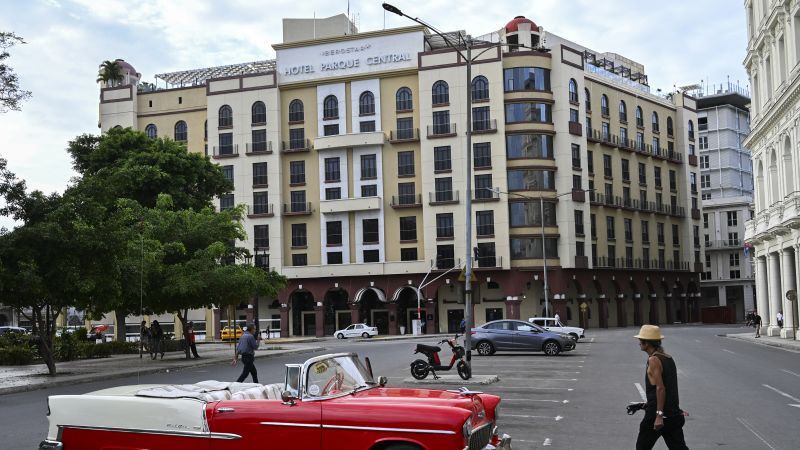
Cuba’s Hotels Face Empty Stalls Amid US Sanctions and a Tourism Downturn
Cuba s hotels sit empty as US – Cuba’s once-vibrant tourism industry is now grappling with a significant decline, as the island’s economy plummets under the weight of sustained US sanctions. Despite its rich cultural heritage and natural beauty, including pristine beaches and colonial architecture, the country has seen a dramatic drop in international visitors. The absence of tourists has left hotels eerily quiet, with many resorts and accommodations sitting unused. This crisis has intensified over the past year, prompting concerns about the long-term viability of Cuba’s tourism-driven economy.
A Crisis Rooted in Economic Pressure
The current situation stems from a combination of factors, including the Trump administration’s aggressive economic measures and the broader challenges posed by the global pandemic. While Cuba’s tourism infrastructure was once a key pillar of its economy, it now faces a perfect storm of restrictions and disruptions. The US has imposed a series of sanctions targeting Cuban imports, limiting access to essential goods and services. This has led to shortages, rising costs, and a breakdown in the hospitality sector, which is heavily reliant on foreign investment.
Old Havana, a historic district dating back to the 16th century and renowned for its well-preserved Spanish colonial architecture, has become a symbol of the industry’s struggles. Once a bustling hub for tourists, the area now echoes with silence. Elio, a musician in a guitar duo based in the district, described the shift in a conversation with local reporters. “There are no tourists,” he said, adding that visitors are “rare, arriving only every few hours.” His concern about speaking to foreign media reflects the growing fear among Cubans that their government might face further scrutiny for the tourism downturn.
“There are no tourists,” said Elio, one half of a guitar duo in Old Havana. “Maybe they are at home. One comes by only every half hour or hour.”
According to the Cuban government, international tourist arrivals in the first five months of 2026 totaled 360,000—a stark 58% decrease compared to the same period in 2025. This decline contrasts sharply with the Dominican Republic’s performance, which saw over 3.6 million visitors during the same timeframe, more than ten times higher. The disparity highlights how the US pressure campaign has altered the dynamics of the Caribbean tourism market, pushing Cuba further into the shadows.
Supply Chain Disruptions and Airline Struggles
The crisis has been compounded by the US’s targeted actions against Cuba’s allies. In January 2026, a military strike on Venezuela—a long-time Cuban partner—disrupted the country’s oil supply, a critical lifeline for its energy needs. This was quickly followed by a broader oil blockade, exacerbating the island’s economic instability. As a result, many air carriers that previously operated flights to and from Cuba have been forced to cancel services, cutting off vital connections for both residents and tourists.
Without reliable fuel sources, the country’s airports have struggled to maintain operations. This has not only affected travel but also deepened the sense of isolation for the Cuban people. “The hotels are empty, and the airports are under pressure,” said Lucy Davies, director of UK-based tour operator Cubania Travel. “It’s hard to imagine a country in such a dire situation still attracting visitors. The pandemic had already dealt a blow, and now the sanctions are making it worse.”
“Who would want to travel to a country which is in such dire straits? People are prepared to have some discomfort on their holiday. But it becomes kind of dark tourism to go somewhere like Cuba at the moment,” said Cubania director Lucy Davies.
Davies’s comments reflect a growing sentiment among travelers. She has suspended all trips for the foreseeable future, citing the economic uncertainty and logistical challenges as major deterrents. The situation has also prompted her to pivot her efforts toward supporting Cubans in need. “I kept hearing about people struggling to find food,” Davies explained. “We’re not going to be able to help everyone. It’ll be a drop in the ocean, but this is what we can do.” Her initiative has enlisted past clients and individuals concerned about the welfare of Cubans to fund food donations, creating a temporary solution for those affected by the economic collapse.
Reforms and the Future of Cuban Tourism
Amid the crisis, Cuban President Miguel Díaz-Canel has signaled a shift in policy, offering new opportunities for Cubans—both on the island and abroad—to take control of the tourism sector. In June 2026, he announced that the government would open up hotel management to private citizens, a departure from its previous reliance on state-run operations. “We are open to Cubans who want to invest and manage hotels,” Díaz-Canel stated. “We have also offered these business opportunities to Cubans residing abroad.”
This reform comes at a pivotal moment, as the government has long bet on tourism to sustain its economy. Over the past decade, substantial investments were made to expand hotel capacity, with the expectation that the sector would drive growth. However, the current reality has left many of these new facilities unoccupied, raising questions about the effectiveness of the strategy. The Trump administration’s goal, as Díaz-Canel noted, is to pressure Cuba into opening its political system and welcoming direct foreign investment. This includes the tourism industry, which remains a key target of the US economic campaign.
Trump’s Strategy and the Path Forward
President Donald Trump has consistently framed the sanctions as a means to weaken Cuba’s economic foundation and force concessions. In an interview with Axios in June, he compared Cuba’s tourism potential to Venezuela’s oil reserves, emphasizing the need for further action. “Venezuela has oil. Cuba doesn’t. Cuba has a nice property and they have nice shoreline,” Trump remarked, suggesting that the country’s resources could be leveraged to attract more visitors if the political climate changes.
While the US claims its measures are aimed at promoting economic reform, critics argue they have deepened the crisis. The blockade has not only restricted access to essential goods but also created a ripple effect across industries. For example, international hotel chains have withdrawn from the market, leaving behind vacancies and a lack of infrastructure to support local entrepreneurs. This has forced the Cuban government to rethink its approach, with some officials acknowledging the need for drastic changes to prevent a deeper collapse.
Despite these challenges, there is hope that the situation may stabilize. The government’s recent reforms aim to empower Cubans to take charge of their own economic future, potentially revitalizing the tourism sector. However, the success of these efforts hinges on external factors, such as the easing of US restrictions and the ability of private operators to fill the void left by foreign chains. For now, Cuba’s hotels remain empty, a stark reminder of the impact of sustained pressure on a fragile economy.
Spain-based economist Pedro Monreal has voiced skepticism about the viability of these reforms, noting that the private sector is still in its infancy. “It is unrealistic to expect that Cubans—whether in exile or on the island—could replace the hotel chains,” Monreal told CNN. “The transition will take time, and the current economic climate may not be conducive to rapid change.”
As the situation continues to evolve, the focus remains on how Cuba can adapt to the new realities. With the tourism sector at a crossroads, the island’s residents and businesses are left to navigate the challenges, hoping for a return to the bustling scenes that once defined their economy. The road to recovery may be long, but the determination to rebuild is evident in the faces of those still fighting to keep the industry alive.
