
Federal judge blocks Trump policy of making arrests at immigration courts nationwide
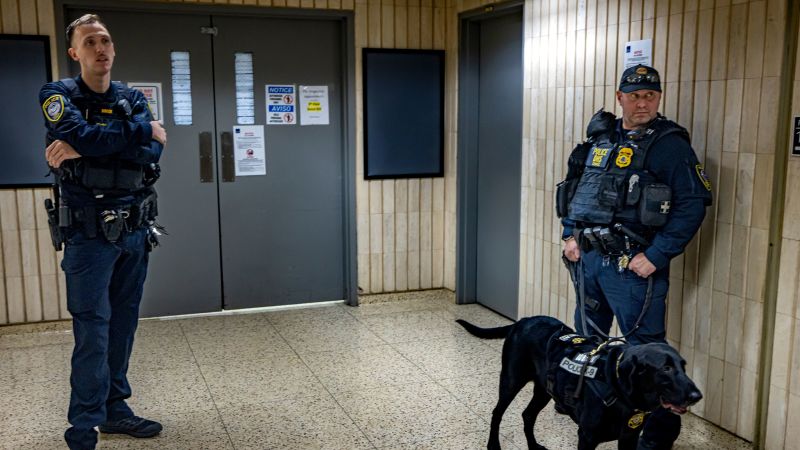
Federal Judge Blocks Trump Policy of Making Arrests at Immigration Courts Nationwide
Federal judge blocks Trump policy of making – A federal judge in California has issued a nationwide injunction halting the Trump administration’s controversial policy of detaining immigrants in immigration court facilities, effectively ending a practice that had sparked intense debate across the country. The decision, handed down on Tuesday, marks a significant setback for the administration’s efforts to expand enforcement actions within court settings, which critics argued undermined the fundamental principles of due process and fair treatment for noncitizens.
Implementation of the Controversial Policy
The policy, introduced by Immigration and Customs Enforcement (ICE) last year, allowed officers to arrest and detain migrants in courthouse hallways shortly after they appeared in court. This practice, which often occurred within minutes of a case being presented, was designed to expedite removals and ensure that individuals who had been found removable by a judge were immediately taken into custody. However, the approach quickly drew criticism from legal experts and advocacy groups, who contended that it transformed immigration courts into sites of intimidation, forcing migrants to confront the threat of detention even as they sought legal representation.
Under the previous guidance, ICE had been restricted from making arrests in or near immigration courthouses unless specific conditions were met. The 2025 policy, however, removed these limitations, enabling enforcement officers to apprehend individuals during court proceedings. This change was seen as a direct challenge to the legal system’s role in protecting immigrants’ rights, as it introduced a sense of unpredictability and fear into the courtroom environment. Legal advocates warned that the policy could deter people from attending hearings, thereby complicating the process of securing their day in court.
Judge’s Ruling and Legal Rationale
Justice P. Casey Pitts, the federal judge who issued the ruling, delivered a detailed 71-page analysis that dismantled the administration’s justification for the policy. The judge emphasized that the 2025 guidelines, while seemingly aligned with the goal of enforcing immigration laws, lacked a coherent rationale and failed to address the core issue of their impact on immigrants’ rights. “The policy’s fatal defects persist even after expanding its scope to immigration courts,” Pitts stated in his ruling, highlighting the “chilling effect” that the practice had on individuals’ willingness to participate in legal proceedings.
“For the avoidance of doubt, simply extending the 2025 courthouse-arrest policies to cover immigration courthouses would not cure those policies’ fatal defects. As the Court has previously detailed, the policies entirely fail to address the chilling effect of courthouse arrests on noncitizens’ attendance at court proceedings, which is both a critical factor underlying ICE’s 2021 guidance and an ‘important aspect of the problem’ in its own right,” Pitts said.
The judge’s argument centered on the inconsistency of the policy. He noted that the administration had not provided sufficient reasoning for removing earlier restrictions on civil arrests at immigration courts, nor had it explained why the new policies did not include safeguards to protect individuals from immediate detention. “ICE’s 2025 policies are devoid of rational explanation for (or even acknowledgment of) the agency’s choices (1) to remove its earlier restrictions on civil arrests at immigration courthouses and (2) not to extend the new policies’ limitations to immigration courthouses,” he added.
Legal Advocacy and Criticism
The ruling was celebrated by legal advocates who had long opposed the policy. Jordan Wells, a senior staff attorney with the Lawyers’ Committee for Civil Rights of the San Francisco Bay Area, praised the decision as a victory for the rights of immigrants. “The courthouse is meant to be a refuge for the pursuit of justice, not a hunting ground for ICE. No immigrant, whether appearing in San Francisco, Miami, Chicago, or New York, should be forced to choose between their liberty and their day in court,” Wells stated in a statement to CNN.
Wells and other legal experts argued that the policy created a hostile environment in immigration courts, where migrants faced the risk of being detained immediately after their cases were heard. This, they said, disrupted the traditional legal process and left individuals vulnerable to arbitrary enforcement. The administration’s approach, they contended, prioritized speed over fairness, often leaving people without adequate time to prepare their defense or appeal the decision.
On the other hand, Trump officials defended the policy, claiming it was necessary to prevent dangerous individuals from evading removal orders. The Department of Homeland Security’s General Counsel, James Percival, took to X to express his views, stating that the ruling represented an overreach by the judiciary. “When a judge sentences a defendant, the defendant is taken into custody. If an alien is ordered removed by an immigration judge, the same should happen. A district judge ordering otherwise is naked judicial activism in service of an anti-American, open borders agenda,” Percival tweeted.
Broader Implications and Legal Precedents
The decision has far-reaching implications for immigration enforcement practices. By blocking the policy, the judge reinforced the idea that immigration courts should function as spaces where due process is upheld, rather than as venues for immediate detention. This ruling aligns with previous legal challenges to similar policies, which had already been criticized for their disruptive effects on the courtroom process.
Legal scholars note that the ruling could set a precedent for future cases involving the balance between immigration enforcement and individual rights. “The key takeaway here is that the administration’s attempt to expand its authority in court settings must be justified by clear and consistent reasoning,” said one expert, who emphasized the importance of transparency in policy-making. The judge’s emphasis on the “chilling effect” underscores the need for enforcement actions to be proportionate and considerate of the rights of those being detained.
The policy’s reversal also signals a shift in the legal landscape for immigration cases. With the 2025 guidelines now blocked, ICE must revert to the older restrictions, which limited arrests in courthouses to specific circumstances. This could lead to a more measured approach to enforcement, although advocates remain cautious about the long-term effectiveness of the change. “While this is a positive step, the policy’s return may not fully resolve the underlying tensions between swift enforcement and fair legal processes,” another legal analyst remarked.
As the administration moves forward, the ruling highlights the ongoing debate over immigration enforcement strategies. Critics argue that the policy’s original intent—rapidly removing individuals who had been found guilty—had been overshadowed by its broader impact on the rights of immigrants. Supporters, however, believe that the policy was essential to ensuring that those who had been legally ordered out of the country were promptly detained, preventing them from disappearing into the community unnoticed.
With the federal judge’s decision, the focus now shifts to how the policy’s reversal will affect ongoing cases and future enforcement actions. The ruling not only provides relief to migrants currently facing immediate detention but also serves as a reminder of the judiciary’s role in safeguarding the rights of all individuals, regardless of their immigration status. As the legal battle continues, the case will likely be cited as a pivotal moment in the fight to protect due process within immigration courts.
