An explosive appeal from Trump over E. Jean Carroll sexual abuse verdict stalls at the Supreme Court

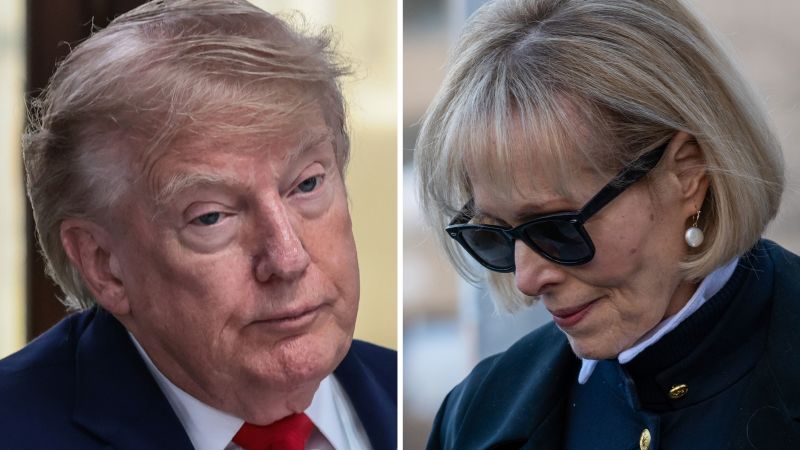
Supreme Court Delays Trump’s Appeal in E. Jean Carroll Sexual Abuse Case
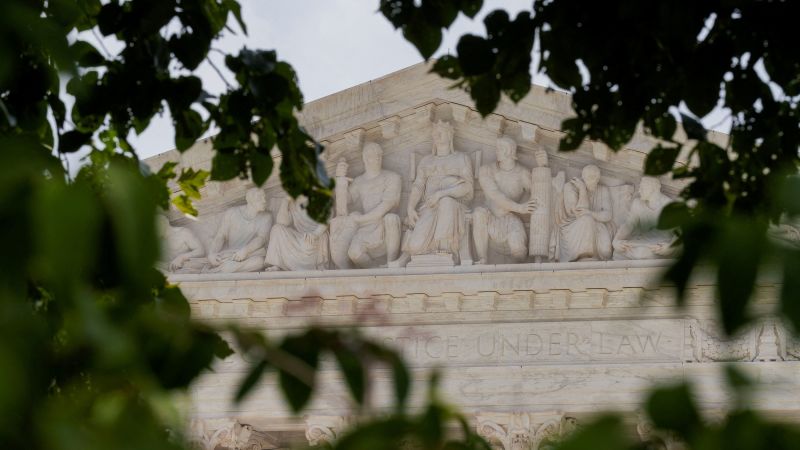
An explosive appeal from Trump over – As the U.S. Supreme Court prepares for its next session, a high-profile legal battle involving President Donald Trump and E. Jean Carroll has taken center stage. The case, which seeks to reverse a federal jury’s finding that Trump sexually abused and defamed Carroll, has been repeatedly postponed, raising questions about the court’s internal deliberations. Initially filed in November 2025, the appeal has been rescheduled 15 times since its submission, a frequency that has drawn attention from legal analysts and observers alike.
Unusual Rescheduling Sparks Debate
The Trump-Carroll case, which has become a focal point of political discourse, has been moved multiple times without clear reasoning. This pattern of deferral has created a sense of uncertainty among legal experts and the public. While the court typically avoids explaining its procedural decisions, the repeated shifts in the schedule have left many wondering if the justices are weighing a potential ruling or awaiting further developments in related cases.
According to a CNN analysis, only one other case in the current term has been rescheduled as often as this one. The delays have also benefited Trump, as they have postponed a $5 million verdict awarded to Carroll by a New York jury in 2022. That verdict, stemming from a civil trial over alleged sexual assault and defamation, remains in limbo while the Supreme Court considers its merits. Meanwhile, Trump’s $83 million judgment in a 2019 case for defamation has already been finalized, adding to his financial obligations in the dispute.
A Timeline of Legal Battles
Carroll’s legal journey against Trump began in 2019 when she filed a defamation lawsuit. A year later, she refiled the case, this time incorporating claims of battery after a state law was passed allowing victims of sexual abuse to pursue civil damages for past incidents. The 2022 case went to trial first, with jurors awarding her $5 million. The 2019 trial followed, resulting in an $83 million verdict. Both cases are now intertwined in the Supreme Court’s review process.
The court’s decision to revisit the appeal has drawn criticism from legal scholars, who argue that the extended timeline lacks a compelling justification. Steve Vladeck, a Georgetown Law professor and CNN Supreme Court analyst, highlighted this discrepancy, noting, “The oddity here isn’t just that the court has rescheduled one of the Carroll cases 15 times, it’s the absence of a persuasive justification for it having done so.” He suggested the justices may be waiting for other appeals related to the Trump-Carroll dispute, even though the cases involve distinct legal issues.
Carroll’s allegations center on an incident in a New York department store in the mid-1990s, during which she claims Trump sexually assaulted her and later defamed her by insisting she fabricated the story to enhance the sales of his book. Trump has consistently denied these claims, asserting that the judge overseeing the 2022 trial, Lewis Kaplan, made critical errors by allowing testimony from two women who accused him of past sexual misconduct. Additionally, he challenged the inclusion of the “Access Hollywood” audio recording, where he joked about grabbing women by the pussy while on a hot mic in 2005.
The Role of the Access Hollywood Tape
During the 2022 trial, the Access Hollywood tape was presented as evidence of Trump’s pattern of behavior. Judge Kaplan ruled it was relevant, arguing that the recording supported the claim that Trump had a history of non-consensual contact with women’s genitalia. However, Trump’s legal team contended that the tape was improperly used to influence the jury’s perception of the case. They claimed the judge erred by allowing testimony from individuals who had previously accused Trump, arguing this created an unfair bias.
The 2nd U.S. Circuit Court of Appeals last year upheld the $5 million verdict, determining that the judge did not commit errors warranting a new trial. Despite this affirmation, Trump sought to have the appeal reviewed by the full bench of judges in 2025, a request that was denied. The president’s attorneys then filed a petition with the Supreme Court, citing the need for a definitive resolution to the case. “This mistreatment of [Carroll] undermines the integrity of our legal system,” they wrote in a January 2026 filing.
Financial and Political Implications
Carroll’s lawsuits have placed Trump in a precarious position, with his total liability now exceeding $100 million when interest is factored in. The financial burden is compounded by the ongoing criminal investigation launched by the Justice Department into the alleged sexual assault. This investigation has added another layer of scrutiny to Trump’s actions, both in and out of office.
Legal analysts have pointed out that the rescheduling of the appeal reflects the court’s potential prioritization of Trump’s case. Vladeck noted that the lack of clear rationale for the delays could indicate either a strategic delay to gather more evidence or a deliberate effort to accommodate Trump’s legal team. “The only other explanation is some kind of special solicitude for President Trump,” he said, adding that this might be problematic since the case concerns actions Trump took before he became president.
As the Supreme Court continues to evaluate the appeal, the case remains a symbol of the broader tensions between executive power and judicial oversight. The delay has given Trump’s legal team more time to prepare, potentially strengthening their arguments against the verdict. However, critics argue that the prolonged process has hindered the timely resolution of justice for Carroll, who has spent years pursuing legal redress for her alleged abuse.
The court’s handling of the case has also raised concerns about its transparency. Unlike usual procedural shifts, the justices have not provided an explanation for the repeated postponements, leaving the public to speculate about their motivations. With the first case in 2019 already decided and the 2022 case pending, the Supreme Court’s eventual ruling could set a precedent for how sexual misconduct allegations are addressed in legal proceedings involving public figures.
“It is deeply damaging to the fabric of our republic for President Trump, in the midst of a historic presidency, to have to take his focus away from his singular and unique duties as chief executive to continue fighting against decades-old, false allegations and the myriad wrongs throughout this baseless case,” the president’s attorneys argued in a January filing.
As the court prepares to render its decision, the case has become a microcosm of the larger debate over accountability for leaders. The rescheduling, the legal arguments, and the public scrutiny all underscore the high stakes involved in this appeal, which could have far-reaching implications for how sexual abuse cases are adjudicated in the future.