Dusty May is leaving Michigan to take the Dallas Mavericks job. He leaves chaos behind in Ann Arbor

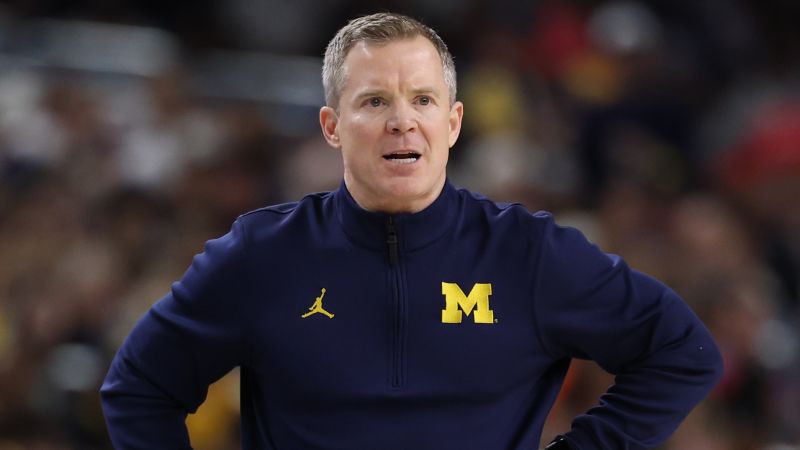
Dusty May’s Departure from Michigan Sparks Uncertainty in College Basketball
Dusty May is leaving Michigan to take – Less than a month into the summer practice window, Dusty May has made a dramatic exit from the University of Michigan, joining the Dallas Mavericks as their new head coach. The move has sent ripples through the college basketball world, raising questions about the stability of programs and the loyalty of coaches in an era of shifting allegiances. While the Protect College Sports Act was designed to curb the turbulence in collegiate athletics, its provisions may not be enough to prevent May’s departure, which feels more like a mid-season upheaval than a planned transition.
The Season’s Unsteady Start
The federal bill, known as the Protect College Sports Act, aims to address the rampant instability in college sports by limiting coaches’ ability to leave mid-season. However, the definition of when the season officially begins remains a point of contention. For college basketball, the summer practice window opened eight weeks prior to the regular season, starting on June 1, 2025. This period has become a critical time for teams to fine-tune their rosters, with several transfers joining the Wolverines in Ann Arbor. Among them were J.P. Estrella, a former Tennessee player; Moustapha Thiam, who transferred from Cincinnati; and Jalen Reed, a big man from LSU. These additions were meant to bolster Michigan’s pursuit of another national championship, but the coach’s abrupt departure has thrown the schedule into disarray.
“He fits exactly what we’re building here,” Michigan head coach Dusty May said of Estrella.
“He’s still improving, too, so we’re ready to get to work,” May added about Thiam.
“Having someone with that experience is important for our program,” he noted regarding Reed.
Despite these reinforcements, the arrival of May’s resignation has created a sense of urgency for Michigan. The Wolverines now face the challenge of replacing their head coach, a task that could take time. The program’s most likely candidate, Justin Joyner, has already accepted a position at Oregon State, leaving the search in limbo. Meanwhile, Mike Boynton, a former Oklahoma State head coach, is being considered as an interim replacement, though his limited NCAA tournament experience may raise eyebrows. Athletic director Warde Manuel will need to act quickly, as the transfer portal season has already closed, and rosters are largely set.
Ripple Effects Across the Collegiate Landscape
The timing of May’s exit has sparked debate over the effectiveness of the Protect College Sports Act. While the bill’s intention is to stabilize college athletics, May’s departure—just three weeks into summer practices—suggests that its rules may not fully address the reality of modern coaching dynamics. In football, a mid-season change of coaches is often seen as a major disruption, but in basketball, the same decision could carry similar weight, especially if it affects a team’s championship prospects.
The players, who had already begun training, now find themselves in a precarious situation. With the season technically underway, they have limited time to adjust to a new coaching staff. NCAA rules grant coaches a 15-day window after their appointment to seek other opportunities, but this period has already passed for May. As a result, the Wolverines are left to navigate the fallout without the benefit of a transition phase. The transfer portal, which had been bustling with activity, is now quiet, leaving players with few options to move if needed.
The chaos surrounding May’s departure has also highlighted a broader trend in college sports. In recent months, the athletic director at Georgia Tech, J Batt, left after just a year to take the helm at Michigan State. Within weeks, May followed suit, joining the Mavericks. This chain of events underscores the fragility of leadership in collegiate athletics and the pressure to make bold moves. While May’s decision to pursue a professional opportunity is understandable, it has raised concerns about the loyalty of coaches and the impact on their teams.
Modeling Behavior in a Turbulent System
May’s departure comes as a reminder of the systemic challenges facing college athletics. During his time at Michigan, he praised his coaching staff for prioritizing the players’ development over personal accolades. “We have an incredibly talented group of coaches that never make it about themselves,” he said in April 2025, following Michigan’s national title win. “Look, this is an ego-driven business. There are a lot of alpha males with great egos and that’s why they’re successful doing what they do. These guys have made our players the No. 1, 2, and 3 priority over their own careers, their own individual attention, and accolades.”
Yet, when the opportunity arose for May to take a more lucrative position in the NBA, he seized it. This contrast between his staff’s commitment and his own decision has left some fans questioning the consistency of leadership in the sport. “It’s hard for our players not to follow the team, which is the staff, when they’re modeling that behavior every day,” May continued. “But when the people they’re meant to pledge loyalty to show so little in return, it becomes harder to criticize the athletes for their own choices.”
The financial incentives of professional basketball have long been a draw for college coaches, but May’s move has intensified the debate. With the Protect College Sports Act in place, coaches are expected to stay committed to their collegiate roles, yet the reality remains that many prioritize financial gain over long-term stability. May’s $10 million salary, which he described as a reasonable return for the resources invested in his team, exemplifies this tension. “If you have to pay—let’s factor in the scholarship and operating budget of our team—and then you have to pay them a salary of, call it $10 million, that’s a pretty good return,” he told Front Office Sports. “And obviously you’re not going to be able to do that every single year. But if you have to, it’s worth it.”
A System in Turmoil
May’s decision to leave Michigan for the Mavericks has been framed by some as a symptom of a deeper crisis in college sports. Critics argue that the system’s structure encourages coaches to act in self-interest, leaving programs vulnerable to sudden changes. The recent exodus of key figures—from J Batt to May—suggests a pattern of instability that could undermine the integrity of collegiate athletics. While the players remain loyal, their coaches’ willingness to jump ship raises questions about the sustainability of the current model.
As the Wolverines scramble to find a replacement, the focus shifts to the broader implications of May’s departure. The Protect College Sports Act was meant to provide a framework for stability, but its success depends on coaches adhering to its rules. May’s early exit may force programs to rethink their strategies, balancing the need for immediate results with long-term loyalty. For Michigan, the loss of a coach who had just led them to a national title is a significant blow, but the team’s ability to recover will depend on how quickly they can find a new leader and adapt to the new reality.
With the transfer portal season over and rosters set, the Wolverines are left to rebuild without the flexibility of a mid-season overhaul. This situation has created a sense of urgency, but it also highlights the challenges of maintaining continuity in a system that prioritizes financial and professional opportunities over institutional commitment. As the NCAA continues to navigate these changes, the question remains: can the rules keep up with the reality of a sport in flux?