
Supreme Court lifts Watergate-era caps on campaign spending
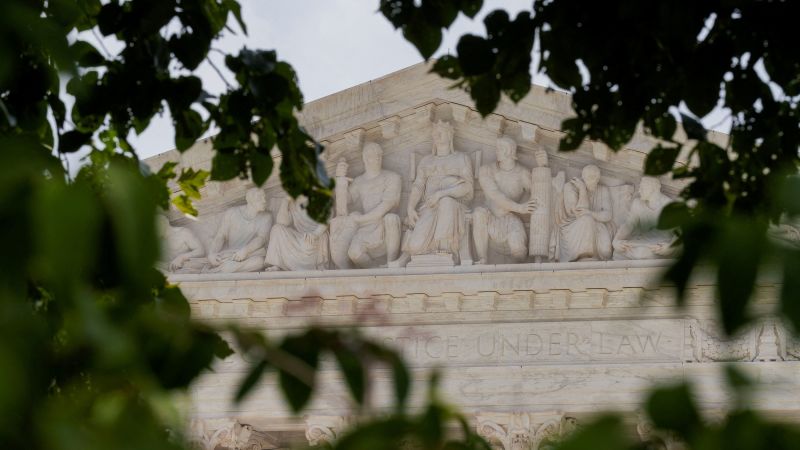
Supreme Court Lifts Watergate-Era Caps on Campaign Spending
Supreme Court lifts Watergate era caps – On Tuesday, the Supreme Court overturned a long-standing campaign spending cap that limited how much money political parties could coordinate with candidates during elections. This decision, which aligns with the Republican Party’s stance, was rooted in a legal challenge initially filed by then-Senate candidate JD Vance. Experts suggest the ruling could provide a significant boost to the GOP in the upcoming midterm elections, which will decide congressional control. The Court’s 6-3 conservative majority, led by Justice Brett Kavanaugh, argued that the outdated restrictions stifled political speech and gave outside groups an unfair edge over traditional party organizations.
Majority Opinion: A Shift in Campaign Finance Priorities
Justice Brett Kavanaugh authored the majority opinion, which emphasized the need to remove barriers to free expression in political campaigns. He contended that the previous precedent, which upheld the spending cap, had enabled nonpartisan groups to dominate the political process at the expense of established parties. “By keeping these limits in place, political parties are relegated to a secondary role in the electoral system,” Kavanaugh wrote. He further asserted that the cap’s persistence has created an imbalance, allowing outside entities to overshadow candidates and their affiliated committees. The ruling, according to Kavanaugh, would restore fairness by enabling parties to operate on equal footing with independent groups.
“Weakened political parties distort the political system,” Kavanaugh added. “They cannot effectively compete with outside groups that have no such restrictions.”
The decision marks a continuation of the Court’s trend of dismantling campaign finance regulations. In recent years, the justices have consistently struck down limits on political spending, signaling a broader philosophical shift toward unfettered fundraising. For instance, in 2014, the Court eliminated aggregate donation caps, allowing donors to contribute unlimited amounts to all candidates and parties over a two-year period. Four years prior, the Citizens United v. FEC ruling had already opened the door for corporations and wealthy individuals to pour unlimited funds into electoral campaigns. This latest ruling seems to reinforce that trajectory, giving political parties greater latitude to mobilize resources.
Dissenting View: A Warning Against Democratic Erosion
Justice Elena Kagan, writing for the liberal dissenters, criticized the decision as a further eroding of campaign finance reforms. She argued that the Court’s actions have gradually dismantled safeguards against political corruption, leaving the system increasingly vulnerable. “I’m not sure what to call a remnant of a remnant, but that is what the Court has left today,” Kagan wrote, highlighting the diminishing role of regulations in preventing undue influence. The dissent warned that the new legal framework would make it harder to ensure the integrity of democratic institutions, as the boundaries between party-aligned spending and independent advocacy blur.
“The legal regime created by these rulings is increasingly unable to stop political corruption, and thus to preserve our institutions’ democratic legitimacy,” Kagan added.
Democrats viewed the decision as a victory for big donors and special interests, fearing it would amplify the influence of wealthy contributors over the Republican agenda. “This ruling is a win for billionaire donors and special interests who want more control over the GOP’s direction,” said Democratic National Committee Chair Ken Martin. He noted that the decision could empower groups with vast financial resources to outspend individual candidates, particularly in key races where Democrats have historically relied on grassroots fundraising. The ruling also raises concerns about the potential for coordinated efforts to sway voter perceptions, as party committees gain access to lower advertising rates traditionally reserved for candidates.
Immediate Impact: A Boost for Republican Campaigns
The decision’s implications are immediate, especially for the midterms. With the caps removed, party committees can now spend more freely in close collaboration with campaigns, leveraging cost-effective advertising channels. This flexibility could allow Republicans to outspend Democrats in critical races, potentially leveling the playing field after years of Democratic candidates outraising their GOP counterparts through small-dollar donations. South Carolina Senator Tim Scott and North Carolina Congressman Richard Hudson, who oversee the Republican Senate and House campaign committees, praised the ruling as a step toward restoring political speech rights. “Striking down these unconstitutional caps on coordinated spending will ensure parties can compete on a level playing field,” they stated in a joint statement.
Meanwhile, Democrats have faced challenges in recent cycles, as individual candidates in pivotal races have often struggled to match the financial firepower of their Republican opponents. Despite this, the Democratic Party has relied on mobilizing small contributors to fund campaigns, a strategy that has yielded mixed results. The new ruling may tip the balance, as party committees gain access to pooled resources that can be deployed strategically. This could be particularly impactful in states where the GOP has historically held the upper hand in fundraising, such as South Carolina and North Carolina, which are key battlegrounds for congressional control.
Historical Context: The Evolution of Campaign Spending Rules
Since the 1970s, campaign spending caps have been a cornerstone of federal election law, designed to prevent excessive influence by wealthy donors. These limits, established during the Watergate era, restricted how much political parties could spend in coordination with candidates, forcing them to rely on outside groups like super PACs to fund advertising and outreach. While super PACs have no spending limits, they are required to operate independently of candidates, creating a dynamic where parties must often cede control of messaging to external entities. This has led to a situation where super PACs, with their vast resources, can dominate the airwaves, while party committees are constrained in their ability to coordinate effectively.
The legal challenge that led to this decision began in 2022, when JD Vance and several party committees, including the National Republican Senatorial Committee, argued that the spending caps violated the First Amendment. Their case aligned with the Court’s growing skepticism of campaign finance regulations, which has seen a series of rulings over the past decade. In 2014, the Court dismantled aggregate donation limits, and in 2018, it struck down a provision preventing campaigns from using post-election funds to repay loans. These decisions have collectively reshaped the landscape of political spending, paving the way for the current ruling that lifts coordinated party spending restrictions.
Broader Implications: A New Era for Political Influence
Political analysts warn that the decision could have lasting effects on the structure of political influence in the United States. By allowing party committees to spend more in coordination with campaigns, the ruling may encourage a shift toward larger-scale, centralized fundraising efforts. This could marginalize smaller donors and grassroots organizations, as candidates increasingly rely on party resources to fund their operations. The ruling also raises questions about the role of transparency in political spending, as the lines between party-aligned and independent expenditures become more blurred.
While Republicans see this as a necessary correction to an outdated system, Democrats argue that the decision disproportionately benefits wealthy donors. “This is an invitation for corruption,” said New York Senator Kirsten Gillibrand, joining Washington Representative Suzan DelBene in condemning the ruling. They pointed to the growing power of super PACs and other outside groups, which have become central to shaping election outcomes. The decision, they claim, allows these entities to further entrench their influence, potentially undermining the democratic process by prioritizing financial might over public participation.
As the midterms approach, the ruling is expected to reshape the dynamics of campaign finance. With the removal of caps, the GOP may gain a strategic advantage, using coordinated spending to amplify their message and counter Democratic efforts. However, the long-term consequences of this shift remain uncertain, with debates likely to continue over the balance between free speech and accountability in politics. The Court’s decision underscores its commitment to expanding the role of money in elections, setting the stage for a new era in political influence and fundraising strategy.
