
Venezuelans deported by the US hours before the deadly earthquake struck are missing
Venezuelans Deported Hours Before Earthquake Tragedy Are Still Missing
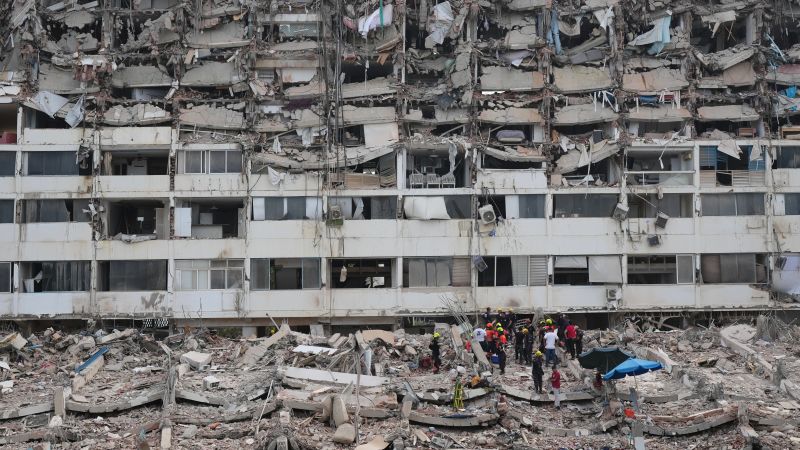
Venezuelans deported by the US hours – More than a week has passed since a catastrophic series of earthquakes struck Venezuela, killing over 1,943 people and leaving countless others unaccounted for. Among those affected were 146 Venezuelans who had been recently deported by the U.S. just hours before the disaster. Their fate remains uncertain as relatives scour the rubble of a collapsed hotel in La Guaira, where they were staying, searching for answers about their loved ones.
A Deportation Flight and a Shattered Hotel
The deportees arrived at Venezuela’s Simón Bolívar International Airport on Wednesday, June 29, following a flight from Miami. According to Venezuelan authorities and the ICE Flight Monitor—a program by Human Rights First tracking deportation flights—the group included 19 women and 7 children. They were then transported to Hotel Santuario in La Guaira, a coastal city north of Caracas. The hotel, which housed the deportees overnight, collapsed during the twin earthquakes that shook the region shortly after their arrival, trapping many inside.
Local officials and residents report that the tremors, described as once-in-a-century events, struck with such intensity that buildings crumbled and infrastructure was devastated. The disaster has left families in despair, with some saying they have yet to find closure. Luis Armando Dasilva, whose sister Amanda Donizete was among the deportees, expressed frustration over the lack of information. “They are not giving us answers about where she is,” he said. “If she is there at a hospital or at the morgue, we have already checked all of that and we haven’t found her.”
The Human Toll and Calls for Burial Rights
“Please, those of you who are here, help us, help us,” pleaded José Gregorio Rincón Ávila, a grandfather of one of the deportees. “We have been waiting many days. We already know those bodies have been there for several days since Wednesday, but at least let us take our loved ones home.”
Ávila’s words reflect the growing desperation of families who are unable to retrieve the remains of their missing relatives. Dasilva echoed this sentiment, emphasizing the urgency to properly bury his sister. “We want our family members—whatever condition they are in—to be laid to rest,” he said. His sister, Amanda, had fled Venezuela’s humanitarian crisis to work in Georgia, U.S., before being sent back home. “She was very happy and wanted to see her family,” Dasilva recalled, though that joy was short-lived.
Meanwhile, Yulis Salcedo, mother of 21-year-old Anderson, shared a poignant moment from the day of the earthquake. She had decorated her home with balloons in the colors of Venezuela’s flag to welcome her son back. “He called me at 5 p.m. and told me ‘I love you so much, Mom. See you tomorrow at home,’” she said in an interview with Reuters. Now, Anderson fights for his life in a hospital, with his legs amputated and his breathing supported by machines. “I want justice because it’s not fair that my son is lying in that bed,” Salcedo said.
U.S. Deportation Policies and Relief Efforts
Days after the disaster, the U.S. has committed resources to assist Venezuela, sending search and rescue teams and allocating over $300 million toward relief efforts. However, the incident has raised questions about the timing of the deportations. In October of last year, the Supreme Court allowed the Trump administration to end Temporary Protected Status (TPS) for 300,000 Venezuelan migrants, enabling their deportation. Since then, hundreds of Venezuelans have been returned to their homeland each week.
As of May, the U.S. had deported 1,746 Venezuelans, according to ICE Flight Monitor. A video shared by a Venezuelan government official showed the deportees arriving at Simón Bolívar International Airport, highlighting their return to the country. Yet, for many, this homecoming turned into a nightmare. One deportee’s wife told CNN that her husband had spent three years in the U.S. building a better life for their family. He was detained by ICE for 15 days before being returned to Venezuela, where the tragedy struck.
“That’s when the tragedy happened,” the woman said, refusing to reveal her name. She now fears her husband may not survive. “Since Friday we have been waiting for an answer to see if (the local authorities) will hand over the bodies to us. Because they say there is no life,” she added, underscoring the anguish of families who feel abandoned.
Seeking Clarity and Support
CNN has sought comments from U.S. Immigration and Customs Enforcement, the Department of Homeland Security, and the State Department to clarify the situation. While the U.S. has pledged aid, the timing of the deportations has sparked debate. Critics argue that sending Venezuelans home just hours before the earthquakes may have increased the risk of loss of life, but officials maintain that the process was necessary for those seeking to reunite with family.
The incident underscores the challenges faced by Venezuelans in their homeland, where economic collapse and political instability have driven mass migration. For those who were deported, the hope of reuniting with relatives was quickly overshadowed by the chaos of the disaster. As the search for survivors continues, the focus has shifted to ensuring the deceased are properly identified and returned to their families for burial.
In the wake of the tragedy, relatives have become both victims and advocates, demanding transparency and support. Their stories—of joy, separation, and loss—paint a stark picture of the human cost of immigration policies and the unpredictable nature of natural disasters. While the U.S. has taken steps to aid Venezuela, the families of the deportees remain in limbo, waiting for news that could change their lives forever.
The collapse of the hotel in La Guaira has also raised concerns about the safety of temporary accommodations for deportees. With the country still reeling from the earthquakes, the recovery process is complicated by the need to balance relief efforts with the demands of families seeking closure. For now, the tragedy continues to unfold, with each passing day bringing new questions and the weight of unanswered prayers.
