After recent losing endorsements, Donald Trump hedges his bet in South Carolina governor’s race

Trump’s Strategic Shift in South Carolina Gubernatorial Race
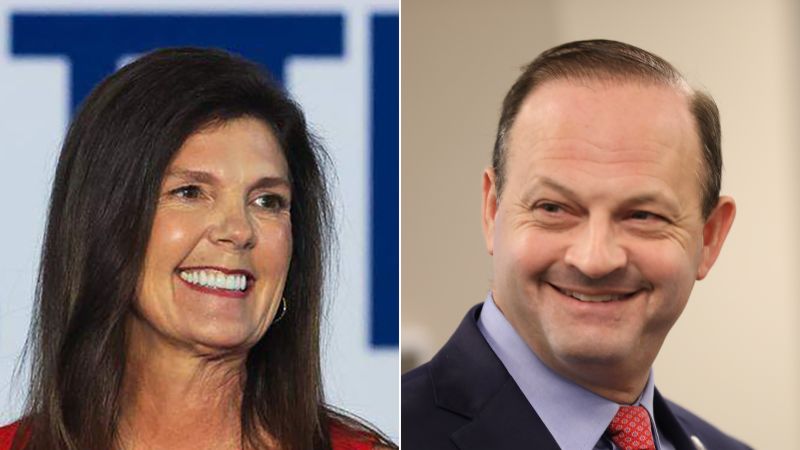
After recent losing endorsements Donald Trump – Following setbacks in recent Republican gubernatorial races in Iowa and Georgia, President Donald Trump adjusted his approach on Friday by endorsing both candidates vying for the South Carolina governor’s seat. This move marks a departure from his previous strategy of backing a single favorite, as he now supports Lt. Gov. Pamela Evette and Attorney General Alan Wilson. “With either one, you can’t go wrong,” Trump stated in a message on Truth Social, signaling his confidence in both contenders despite the political gamble involved.
A Pivot After Previous Defeats
Just weeks prior, Trump had firmly endorsed Evette as his preferred choice for the June 9 primary, calling her his “Complete and Total Endorsement.” However, the outcome of the race revealed Evette narrowly outperforming Wilson, falling short of the 50% threshold required to avoid a runoff. The decision to broaden his support now appears to be a response to the recent losses of his chosen candidates in other states, including businessman Zach Lahn’s victory over Rep. Randy Feenstra in Iowa and healthcare executive Rick Jackson’s win over Lt. Gov. Burt Jones in Georgia.
“I’ve proudly stood with President Trump from the very beginning, defended him when others would not, and fought alongside him against the radical left,” Wilson said in a news release shortly after Trump posted on Truth Social.
While Evette’s campaign highlighted her initial lead, the runoff on June 23 has shifted the narrative. Trump’s endorsement of Wilson, a longtime state attorney general, has galvanized additional support, with several candidates who did not advance to the runoff—such as US Reps. Ralph Norman and Nancy Mace—turning their backing to Wilson. Even US Sen. Tim Scott joined the chorus, endorsing Wilson on Friday. This consolidation of support has raised questions about Evette’s viability in the final vote.
Evette’s campaign, which had previously leveraged Trump’s favor, responded to the latest development by redirecting attention to her own social media post. “I was proud to come in first as President @realDonaldTrump’s endorsed candidate for Governor on June 9th. Looking forward to doing it again on June 23rd,” she wrote. The message underscored her determination to maintain her position as Trump’s chosen candidate, even as the dynamics of the race evolved.
Political Implications of the Endorsement
Trump’s dual endorsement has positioned him as a critical player in a race that could influence the broader political landscape of South Carolina. The state, known for its reliably red voting patterns, has become a focal point for the former president’s efforts to reassert influence. His decision to support both candidates also reflects a pragmatic attempt to mitigate the impact of his past missteps, such as the loss of Rep. Feenstra in Iowa. Trump had publicly criticized his advisors for failing to provide accurate information during that campaign, which culminated in Feenstra’s defeat.
Despite the endorsement, Evette still retains the backing of term-limited former Governor Henry McMaster, a close ally of Trump. This continued support provides her with a strong network, but it may not be enough to counter the surge in Wilson’s favor. The runoff, which follows the June 9 primary, now hinges on the combined influence of Trump’s endorsement and the shifting allegiances of independent voters.
Wilson’s campaign has capitalized on the endorsement by aligning himself with Trump’s brand. His social media profile was promptly updated to reflect the new partnership, emphasizing themes of economic growth and conservative governance. “I am deeply honored to have his support because he understands I am focused on making South Carolina more affordable for families and profitable for businesses,” Wilson said, highlighting the strategic messaging aimed at appealing to both Trump loyalists and moderate voters.
History of Double Endorsements
The Washington Post had earlier speculated about the possibility of Trump endorsing two candidates in South Carolina, a tactic he has employed in the past. Notably, in the 2022 Missouri Senate race, Trump backed both “ERIC” candidates—current Sen. Eric Schmitt and former Gov. Eric Greitens—when they shared the same first name. This precedent suggests a pattern of using dual endorsements to bolster his influence in states where the political climate is uncertain.
By extending his support to both Evette and Wilson, Trump aims to ensure a win in a state he has struggled to dominate in recent elections. The runoff, occurring just a month after South Carolina Republicans rejected a proposal to redraw the state’s congressional map, adds another layer of complexity. The GOP-controlled legislature had failed to pass the measure during a special session, with lawmakers expressing concerns about the timing and fairness of the redistricting process. This failure to secure a legislative win may have prompted Trump to focus on the gubernatorial race as a way to reframe his political impact in the state.
The dual endorsement also underscores the evolving role of Trump in the 2024 election cycle. While he remains a central figure in Republican politics, his ability to dictate outcomes has been tested by recent primary results. In Georgia, his choice of Lt. Gov. Burt Jones was defeated by Rick Jackson, a healthcare executive with a strong grassroots presence. Trump attempted to salvage the situation by praising Jackson’s campaign on Truth Social, declaring it “Very smart!” This tactic highlights his efforts to maintain credibility and unity within the party.
For Evette, the loss of Trump’s singular support has been a significant blow. Her campaign had positioned her as the president’s preferred candidate, leveraging that association to attract voters. However, with Wilson now gaining momentum, the race has become a test of whether Trump’s endorsement can still be a decisive factor in a state where the electorate is increasingly diverse. The runoff on June 23 promises to be a high-stakes contest, with both candidates vying to secure a mandate that could shape South Carolina’s political future for years to come.
As the campaign enters its final stretch, the interplay between Trump’s influence and the candidates’ individual strengths will be key. Evette’s campaign remains optimistic, with her social media presence and personal connection to the president still serving as assets. Wilson, on the other hand, has the advantage of a robust record as attorney general and a broader base of support. The outcome of the runoff will not only determine the next governor of South Carolina but also signal the extent of Trump’s ability to sway state-level politics in his favor.
Broader Context of Trump’s Political Strategy
South Carolina’s gubernatorial race is part of a larger trend in which Trump is recalibrating his strategy to address the challenges posed by a divided Republican base. The dual endorsement allows him to maintain relevance in a state where his influence has waned, particularly after the congressional map redistricting effort failed. This setback highlighted the growing divide between Trump’s core supporters and more moderate Republicans, a trend that may be reflected in the gubernatorial race as well.
By endorsing both Evette and Wilson, Trump has created a scenario where his support could be distributed between two candidates, potentially splitting the vote. However, the decision also ensures that his name remains prominent in the race, which is crucial for maintaining his brand’s visibility. The runoff, therefore, represents a pivotal moment for both Evette and Wilson, as they seek to capitalize on the president’s endorsement and the state’s political climate.
As the June 23 runoff approaches, the race has become a microcosm of the broader challenges facing the Republican Party. Trump’s ability to influence state-level outcomes has been tested, and the results may provide insight into the party’s ability to unite under a common platform. For now, the dual endorsement stands as a testament to his enduring power in the GOP, even as the path to victory becomes more complex than ever before.