
The Milky Way ate another galaxy. Scientists say they’ve found the scraps
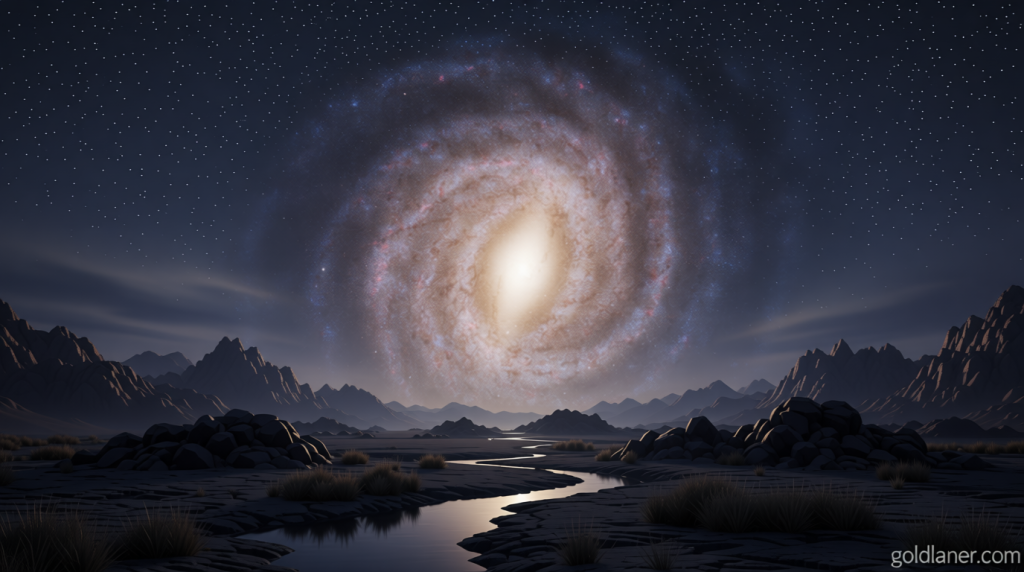
The Milky Way ate another galaxy. Scientists say they’ve found the scraps
Discovery of Ancient Stellar Remnants May Rewrite Galactic History
The Milky Way ate another galaxy – Astronomers have uncovered a peculiar group of stars that could mark the remnants of a dwarf galaxy consumed by the Milky Way approximately 10 billion years ago. Dubbed Loki, after the Norse deity known for his trickery, this finding might offer new insights into the cosmic events that shaped our galaxy’s development. The study, published in the journal *Monthly Notices of the Royal Astronomical Society* in May, suggests these stars are not merely scattered fragments but potential evidence of a significant event in the Milky Way’s early history.
The Milky Way’s Cosmic Growth Through Mergers
The Milky Way, our galactic home, has not always been the sprawling structure it is today. Spanning roughly 100,000 light-years and housing between 100 billion and 400 billion stars, it is a massive entity. However, its formation involved gradual expansion, with mergers playing a pivotal role. Researchers believe that the galaxy began as a smaller system around 12 billion years ago and grew by absorbing numerous dwarf galaxies. These collisions and accretions contributed to its current size, yet the precise origins of its mass remain a mystery.
Identifying the remnants of these ancient encounters is crucial to understanding the Milky Way’s evolutionary path. While most studies have focused on the galaxy’s stellar halo—a diffuse, spherical cloud surrounding the galactic disk—scientists are now examining regions closer to the disk itself. This shift in focus has led to the discovery of a cluster of stars with unusual characteristics, offering clues about a galaxy that may have been devoured in the distant past. The significance of this finding lies in its potential to reveal how the Milky Way incorporated smaller systems to build its present form.
Stellar Clues: Metal-Poor Stars and Their Origins
The key to unlocking this galactic history lies in the composition of certain stars. These metal-lacking stars, which contain minimal amounts of elements heavier than helium, are thought to be among the oldest in the universe. According to the study, their presence near the galactic disk suggests they originated from a dwarf galaxy that was ingested by the Milky Way billions of years ago.
The first stars in the cosmos were primarily composed of hydrogen and helium, with heavier elements formed through nuclear fusion in their cores before being scattered by supernova explosions. As a result, stars that emerged later in the universe’s timeline typically have higher metal content. However, the discovery of these metal-poor stars near the Milky Way’s disk challenges the assumption that such ancient stars are only found in the outer regions. Their proximity implies that the galaxy may have once devoured a substantial object, leaving behind a trail of stellar remnants.
Dr. Cara Battersby, an associate professor of physics at the University of Connecticut, emphasized the importance of these stars in deciphering the universe’s past. “Very metal-poor stars are like time capsules, preserving the chemical signatures of the early cosmos,” she explained in an email. These stars, she noted, could serve as a critical tool for scientists seeking to trace the conditions and dynamics of the universe’s formative years.
Technological Breakthroughs in Observational Astronomy
The identification of these stars relied on advanced observational techniques and data from cutting-edge instruments. The European Space Agency’s Gaia telescope, which mapped the motions and compositions of 2 billion stars across the Milky Way from 2014 to 2025, provided the foundational dataset. Scientists then used the high-resolution spectrograph on the Canada-France-Hawaii Telescope, situated on Maunakea in Hawaii, to analyze the stars’ chemical profiles in greater detail.
Lead researcher Dr. Federico Sestito, a postdoctoral fellow at the University of Hertfordshire, explained that the challenge of locating metal-poor stars near the galactic disk stems from the abundance of young, metal-rich stars in the region. “The galactic disk is a bustling environment, filled with newer stars and dense dust clouds,” Sestito said. “This makes it difficult to detect older stars that may have been swallowed by the Milky Way.” Despite this, his team pinpointed 20 such stars in close proximity to the disk, a discovery that could reshape understanding of the galaxy’s formation.
The stars’ age, though not definitively established, appears to predate 10 billion years. Additionally, their chemical compositions are remarkably similar, indicating a shared origin. This uniformity suggests they were once part of a single dwarf galaxy, which the Milky Way may have consumed during its early expansion. The team also noted that the stars’ orbital patterns—some moving in the same direction as the galactic disk (prograde) and others in the opposite (retrograde)—mirror the dynamics of a disrupted dwarf galaxy.
Implications for Galactic Evolution and Future Research
This discovery raises intriguing questions about the Milky Way’s past. If these stars are remnants of a larger galaxy ingested by our own, it could mean that the process of accretion involved more significant events than previously thought. The study highlights the possibility that the galactic disk itself may have retained traces of these ancient mergers, challenging the notion that such evidence is confined to the halo.
“Studying these stars allows us to piece together the galaxy’s history like a cosmic puzzle,” said Dr. Sestito. “They act as markers, revealing the gravitational interactions that shaped the Milky Way.” The findings also underscore the need for further exploration of the disk’s stellar population, as it may hold untapped clues about the galaxy’s origins.
Scientists continue to investigate whether the observed patterns could be linked to dark matter. Some theories propose that the gravitational effects of dark matter might have influenced the movement of these stars, creating the orbital anomalies detected. While this connection remains speculative, it opens new avenues for research into the interplay between visible matter and the elusive dark matter that permeates the universe.
Understanding the Milky Way’s Early Feasting
The existence of Loki’s stellar remnants suggests that the Milky Way’s early expansion was marked by intense activity. If the galaxy devoured a larger system, it would have significantly increased its mass and altered its structure. This process, known as hierarchical galaxy formation, is central to modern astrophysical models. However, the precise details of these mergers remain unclear, and the study of metal-poor stars could help fill in the gaps.
Dr. Battersby highlighted the broader significance of these findings. “These stars are not just relics; they’re windows into the past,” she said. “By studying their composition and movement, we can learn about the environments in which they were born and the forces that shaped the Milky Way.” The discovery of Loki’s remnants also reinforces the idea that the galaxy’s evolution is a continuous process, with each merger contributing to its current form.
Astronomers plan to expand their search for similar stellar groups, hoping to uncover more evidence of the Milky Way’s ancient interactions. This work could lead to a more comprehensive understanding of how galaxies like ours grow and transform over billions of years. The study of metal-poor stars, in particular, remains a vital field, as their chemical signatures provide a unique glimpse into the early universe’s stellar nursery.
As researchers delve deeper into the data, they may uncover additional pieces of this galactic puzzle. The Milky Way’s history, once thought to be dominated by the absorption of smaller dwarf galaxies, now appears to involve more complex interactions. These findings not only challenge existing models but also inspire new questions about the role of mergers in shaping the universe’s largest structures. With tools like Gaia and spectrographic analysis, scientists are gradually reconstructing the story of how our galaxy became the vast system it is today.
