
‘Time is not in Russia’s favor’: Battlefield losses and economic pain pile pressure on Putin, European spy chief says
‘Time is not in Russia’s favor’: Battlefield losses and economic pain pile pressure on Putin, European spy chief says
Stalemate and Strain on Putin’s War Effort
Time is not in Russia s favor – Russian President Vladimir Putin faces increasing pressure to reconsider his strategy in Ukraine, as both the front lines and domestic conditions have shifted against him. Kaupo Rosin, the head of Estonia’s Foreign Intelligence Service, warned CNN that Putin’s ability to maintain control over the conflict may be waning. In an interview at Tallinn’s intelligence agency headquarters, Rosin emphasized that the leader of Russia is “no longer able to negotiate from a position of strength,” citing a combination of economic, military, and societal challenges.
“Time is not in Russia’s favor,” said Rosin, who has spent years analyzing Moscow’s actions from Estonia’s vantage point. “I do not hear any more talk about total victory. People in the Kremlin recognize that the situation on the Ukrainian battlefield is not going too well.”
Estonia, a former Soviet republic now a NATO ally, has become a strategic hub for monitoring Russia’s movements. Rosin described the country as a “listening post” that provides critical insights into the dynamics of the war. He noted that while Russia initially appeared to be gaining ground, recent trends suggest a more precarious situation. “The advances they’ve made have slowed significantly this year,” he explained, highlighting the challenges in maintaining momentum.
Drone Warfare and the Cost of the Conflict
The war’s progression has been marked by a heavy reliance on drone technology, which has become a defining feature of modern combat. Rosin argued that the balance between the two sides in this domain has fluctuated over time, but Ukraine’s recent advancements have disrupted Russia’s dominance. “The share of Shahed drones shot down by interceptor drones has doubled over the past four months,” said Ukraine’s defense minister, Mykhailo Fedorov, during a recent briefing. This shift, Rosin suggested, might limit the potential for large-scale territorial changes on the front lines.
Analysts from the Washington-based Center for Strategic and International Studies (CSIS) and other experts report that Russian forces have averaged about 70 meters of territorial gain per day over the past two years, with approximately 1,000 soldiers killed or wounded daily. However, this progress has stalled this year, with Russia struggling to maintain its gains. “Even those minuscule advances have come to a stuttering halt,” Rosin noted, adding that the war has reached a critical juncture.
Russian casualties have surged in recent months, with US Secretary of State Marco Rubio stating last week that the country is losing “15,000 to 20,000 soldiers a month dead—not injured, dead.” The Ukrainian defense ministry reported 35,203 Russian troops killed or severely wounded in April, a figure consistent with the prior two months. While CNN has not independently verified these numbers, both sides have been reluctant to publish official casualty figures, raising questions about transparency.
Internal Stability and the Risk of Mobilization
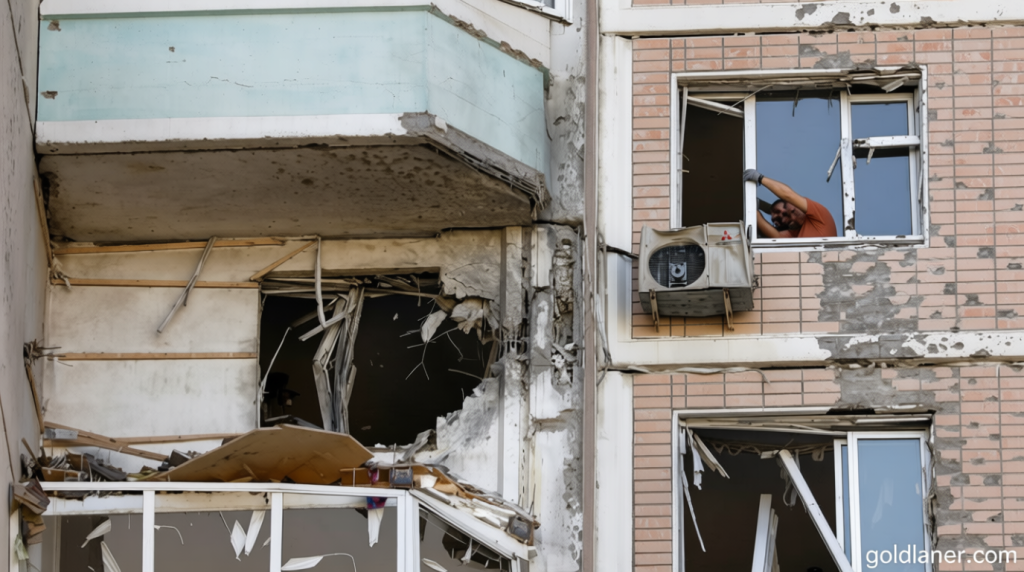
Despite the military setbacks, Russia’s leadership remains focused on consolidating its gains, but the strain on its population is growing. Rosin pointed out that the war is no longer just a foreign campaign—it is beginning to impact Russians at home. “The war is coming, war is at home,” he said, referencing recent drone attacks on Moscow that have alarmed citizens and stirred public sentiment.
Rosin also warned that further military escalation could threaten Russia’s internal stability. “If the Russians were able to mobilize another couple of hundred thousand more people to the battlefield, that would be a problem for Ukraine,” he said. However, such a move would “create additional internal stability risks” for the Kremlin, which is already under pressure from protests and a significant exodus of men avoiding conscription. “They are very concerned about internal stability, monitoring it very carefully… This is not the decision they would make very easily,” he added.
Earlier this year, Moscow initiated a partial mobilization of reservists, a move that drew widespread public backlash. The September 2022 order, issued seven months after the full-scale invasion began, led to protests and a mass departure of potential recruits. Since then, recruitment has depended on regional governments offering substantial bonuses and other benefits to volunteers. But as Russia’s economy faces mounting pressure, these incentives have become harder to sustain.
Sanctions and the Energy Sector
The economic toll of the war is evident in Russia’s revised growth forecast. Last week, Moscow cut its annual growth projection from 1.3% to 0.4%, with Deputy Prime Minister Alexander Novak citing labor shortages, excessive government spending, and Western sanctions as key factors. Rosin highlighted that Ukraine’s attacks on Russia’s oil industry have played a major role in this economic decline. “Kyiv has inflicted billions and billions of dollars’ worth of damage to the energy sector,” he said, noting that refineries, export hubs, and pipelines hundreds of miles inside Russia have been targeted by long-range drones.
Rosin stressed that these strikes are not just symbolic—they are reshaping the conflict’s dynamics. “The cost of the war, international sanctions, and the assault on Russia’s oil infrastructure are beginning to bite,” he explained. This economic strain, combined with the human toll on the battlefield, is creating a dual crisis that could force Putin to seek a resolution. “The war has become a homefront issue,” he said, emphasizing the growing unease among Russians about the war’s sustainability.
Strategic Implications and the Road Ahead
As the war drags on, the question remains: will these pressures compel Putin to change course? Rosin acknowledged that it is unclear how recent developments have influenced the leader’s decisions. “Where is the moment he understands the real situation?” he asked, suggesting that Putin’s response to the crisis may depend on a variety of internal and external factors. “The military is losing more men than it can recruit, and the economy is struggling,” he said, painting a picture of a nation stretched thin.
While Russia continues to push for control over Ukraine’s eastern Donbas region, Rosin argued that achieving this goal would require a “forced mobilization” of additional troops. Such a move, however, could exacerbate domestic tensions and weaken the government’s grip on the population. “The Kremlin is very careful about how it manages internal stability,” he said, noting that public sentiment is a crucial factor in shaping Russia’s strategy. “If they were to mobilize again, the backlash might be even stronger.”
Amid these challenges, Estonia’s intelligence chief remains a key observer of the conflict. His analysis underscores the interconnectedness of military and economic factors, as well as the growing influence of drone warfare. “The balance between the two sides in drone technology has shifted back and forth as the war has progressed,” Rosin said. But he believes that Ukraine’s progress in countering Russian attacks is a turning point. “The war is no longer just about military dominance—it’s about survival.”
Rosin’s insights reflect a broader trend in European intelligence circles, where analysts are increasingly concerned about Putin’s ability to sustain the war effort. The combination of stalled advances, rising casualties, and economic difficulties has created a scenario where Russia may be forced to negotiate, even if it means ceding territory. “The pressure is building, and it’s not just external,” he said. “It’s coming from within the country as well.”
With the war entering its third year, the stakes have never been higher. The Kremlin’s ability to maintain control over its military and economy will determine the outcome of the conflict. For now, the European intelligence chief’s warning stands as a sobering assessment of Putin’s position. “Time is not in Russia’s favor,” he reiterated, “and the longer the war continues, the more it will test the limits of the regime.”
