
1 dead, 36 injured in shipyard explosion and fire on Staten Island, officials say
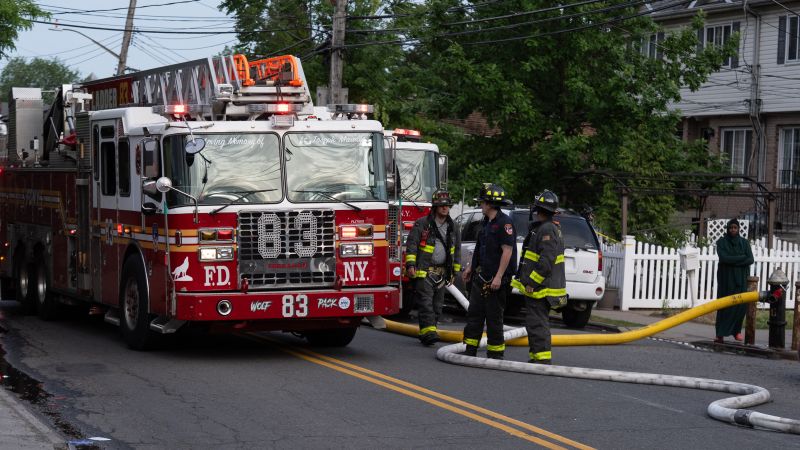
Staten Island Shipyard Explosion and Fire: 1 Dead, 36 Injured
1 dead 36 injured in shipyard – On Friday, a devastating incident unfolded at a New York City shipyard, leaving one individual deceased and 36 others injured, city officials confirmed. The event, which involved a fire and two consecutive explosions, occurred at the rear of a metal structure measuring 150 feet by 150 feet. Most of the injured were firefighters and first responders, while one civilian perished on-site, according to the latest updates from the fire department.
Fire Commissioner Lillian Bonsignore described the scene as one of urgency, recounting that several people called emergency services around 3:30 p.m., reporting smoke and the entrapment of two workers in the basement of the structure. Within six minutes of the initial call, firefighting and emergency medical crews had arrived, launching a rescue operation. However, the situation escalated rapidly when an explosion struck shortly after their arrival, inflicting severe injuries on multiple firefighters and a few civilians.
Second Explosion and Casualties
The second explosion, which transpired while a firefighter and a fire marshal were inside the building, unleashed a powerful shock wave that caused critical injuries to both individuals. Chief of Department John Esposito elaborated on the unfolding crisis, stating that five firefighters and paramedics were actively searching for the trapped workers within the structure, as well as on its exterior, when the second blast occurred. This led to additional casualties, with the most severe injuries sustained by the fire marshal and the firefighter who were directly exposed to the blast’s force.
“This was a complex, fast-developing emergency situation,” said New York Mayor Zohran Mamdani during a news conference on Friday evening. The mayor emphasized the challenges faced by responders, highlighting the need for swift action and coordinated efforts to mitigate the damage.
Following the explosions, the focus shifted to stabilizing the injured. Dr. David Prezant, the fire department’s chief medical officer, provided an update on the condition of the fire marshal, who was admitted to the hospital in critical but stable condition. He suffered a fractured skull and a small brain bleed, and medical teams are closely monitoring him to ensure there is no subsequent brain swelling. The firefighter, who was transported to the hospital in serious condition, is currently being observed for potential muscle injuries, though Prezant noted they are optimistic about their recovery.
As the incident progressed, the fire remained active but under control by Friday night. Mamdani assured the public that over 200 firefighters were still on-site, working to extinguish the flames and secure the area. The mayor also mentioned that a comprehensive investigation into the cause of the fire would begin as soon as possible, aiming to uncover the sequence of events that led to the disaster.
Witness Accounts and Surrounding Area
Richard Oviogor, a local resident who was nearby, shared his experience with WABC-TV. He described the moment of the explosions as a “big shock wave,” which rattled the area and left him in awe. “It felt like the ground was shaking under my feet,” Oviogor said. The shipyard’s location in a bustling part of Staten Island means the impact of the incident could be felt across several nearby businesses.
The area is known for its diverse operations, including a coffee roasting company and a self-storage facility. These establishments, while not directly affected by the explosion, may have experienced disruptions due to the shockwave and the subsequent evacuation of the surrounding zone. The shipyard itself has a rich history, having been previously owned by the Bethlehem Steel Company. During World War II, this company played a pivotal role in constructing ships for the U.S. Navy, contributing significantly to the war effort. Over the years, the site has undergone various transformations, but its industrial legacy remains a notable part of Staten Island’s heritage.
Emergency responders faced an uphill battle as they navigated the chaotic aftermath of the explosions. The confined space of the metal structure added to the danger, with Esposito cautioning that such environments pose unique risks for rescuers. “Confined spaces are very dangerous operations for any rescuers,” he stated. The speed and intensity of the incident underscored the importance of quick decision-making and the coordination among different emergency units.
While the immediate focus has been on treating the injured and extinguishing the fire, authorities are now looking into the broader implications of the event. The investigation will examine factors such as the structural integrity of the building, the presence of flammable materials, and the protocols in place for handling emergencies in industrial settings. Officials have also begun assessing the damage to the shipyard and its surrounding infrastructure, with plans to determine the extent of the economic and environmental impact.
Community members and local businesses are rallying to support the victims and their families. The event has sparked discussions about workplace safety and the need for improved emergency preparedness in industrial zones. With the fire under control and the injured receiving medical attention, the community is now waiting for the investigation’s findings to understand how this tragedy could be prevented in the future.
Staten Island, a borough known for its industrial heartland, has experienced its share of accidents. However, the scale of this incident has drawn significant attention, not just from the local residents but also from the broader New York City community. The response to the explosion and fire has been a testament to the dedication of first responders, who worked tirelessly to save lives and contain the damage.
As the situation continues to evolve, officials remain vigilant. Mamdani reiterated the need for transparency and thoroughness in the investigation, stating that the community’s trust is vital in the aftermath of such
