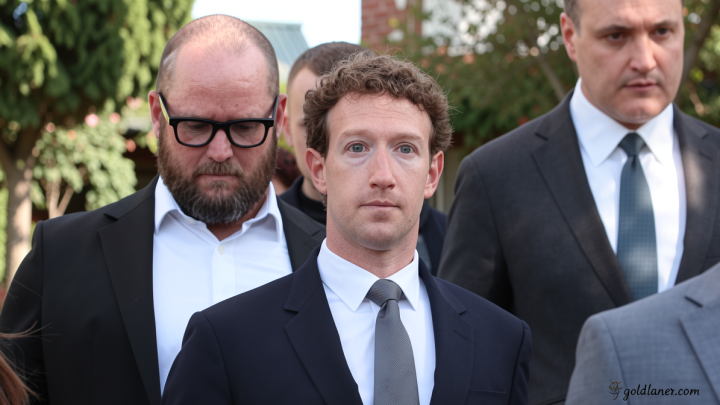
How Tim Cook made Apple one of the world’s most valuable companies

Daftar Isi
Apple’s Next Chapter Begins as John Ternus Steps Into the CEO Seat
Goldlaner.com – On September 1, the most powerful technology company on Earth will hand its top leadership role to a hardware engineering executive named John Ternus. The man leaving that chair, Tim Cook, departs after a fifteen-year tenure that transformed Apple from a beloved consumer-electronics brand into a corporate entity whose market value briefly touched $5 trillion in July — a threshold only one other company in history had ever crossed. The scale of what Cook accomplished during his watch is difficult to overstate: Apple’s share price climbed more than 2,000 percent while he sat at the helm, a run that placed the firm among the most valuable corporations ever assembled.
Yet the story of Cook’s era cannot be told solely through product launches or revenue figures. It is equally a story of negotiation, geopolitical balancing, and the quiet exercise of executive judgment under conditions that would have overwhelmed less steady leadership.
From Supply-Chain Architect to Global Statesman
Cook arrived at the CEO position in August 2011 carrying deep expertise in operations and logistics — the machinery that moves components from factory floors to retail shelves across dozens of countries. What distinguished him, however, was not merely technical competence. Colleagues who worked alongside him during the Steve Jobs era recall a man of unusual composure and deliberation. Ron Johnson, who ran Apple’s retail division from 2000 through 2011, described Cook — then chief operating officer — as the most measured voice in weekly strategy sessions with Jobs and the broader executive team.
“He was perhaps the most thoughtful of the executive team members,” Johnson recalled. “He would always listen first and speak when he had something to add.”
That temperament proved decisive once Cook inherited the role. The United States and China — the two markets most critical to Apple’s iPhone empire — entered a period of sustained diplomatic friction during his tenure. Maintaining productive relationships with both governments while simultaneously diversifying manufacturing away from Chinese soil was, by most accounts, an almost paradoxical task. Gene Munster, managing partner at Deepwater Asset Management and a long-time Apple observer dating back to 2004, characterized Cook’s dual role bluntly: the former CEO was as much a statesman as a corporate executive.
“I don’t know how you do that,” Munster said of Cook’s ability to court Chinese consumers and leadership while shifting production elsewhere. “I don’t know if that dynamic makes sense.”
Dodging Tariffs Through Investment
One of the most consequential decisions of Cook’s final years involved the Trump administration’s sweeping tariff agenda. Rather than capitulate to demands that all iPhone assembly move to American soil — a logistical impossibility on any near-term horizon — Cook committed Apple to a $600 billion investment in U.S. operations, including the domestic production of critical iPhone components. The move effectively neutralized the tariff threat without forcing an abrupt and costly reshuffling of the global supply chain.
The personal dimension of that negotiation was notable. During Trump’s first term, the president acknowledged that Cook was among the very few corporate leaders who had personally telephoned him. Jeffrey Sonnenfeld, senior associate dean for leadership studies at the Yale School of Management and a former White House advisor, placed Cook near the top of any list of executives who earned the president’s grudging respect.
“In terms of CEOs that Trump has come to respect, Tim Cook would be very high on the list,” Sonnenfeld observed.
The iPhone as Infrastructure
Beyond geopolitics, Cook’s most visible legacy is the way he embedded the iPhone into the daily rituals of billions of people. Under his direction, the device evolved from a communications gadget into a payment terminal, a fitness tracker, a music-streaming hub, and a wallet for transit passes. The web of services and accessories that Cook championed over the past decade made the phone feel less like an optional purchase and more like essential infrastructure — comparable, in daily reliance, to a utility connection.
“(Cook) managed to scale the iPhone to a level that no one would have thought was likely or possible over that period of time,” said David Yoffie, a professor at Harvard Business School who authored a case study examining Apple and its former CEO.
What Ternus Inherits
The challenges facing the incoming CEO are substantial and, in several respects, more complex than anything Cook confronted at the start of his own tenure. Europe — Apple’s second-largest market — has grown increasingly assertive in its regulatory posture. The company was compelled to restructure how it operates the App Store within the region, and its redesigned version of the Siri voice assistant will not launch there because of European Union rules that constrain certain data-handling practices.
Artificial intelligence presents a second front. Apple’s most recent major hardware venture, the Vision Pro spatial-computing headset, failed to generate the consumer momentum the company had hoped for, leaving the firm under pressure to demonstrate credible AI capabilities. Compounding that pressure, a global shortage of memory chips — driven by the insatiable demand of data-center builders racing to outfit AI systems — has forced Apple and its competitors to raise product prices, squeezing margins at precisely the moment consumer spending is most scrutinized.
Still, Cook offered his successor a guiding principle during one of his final earnings calls as CEO, delivered in April. The advice was characteristically simple and characteristically Cook: build things that make people’s lives richer, and let that standard drive every strategic choice.
“If you keep focusing on that and make your decisions around that, it will produce a great business,” he told Ternus. “And we’ll be able to build more products and do it all over again.”
Whether Ternus can translate that philosophy into competitive advantage while navigating EU antitrust scrutiny, chip-supply volatility, and the expectations of a $5-trillion shareholder base remains the defining question of Apple’s next chapter. What is certain is that the bar Cook set — in market performance, in diplomatic navigation, and in the sheer ubiquity of the iPhone — will be extraordinarily difficult to match.
Related Reading
Frequently Asked Questions
What is How Tim Cook made Apple one?
How Tim Cook made Apple one is the main topic of this guide. The article explains the context, practical details, and next steps readers should understand.
Why does How Tim Cook made Apple one matter?
How Tim Cook made Apple one matters because readers are looking for a useful answer, not just a short summary. Good content should match search intent and help them decide what to do next.