
A Decades-Old Texas Mystery Finally Reaches the Courtroom
Goldlaner.com – Jury selection is set to begin Monday in a case that has haunted one family for more than four decades. James Dolphs Elmore Jr., 61, will soon stand before a Harris County jury facing one count of manslaughter and two counts of felony evidence tampering. At the center of the prosecution’s case is Tim Miller, 79, a father who has spent roughly half his adult life searching for answers about what happened to his daughter in a quiet stretch of coastal Texas.
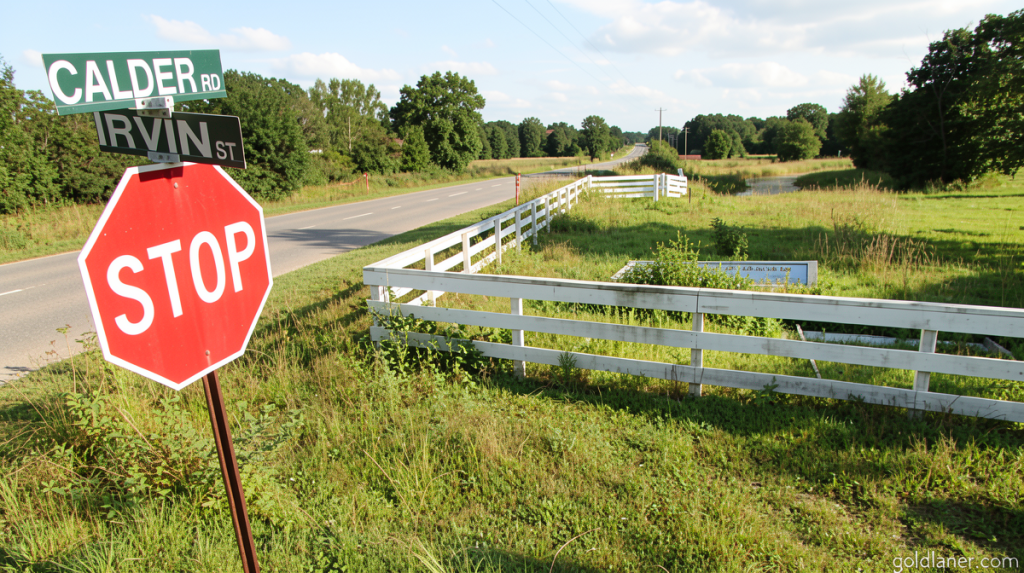
The charges stem from events that unfolded in a 25-acre parcel of land near Calder Road in League City, a small community wedged between Houston and Galveston along the Interstate 45 corridor. Between 1984 and 1991, the remains of four young women surfaced in that isolated patch of terrain. The site sits within what investigators and local residents have come to call the “Texas Killing Fields,” a stretch of highway where approximately 30 slain women and girls have been recovered since the 1970s.
The Field and Its Victims
The four women discovered in the League City plot came from disparate walks of life, yet their stories converged in the same dirt and undergrowth. The earliest of them, Heidi Fye, was a 25-year-old bartender sometimes known by the names Heide or Heidi Fye-Villareal. She was last spotted at a neighborhood convenience store before disappearing in 1983. On April 6, 1984, a neighborhood dog carried partial skeletal remains back to its owner’s home in the 1300 block of Ervin Street, according to League City police. Investigators then combed the woods along Ervin Street and Calder Road and recovered the remainder of Fye’s remains.
Five months after Fye’s disappearance, another young woman walked out of that same convenience store and never made it home. Laura Lynn Miller, 16, was a high school sophomore who dreamed of a singing career but battled debilitating seizures that made both social and academic life difficult. Her family had recently relocated from nearby Dickinson to League City, and the household telephone had not yet been installed.
“Laura asked if she could go to a payphone to call her boyfriend since her family’s phone was not yet connected,” the FBI said. “On September 10, 1984, her mother drove her to the payphone, and Laura planned to walk the half-mile back home.”
When Laura failed to return, local police treated the situation as a runaway case and assured the Miller family that she would eventually call. No such call ever came. The family was left without answers, without a body, without closure.
Two Bodies, One Identified, One Lost
On February 2, 1986, two boys riding bicycles through the field stumbled upon the remains of two females lying feet apart from one another. Dental records allowed investigators to confirm that one of the victims was Laura Miller. The other woman, however, could not be identified. For the next three decades she was referred to simply as “Jane Doe.”
A separate discovery followed on September 8, 1991, when two horseback riders found the body of a fourth woman in the same field. Authorities again lacked identifying information, and the victim was labeled “Janet Doe” for nearly 28 years.
DNA Closes the Loop
Between 2016 and 2019, advances in genetic genealogy and modern DNA testing finally gave names to both unidentified women. “Jane Doe” was confirmed as Audrey Lee Cook, a 30-year-old mechanic who had worked at several Houston companies before vanishing in December 1985. Cook was described by her aunt, Shirley Love, as a free spirit who loved riding a motorcycle and camping. When Cook’s regular letters to her family in Memphis stopped arriving, relatives assumed she was simply off on an adventure. It took 33 years before Love learned what had truly happened to her niece.
“Janet Doe” was identified as Donna Prudhomme, a 34-year-old mother of two sons. Her sister, Dianne Gonsoulin-Hastings, told the FBI that Prudhomme’s first marriage had been abusive, prompting her to leave with her children. After a subsequent relationship ended, Prudhomme struggled financially. She placed her sons with their grandmother and attempted to rebuild her life in Clear Lake, Texas. The last communication Gonsoulin-Hastings received from her sister came in 1989. For more than three decades, the family continued searching.
A Father’s Long Vigil
Tim Miller’s decades of unanswered grief eventually found an outlet beyond his own family’s tragedy. He founded a nonprofit organization dedicated to helping thousands of other families locate missing loved ones, channeling personal anguish into a broader mission of advocacy and investigation. Yet for his own daughter, justice remained out of reach until a man named James Dolphs Elmore Jr. reached out to him.
Elmore is now accused of helping dispose of both Laura Miller’s and Audrey Cook’s bodies and of contributing to Laura’s death. If convicted, he will become one of the few individuals held criminally accountable for crimes committed within the Texas Killing Fields corridor, a region where dozens of cases have gone unsolved for generations. The trial represents a narrow but significant crack in what has long been a wall of silence along Interstate 45, and for the Miller family it marks the first time a courtroom will examine, in detail, what happened to a 16-year-old girl who walked a half-mile from a payphone and never walked home.
Related Reading
Frequently Asked Questions
What is His daughter s body was found?
His daughter s body was found is the main topic of this guide. The article explains the context, practical details, and next steps readers should understand.
Why does His daughter s body was found matter?
His daughter s body was found matters because readers are looking for a useful answer, not just a short summary. Good content should match search intent and help them decide what to do next.