
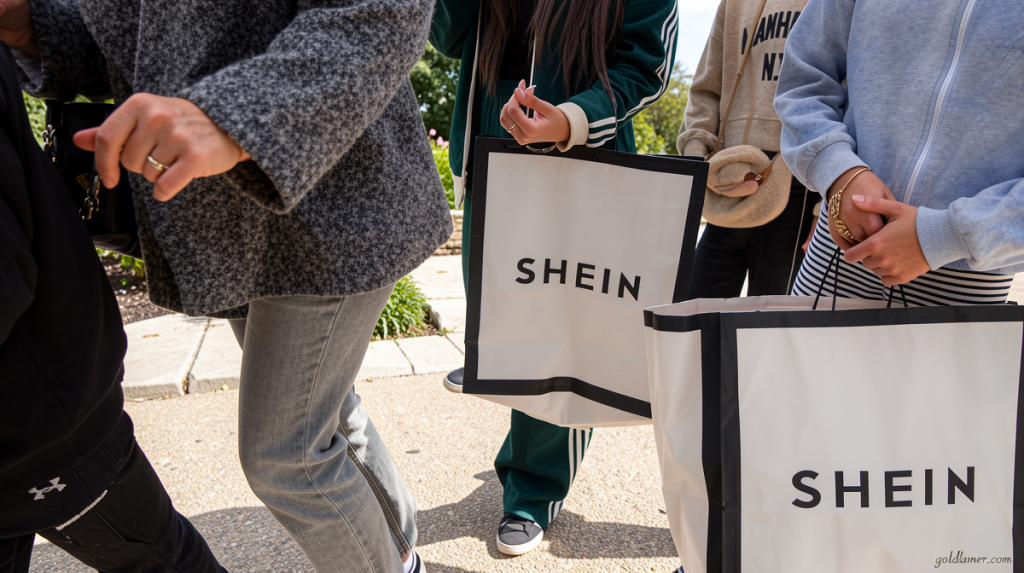
Shein’s Dressed for Its Long-Awaited HK Debut
Goldlaner.com – Shein’s dressed for its long-awaited market debut in Hong Kong, and the bell rings Tuesday. The ultrafast-fashion retailer that once turned a viral TikTok clip into $11 jeans within days is finally listing after years of aborted attempts in New York and London. What greeted the company’s meteoric rise a few years ago, however, has been replaced by a far more cautious reception — one shaped by collapsing valuations, tariff shocks, and unresolved labor controversies.
From $98 Billion to $26 Billion: A Valuation Collapse
The prospectus filed last week targets roughly $1.7 billion in fresh capital, pricing the company at approximately $26 billion. That figure sits more than 70 percent below the $98.2 billion peak Shein commanded in 2022. The gap between those two numbers captures how rapidly sentiment has turned, driven by intensifying competition, shifting trade policy, and persistent questions about environmental footprint and labor practices.
The financial trajectory underscores the shift. Per the July prospectus, net income fell 39 percent year over year even as revenue kept climbing. By the first quarter of this year the company had slipped into the red, posting losses of $99 million. Analysts attribute the deterioration to a confluence of factors none of which was foreseeable when the firm last traded near the century-billion mark.
Tariff Walls and the End of a Cost Advantage
The single most consequential policy change has been the elimination of the de minimis exemption in the United States, Shein’s second-largest market after Europe. Under that rule, small parcels shipped directly to consumers entered tariff-free. Paired with a supply chain rooted in Chinese factories, the exemption let the company deliver trend-driven garments at prices no traditional retailer could match. Its removal has stripped away a core pillar of that cost advantage.
Europe followed suit last month, dismantling a comparable exemption within the bloc. The simultaneous tightening on both sides of the Atlantic has compressed already-thin margins and forced near-overnight rethinking of logistics, pricing, and sourcing strategies.
“It has absolutely missed the best timing for an IPO,” said Jin Lu, senior vice president of The Asia Group consultancy. “Everyone is watching to see whether there’s still room for growth, and how much room there is. And competition, if anything, has intensified.”
The Disruption Model Under Strain
Founded in China in 2012, Shein fused a domestic manufacturing base with aggressive social-media marketing aimed at teenagers and young adults. Where traditional fast-fashion houses like Zara and H&M might take weeks to move a design from runway to rack, the company compressed that cycle to days, reacting to micro-trends on Instagram and TikTok in near real time.
“Shein took the fast fashion model, which is frequent release of new products, and just put it on steroids,” said Louise Deglise-Favre, lead apparel analyst at GlobalData. “The way that they’ve been really disruptive is because they’re so fast — any small trend that popped up on social media, they were able to supply a demand instantly.”
By last year’s sales figures, Shein ranked as the third-largest global apparel brand, trailing only Nike and Adidas, with Zara and H&M just behind. GlobalData projects the company will hold that position through the current year. Still, the competitive field has grown denser, with other Chinese e-commerce players replicating the same rapid-turnaround playbook. Shein’s dressed for its long-awaited listing, but the question now is whether the growth runway still exists.
Forced-Labor Allegations and Political Scrutiny
The ascent has been shadowed by controversy. Environmental groups have criticized the waste generated by hyper-fast product cycles, while independent designers and smaller retailers have accused the company of copying their designs. More politically charged has been the question of whether garments in the supply chain incorporate cotton grown in China’s Xinjiang region, home to the Uyghur minority.
In 2023, a Congressional Commission concluded there were “credible allegations of the company’s use of underpaid and forced labor” in Xinjiang, a finding it said violated US law. Beijing publicly rejected those claims. Shein has consistently denied employing forced labor anywhere in its supply chain and previously stated it did not source cotton from Xinjiang or from China at all. Yet at a UK parliamentary hearing early last year, lawmakers pressed the company for greater transparency on supplier audits.
Frequently Asked Questions
When does Shein list in Hong Kong?
The company is scheduled to ring the opening bell on Tuesday, following its prospectus filing last week. The offering targets approximately $1.7 billion in proceeds at a valuation near $26 billion.
Why did Shein abandon its New York and London listing plans?
Regulatory friction, shifting trade-policy environments, and a deteriorating macro backdrop made the Asian market a more viable venue. The pivot to Hong Kong also aligns with the company’s Chinese founding and manufacturing base.
How has the de minimis tariff change affected Shein’s economics?
The elimination of the US de minimis exemption — and Europe’s parallel move last month — removed the tariff-free channel that underpinned the company’s ultra-low direct-to-consumer pricing. Margins have compressed, forcing restructuring of logistics and sourcing.
What is Shein’s current global market position?
The company ranked as the third-largest global apparel brand by last year’s sales, behind Nike and Adidas. GlobalData expects that ranking to persist through the current year, though competitive pressure from other Chinese e-commerce players continues to intensify.