
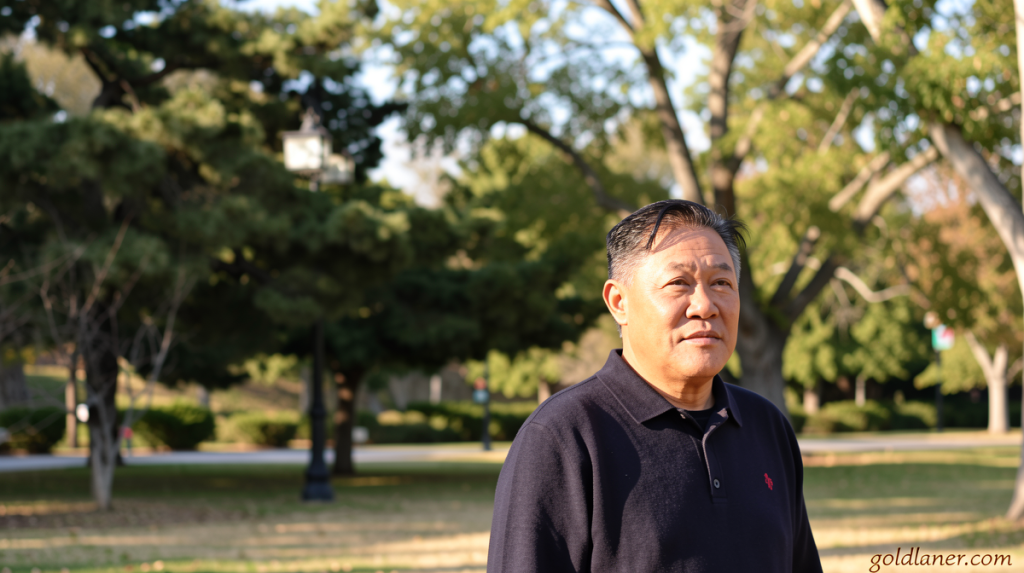
Purple Heart Recipient Pardoned in New York After Self-Deportation to South Korea
Goldlaner.com – A 57-year-old Korean-born veteran of the United States Army has received a gubernatorial pardon in New York State, wiping out the two criminal convictions that ultimately forced him to leave the country he had served in combat. Sae Joon Park, who self-deported to South Korea in mid-2025 after a tense encounter with immigration enforcement agents, now holds legal grounds to petition for vacatur of his removal order — a development that could, over time, allow him to re-enter the United States.
The pardon, issued by New York Governor Kathy Hochul on Friday, erased Park’s 2009 conviction for second-degree bail jumping and his 2007 conviction for third-degree criminal possession of a controlled substance. He was one of six individuals granted clemency in that batch of commutations.
“They have displayed positive changes in their lives and will dedicate themselves to bettering their communities — they earned their second chance through rehabilitation and can now establish their futures once again,” the governor’s office said in a statement accompanying the announcement.
From Child Refugee to Combat Soldier
Park’s path into American military service began in childhood. At age seven, he traveled alone from South Korea to Miami after his parents’ divorce, joining his mother on a green card. The family later resettled in Southern California, where Park completed high school and enlisted in the US Army.
In 1989, he deployed with the US invasion of Panama. During a firefight, he was struck twice — once in the spine and once in the lower back. He was awarded the Purple Heart, the medal conferred on service members wounded or killed in action. The distinction would prove consequential decades later, when immigration officials weighed whether to execute his removal order.
PTSD, Probation, and a Flight to Hawaii
After returning stateside, Park struggled with what he would later identify as post-traumatic stress disorder. To manage the pain, he turned to drugs. In 2007, New York police arrested him while purchasing narcotics. He was convicted of third-degree criminal possession of a controlled substance and placed on probation with court-ordered drug testing.
Fearing he would fail a scheduled test, Park fled New York, missed a required court appearance, and drove to Hawaii to stay with family. US marshals eventually located the household and knocked on the door while he was out. His relatives persuaded him to surrender. He was convicted of second-degree bail jumping — a charge classified as an aggravated felony under federal immigration law — and sentenced to prison in New York. He was released in 2011.
ICE Detention and a Narrow Reprieve
Court records obtained by his attorney show that Immigration and Customs Enforcement agents were waiting at the prison gate when Park was released. An immigration judge had issued a removal order the previous year based on his criminal convictions. He spent six months in ICE detention before being released under a deferred-action arrangement — a form of prosecutorial discretion that pauses deportation without conferring lawful status.
His attorney, Danicole Ramos, previously explained that the deferral rested on the “equities of being a Purple Heart veteran.” His childhood green card was revoked, and he was barred from leaving the country, but he was permitted to remain and work legally. For roughly 15 years, he did exactly that.
The Check-In That Ended Everything
The arrangement collapsed during a routine immigration check-in last June. An ICE officer cited Park’s prior removal order and threatened on-the-spot detention, Ramos said. A deal was struck: Park would avoid immediate custody if he wore an ankle monitor and self-deported within three weeks. He complied, boarding a flight back to South Korea — the country he had left as a seven-year-old.
His case gained national visibility in December, when members of Congress pressed then-Homeland Security Secretary Kristi Noem during a heated hearing about noncitizen veterans swept into President Donald Trump’s sweeping immigration crackdown. Park was among several veterans who self-deported or were expelled under that policy environment.
What the Pardon Does — and Does Not — Do
The gubernatorial pardon does not automatically restore Park’s right to enter the United States. However, Ramos said, it supplies the legal basis for him to seek vacatur of the removal order, removing the aggravated-felony conviction that anchored the deportation mandate. How long that process will take remains unspecified.
“This pardon represents a tremendous step forward and gives Mr. Park and his family renewed hope that, after more than a year of separation, he may one day be able to return to the country he has called home since childhood and for which he put his life on the line,” Ramos said in a statement.
“I still cannot believe this has happened. I am incredibly grateful to Governor Hochul for giving me this chance and for recognizing that I am more than the mistakes I made many years ago,” Park said in a statement issued through his attorney.
The Department of Homeland Security, when asked previously about Park’s case, pointed to his criminal record as justification for deportation. No further comment had been provided as of publication.
The episode underscores a tension at the intersection of military service, immigration enforcement, and state clemency power. Veterans who served in combat — some wounded, some decorated — can still find themselves subject to removal orders rooted in decades-old convictions, particularly where those convictions carry the aggravated-felony label that triggers mandatory deportation under federal law. New York’s pardon mechanism, available only for state-level offenses, offers a narrow but meaningful avenue to sever that link, at least in states where the governor exercises the power. For Park, the pardon is not a ticket home; it is, as his attorney framed it, a step forward in a process whose duration and outcome remain uncertain.
Related Reading
Frequently Asked Questions
What is US Army veteran pardoned for crimes?
US Army veteran pardoned for crimes is the main topic of this guide. The article explains the context, practical details, and next steps readers should understand.
Why does US Army veteran pardoned for crimes matter?
US Army veteran pardoned for crimes matters because readers are looking for a useful answer, not just a short summary. Good content should match search intent and help them decide what to do next.