
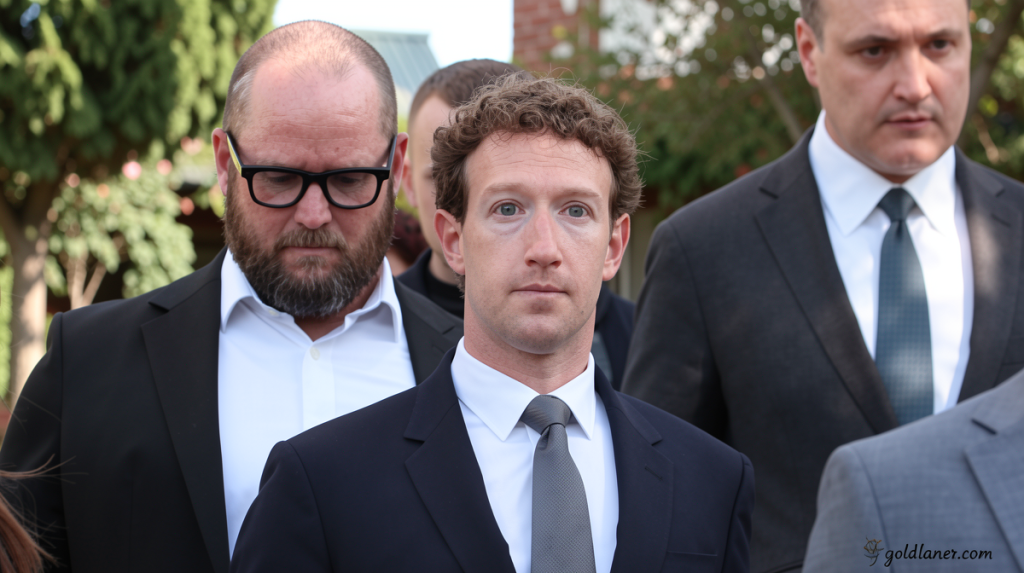
Meta Faces $1.4T Addiction Trial in Oakland
Goldlaner.com – Meta is back in the courtroom, and this time the stakes dwarf anything the company has previously endured. On Tuesday, a federal judge in Oakland, California, presided over the opening of what legal analysts describe as the largest social-media addiction suit ever brought. Attorneys general from California, Colorado, Kentucky, and New Jersey took the stand to press claims against Meta — the corporate umbrella over Facebook, Instagram, WhatsApp, and Threads — seeking damages that top out at $1.4 trillion, a sum that rivals the company’s entire market capitalization.
How the Suit Took Shape
The litigation’s roots stretch to 2023, when a bloc of 29 state attorneys general joined forces to allege that Meta’s product architecture was built with one overriding goal: locking young users into their devices. The complaint singles out recommendation engines, infinite-scroll feeds, reaction buttons, and push-notification systems as purposeful engagement traps rather than neutral design decisions. It further charges that Meta suppressed findings from its own internal research showing measurable harm to minors, and that it collected personal data from children under 13 without parental consent in breach of the Children Online Privacy Protection Act (COPPA).
In their opening statements, the plaintiffs’ team framed Meta’s advertising-funded model as a deliberate trade-off: maximize minutes-on-screen at the expense of adolescent well-being. They also highlighted public comments by Meta executives — in interviews and shareholder letters — expressing doubt that the platforms cause meaningful harm to young users, which the states characterize as knowing misrepresentations.
“Meta designed a dangerous product for young users, knew it to be dangerous, and then lied to children, families, and the community about how dangerous it was,” California Attorney General Rob Bonta said in a statement the week before trial. “We are ready to hold Meta accountable for its role in fueling the mental health crisis of American children and look forward to trial.”
Meta’s Counter-Narrative and Legal Shields
The company has pushed back hard. A Monday statement from a Meta spokesperson branded the allegations “unsubstantiated” and called the trillion-dollar ask “vastly disproportionate.” The spokesperson argued that the states offered no proof their residents were actually deceived, that routine features like a secondary Instagram account caused measurable injury, or that the suit amounts to punishing Meta for industry-wide challenges such as age verification.
“Rather than sticking to the facts or the law, the states have instead decided to chase an outlandish payout,” the spokesperson said.
Meta’s defense is expected to rest on two principal shields. Section 230 of the Communications Decency Act generally insulates platforms from liability for third-party content, while the First Amendment, the company argues, protects its editorial and design judgments. On the COPPA prong, Meta contends the states must show the company knowingly failed to remove a substantial number of under-13 accounts — and notes that every major social platform struggles to identify minors online.
What a Verdict Would Mean Beyond the Headline Number
The states have also sought injunctive relief: a court order forcing Meta to redesign default settings, notification architecture, algorithmic recommendation logic, or data-collection practices for younger users. Even a damages award well below the trillion-dollar ceiling would send shockwaves through the sector, because Snap, TikTok, and YouTube are already entangled in parallel suits from individuals, school districts, and state governments. Commentators have likened this wave of litigation to Big Tech’s “Big Tobacco moment,” echoing the decades of litigation that reshaped the cigarette industry once internal documents exposed suppressed health data.
Meta has already absorbed just under $1 billion in damages from two individual-plaintiff verdicts of this type. Tuesday’s trial, however, operates on a different order of magnitude entirely. A ruling here would set a precedent that extends far beyond one company’s balance sheet, potentially rewriting how every major platform designs for minors.
Frequently Asked Questions
Where is the trial being held? The case is proceeding in a federal courtroom in Oakland, California, with opening arguments delivered on Tuesday.
How much are the states seeking? The four plaintiff states — California, Colorado, Kentucky, and New Jersey — are pursuing damages that could reach $1.4 trillion, alongside injunctive relief requiring product changes.
What legal