Iran’s man in charge: Who is the negotiator leading Tehran through talks with the US?

Iran’s Man in Charge: Key Negotiator in US Talks
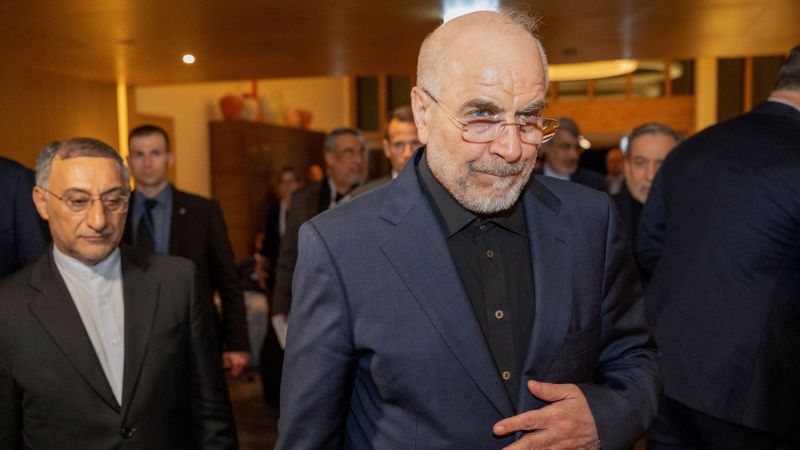
Iran s man in charge – Iran’s man in charge, Mohammad Bagher Ghalibaf, has taken center stage in the country’s diplomatic efforts with the United States. As Iran’s top negotiator, he recently arrived in Zurich, Switzerland, marking the beginning of critical talks between Tehran and Washington. His presence was significant, with his senior role and the symbolic weight of the moment drawing attention. Accompanied by the foreign minister and other high-ranking officials, Ghalibaf’s actions highlighted his importance in the ongoing negotiations. He shared a photograph on X, the former Twitter platform, of himself on the tarmac alongside the aircraft, the fuselage of which displayed the Iranian flag. The image, captioned with the hashtag “#Mindab168,” referenced a U.S. attack on an elementary school in southern Iran that killed 168 people earlier this year.
The Rise of Ghalibaf in Iranian Leadership
Ghalibaf’s ascent to his current position reflects a mix of political resilience and strategic timing. At 64 years old, he has become a central figure in Iran’s leadership following a series of high-profile strikes by the U.S. and Israel that targeted top Iranian officials. Supreme Leader Ali Khamenei and Ali Larijani, a key architect of Iran’s military and diplomatic strategies, were among those lost in these attacks. The loss of these leaders created a leadership vacuum, which Ghalibaf, as speaker of the Iranian parliament, has filled with his composed demeanor and practical approach. Analysts suggest that his rise was not only due to experience but also a result of eliminating rivals, a process that has cemented his influence in Tehran.
“Ghalibaf’s prominence stems from both his tenure and the removal of competitors, leaving him as a pivotal voice in Iran’s current political landscape,” noted Ali Vaez, Iran project director at the International Crisis Group.
Ghalibaf’s background as a former air force commander and his role within the Islamic Revolutionary Guard Corps (IRGC) have shaped his diplomatic style. The IRGC, which has grown stronger in the wake of U.S.-Israel strikes, has positioned Ghalibaf as a bridge between Iran’s hardline factions and its foreign policy goals. His leadership in these negotiations comes at a crucial juncture, as the country recovers from nearly four months of intense conflict. The talks, however, are not just political—they are deeply rooted in the emotional aftermath of the March attack that left 168 Iranians dead.
Strategic Reckoning in US Negotiations
The recent meeting between Ghalibaf and U.S. Vice President JD Vance in Islamabad, Pakistan, marked the highest-level direct dialogue between Iranian and American officials since the 1979 Islamic Revolution. During this encounter, Ghalibaf emphasized the deep mistrust Iran holds toward the Trump administration, recounting his statement: “We entered these negotiations with complete distrust of you,” as reported by Islamic Republic of Iran Broadcasting (IRIB). This sentiment underscores the broader skepticism Iran has toward Washington, particularly after the U.S. decision to assign Ghalibaf as the lead negotiator.
“The decision to name Ghalibaf as the lead negotiator was likely influenced by Washington’s desire for a figure with greater authority than the foreign minister,” explained Ali Ahmadi of the Geneva Center for Security Policy and Middle East Institute.
Ghalibaf’s role as a conservative pragmatist has allowed him to balance hardline security policies with flexible diplomacy. While maintaining a firm stance on national defense, he is seen as a potential partner for the Trump administration, which views him as a rare Iranian official capable of blending influence with negotiation readiness. Despite this, his recent social media responses to Trump’s threats reveal that he has not abandoned his assertive rhetoric, even as he engages in talks with the U.S.
Trump’s Approach and Ghalibaf’s Response
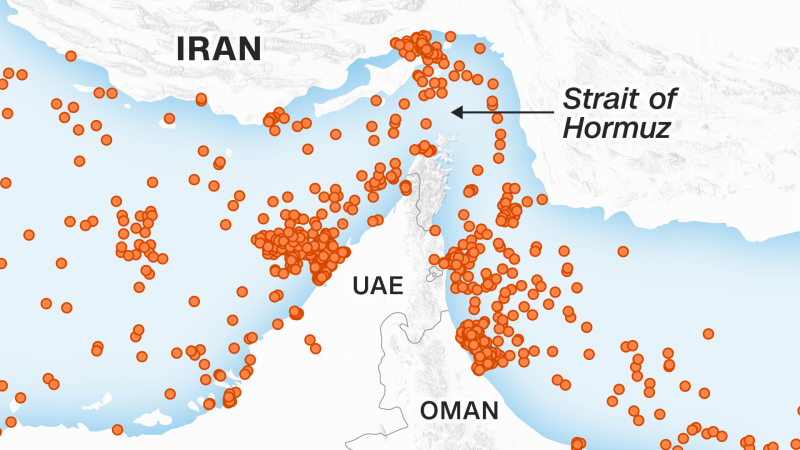
During a televised interview with Fox News this weekend, former President Donald Trump appeared to signal his determination to press Iran further. He warned that if the Strait of Hormuz were closed, Iran would “not have a country” and would “not even make it back to your f**king country.” This aggressive stance highlights the pressure exerted on Ghalibaf during the negotiations. As Iran’s man in charge, he faces the challenge of navigating these threats while maintaining the country’s strategic interests.
“Trump’s remarks underscore the intensity of the U.S. position, placing Ghalibaf in a tough spot as he seeks to balance defiance with diplomacy,” observed Vaez.
Ghalibaf’s performance in these talks will be pivotal in shaping Iran’s future relations with the United States. His ability to represent both the nation’s hardline security priorities and its willingness to engage in dialogue could determine the success of the negotiations. As the talks progress, the role of Iran’s man in charge will remain central to the evolving dynamics between Tehran and Washington, reflecting the broader geopolitical tensions at play.