Russia is still inching forward in eastern Ukraine, but experts say claims of progress are exaggerated

Russia’s Slow Advance in Eastern Ukraine Faces Doubt from Analysts
Experts question whether recent territorial gains are real or part of a broader information campaign
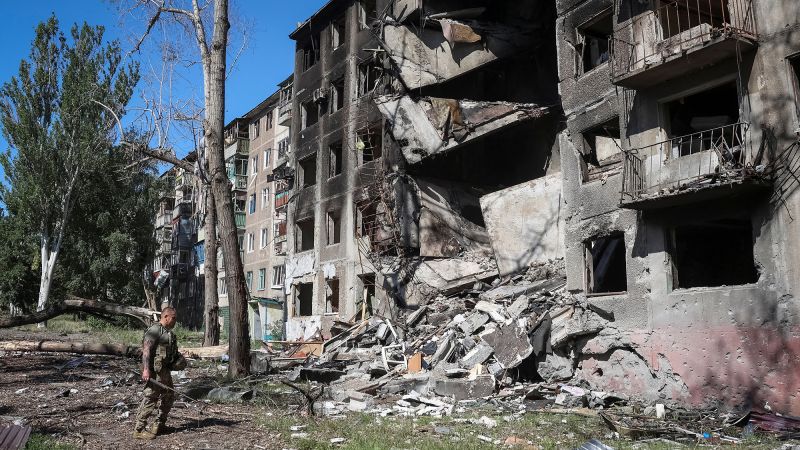
Russia is still inching forward in eastern – Amid escalating tensions in eastern Ukraine, Russian forces have been making incremental progress in the Donetsk region, where they have deployed the majority of their military assets. However, outside analysts and frontline Ukrainian troops suggest that these advances may be overstated, with the Kremlin seeking to bolster its narrative of success through strategic messaging. The focus of the conflict remains on Kostyantynivka, a critical city dubbed the “fortress belt,” and nearby Lyman, where Russian troops are attempting to surround key Ukrainian positions. Yet, the situation on the ground appears more complex than the official reports imply.
According to the Washington-based think tank Institute for the Study of War (ISW), Russia’s claims of control over eastern Kostyantynivka are misleading. The city has become a contested “gray zone,” with neither side fully occupying all areas. This ambiguity reflects a broader pattern of tactical maneuvering, as Russian forces rely on small, stealthy infiltration missions rather than full-scale advances. ISW’s Russia team lead, Kateryna Stepanenko, explained that these operations involve limited numbers of soldiers—often just one or two—moving into Ukrainian-held positions. “These are not advances, but infiltrations,” she said. “They’re not establishing consolidated control. It’s a slow, grinding effort to wear down the enemy’s defenses.”
“They still need quite a lot of time and resources to turn these small gains into real strategic footholds,” Stepanenko added, emphasizing that Russia’s tactics are designed to create the illusion of progress while minimizing exposure.
Meanwhile, Ukrainian soldiers on the front lines describe the situation as worsening, though they remain confident in their ability to hold ground. Kostiantyn Melnykov, a press officer for Ukraine’s 24th Mechanized Brigade, told CNN on Tuesday that the Kostyantynivka sector has seen a noticeable decline in stability. “The enemy is intensifying their airstrikes in this area,” he noted. “It’s a constant pressure, but we’re managing it.” Despite the challenges, Melnykov stressed that Russian movements remain sluggish, and Ukrainian units continue to counteract their efforts by eliminating enemy troops and destroying equipment.
Russia’s broader objective is to capture the entire Donbas region, a crucial industrial and logistical hub that forms the backbone of Ukraine’s defense. This area, including Kostyantynivka and surrounding settlements, is a primary target for Moscow. Yet, analysts argue that the current pace of operations makes this goal seem increasingly distant. “The Russian military is still struggling to break through Ukrainian defenses,” said Yuriy Madyar, acting deputy commander of Ukraine’s 19th Army Corps, in an interview with the national broadcaster Suspilne last week. “We see single soldiers advancing, but they’re not able to sustain pressure.”
The use of small infantry groups to infiltrate cities has become a hallmark of Russia’s strategy. This method was notably employed in the capture of Pokrovsk earlier this year, where months of combat followed initial incursions. Infiltration allows Russia to minimize casualties while creating the appearance of territorial expansion. However, this approach also exposes vulnerabilities, as Ukrainian forces can target isolated units and disrupt supply lines. The same tactic is now being used in Kostyantynivka, where the city’s eastern half has been claimed by Russian officials, but Ukrainian troops continue to contest the area.
Experts believe Russia is intensifying its infiltration efforts to offset recent setbacks and align with a looming deadline. Reports suggest the Kremlin has set a target for seizing Donbas by September, a timeline that could influence the pace of operations. ISW has raised concerns that Russian officials are using AI-generated footage to support their claims of progress. For instance, the Russian Ministry of Defense recently shared a video of troops raising a flag in Lyman, which the think tank could not independently verify. “There’s reason to believe the footage may be altered,” Stepanenko said, highlighting how such tactics help Russia project dominance without necessarily securing long-term gains.
Weather conditions are also playing a role in Russia’s strategy. The summer’s greenery and favorable climate provide cover for advancing forces, while drone operations become more effective. However, this advantage is not exclusive to Russia, as Ukrainian forces have similarly leveraged the same conditions. “Both sides are adapting to the environment,” said Melnykov, who noted that Ukrainian troops are using drones to monitor Russian movements and anticipate their next steps.
The psychological impact of these tactics cannot be ignored. By making premature declarations of victory, Russia aims to demoralize Ukrainian forces and gain international support. Stepanenko pointed out that the Kremlin is capitalizing on vulnerabilities exposed by recent attacks on Russian-occupied territories, including Crimea and Kherson. “Infiltrations allow them to declare major successes without fully occupying the area,” she explained. “This helps mask the fact that their actual gains are limited.”
Despite the challenges, Ukrainian commanders remain optimistic about their defensive capabilities. “Our forces are holding back the enemy’s overwhelming numbers,” Melnykov stated, citing the effectiveness of Ukrainian resistance. “We’re not just defending; we’re disrupting their plans.” This resilience is partly due to the tactical flexibility of Ukrainian units, which have adapted to the slower pace of Russian advances. “Every inch they take, we counter with more than they expect,” said Madyar, emphasizing the importance of sustained local efforts.
As the conflict drags on, the distinction between progress and propaganda becomes sharper. While Russia’s advances are real, they are often accompanied by exaggerated claims to justify continued operations. The Donbas region, with its dense network of industrial cities and infrastructure, remains a symbolic and strategic prize. Yet, the question lingers: can Russia truly control this area, or is it merely inching closer to a goal that feels increasingly out of reach?
For now, the situation in Kostyantynivka and Lyman continues to evolve. The city’s contested status underscores the complexity of the war, where control shifts rapidly and the line between victory and stalemate blurs. As ISW and Ukrainian soldiers monitor the front lines, the battle for Donbas remains a critical test of both sides’ endurance and adaptability. Whether the Kremlin’s September deadline is met or not, the narrative of progress will likely continue to shape the perception of this ongoing conflict.