
Kim Jong Un inspects new nuclear plant, plans ‘exponential’ weapons production ramp-up
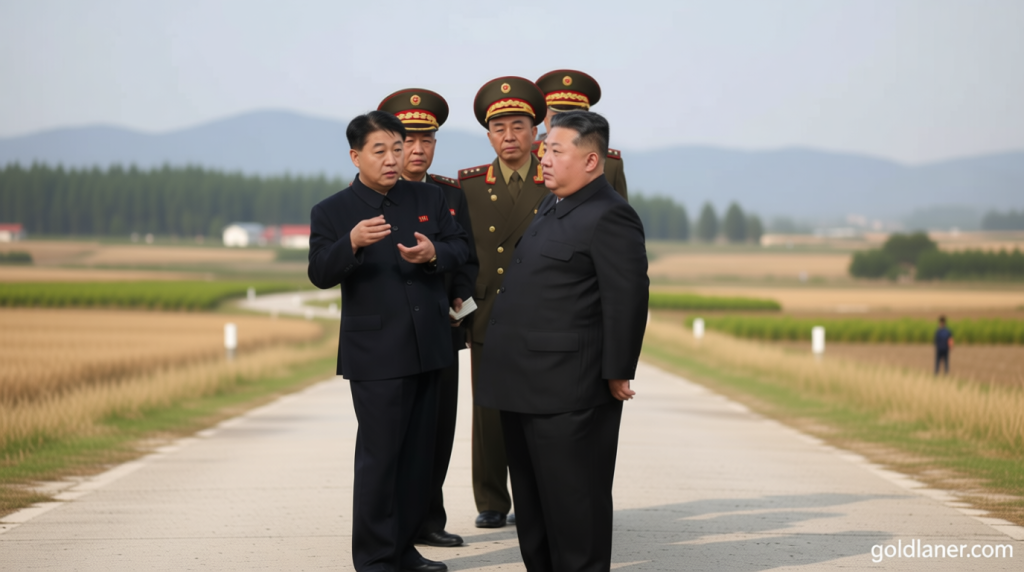
Kim Jong Un Tours Advanced Nuclear Facility, Announces Accelerated Weapons Production
Kim Jong Un inspects new nuclear – North Korean leader Kim Jong Un visited a newly constructed nuclear facility on Wednesday, signaling a significant expansion of the nation’s nuclear capabilities. State-run media reported that Pyongyang aims to “intensify its nuclear forces at an exponential pace,” according to the Korean Central News Agency (KCNA). The facility, which produces weapons-grade nuclear material, is part of a broader strategy to bolster the country’s nuclear deterrent. Kim emphasized that the nation’s capacity for nuclear material production has more than doubled over the last five years, a development that underscores his administration’s commitment to strengthening the military’s strategic arsenal.
The recent inspection aligns with a five-year plan that was initiated after stalled negotiations with the United States, including three meetings between Kim and former President Donald Trump during his first term. These talks, which focused on denuclearization, ultimately failed to produce a lasting agreement, prompting North Korea to redirect efforts toward expanding its nuclear infrastructure. The timing of the announcement coincides with Washington’s attempts to resolve a months-long conflict with Iran, aiming to secure Tehran’s agreement to halt nuclear material development that could be weaponized.
Nuclear Facilities and Production
The new plant, whose location remains undisclosed by KCNA, is described as employing “advanced technology” in the latest state media coverage. Images shared by North Korea depict Kim walking among rows of centrifuges, suggesting the facility is operational. However, experts note that the exact nature of the plant—whether it is the recently reported Yongbyon facility or an unannounced site—remains unclear. The International Atomic Energy Agency (IAEA) previously highlighted the construction of a new building at Yongbyon, which mirrors the infrastructure of the Kangson enrichment plant. This includes power supply systems and cooling capacities, indicating a scaling-up of nuclear production efforts.
“The new building is externally complete and internal fitting is likely underway,” stated the IAEA report, which adds to growing concerns about North Korea’s nuclear ambitions. The agency’s findings align with recent testimonies from the U.S. Defense Intelligence Agency, where Lt. Gen. James Adams noted the potential for an additional uranium enrichment facility at Yongbyon. This development could further enhance Pyongyang’s ability to manufacture warheads, though the facility inspected by Kim may or may not be the one referenced in the intelligence assessment.
North Korea’s nuclear program has been a focal point of international scrutiny, particularly following its successful test of intercontinental ballistic missiles (ICBM) capable of targeting the entire U.S. territory. The 2026 Annual Threat Assessment, released by the Office of the U.S. Director of National Intelligence, confirmed these advancements, noting the country’s consistent missile testing in recent years. Kim’s praise for nuclear scientists during the inspection highlights the central role of the program in national security strategy.
Global Trends and Strategic Implications
Analysts suggest that North Korea’s nuclear buildup reflects a larger global pattern, with nations investing heavily in nuclear capabilities to ensure deterrence. The 2026 edition of a key intelligence report underscores this trend, noting that the country’s nuclear potential is now “unimaginable” in scale. Hong Min, a senior research fellow at the Korea Institute for National Unification in Seoul, commented that the new facility marks a critical phase in the program’s evolution. “The focus has shifted from research to mass production,” Hong stated, pointing to the presence of officials from the munitions industry and the Nuclear Weapons Institute during the inspection.
By showcasing the facility’s control room, processing systems, and module zones, North Korea is strategically emphasizing its readiness to produce nuclear weapons in large quantities. This approach contrasts with earlier displays of flashy missile tests or military parades, which often captured global attention but provided less insight into the actual production process. The emphasis on infrastructure suggests a long-term plan to sustain high levels of nuclear output, independent of short-term diplomatic fluctuations.
The new plant’s construction follows a series of inspections by Kim, with state media releasing images of him visiting nuclear facilities at least three times since September 2024. These visits have been interpreted as a demonstration of North Korea’s growing confidence in its nuclear capabilities. The country already possesses enough material for up to 90 warheads, with estimates suggesting around 50 have been assembled, according to a March report by the Congressional Research Service.
Strategic Shift in North Korea’s Nuclear Program
Kim’s recent statements reveal a deliberate shift in strategy, prioritizing the development of a robust nuclear deterrent over the pursuit of diplomatic solutions. This comes amid ongoing tensions with the United States, where Trump’s administration has been criticized for dismantling a previous agreement with Iran to monitor its nuclear program. Critics argue that Trump’s first term saw the termination of the Obama-era deal, which aimed to curb Iran’s enrichment activities. Now, with the US-Israeli conflict with Iran persisting, Trump is reportedly seeking a similar agreement to limit Pyongyang’s nuclear progress.
Despite these diplomatic challenges, North Korea’s nuclear advancements continue to grow. The International Atomic Energy Agency’s monitoring of Yongbyon’s new building suggests that the facility may soon contribute to the country’s production capacity. Meanwhile, a separate incident involving a Russian ship, which sank under mysterious circumstances, may have been transporting submarine nuclear reactors to the region, further linking North Korea to global nuclear dynamics.
Experts view Kim’s emphasis on mass production as a calculated move to solidify North Korea’s position as a nuclear power. The state media’s focus on the facility’s operational features—such as centrifuge arrays and processing pipelines—signals an intention to project readiness to any potential adversaries. This strategy is part of a broader effort to assert dominance in regional and global security, leveraging nuclear capabilities as both a shield and a weapon.
As North Korea continues to scale its nuclear program, the implications for international relations grow more complex. The country’s ability to rapidly increase production capacity challenges the effectiveness of diplomatic agreements and highlights the need for updated strategies to address its evolving nuclear posture. With Kim’s leadership driving this expansion, the global community watches closely for further developments in Pyongyang’s bid to establish itself as a nuclear superpower.
