
US Marine Corps retires the first fighter jet that didn’t need a runway
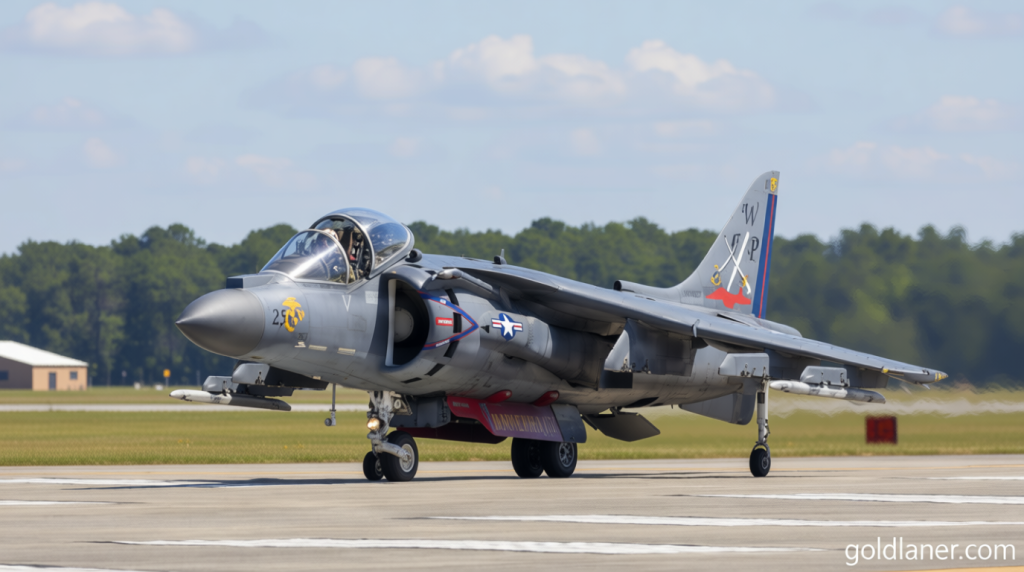
US Marine Corps Retires the First Fighter Jet That Didn’t Need a Runway
US Marine Corps retires the first – The US Marine Corps has formally concluded the service of the AV-8B Harrier II, a groundbreaking vertical takeoff and landing (V/STOL) aircraft that defined Marine aviation for nearly five and a half decades. On Wednesday, the final chapter of the Harrier’s operational history was marked at a poignant “sundown” ceremony held at Marine Corps Air Station Cherry Point in North Carolina. Around 5,000 attendees gathered to witness the last public display of the iconic jet, which showcased its ability to hover, take off, and land vertically—features that made it a standout in military and civilian aviation alike.
A Legacy of Versatility and Innovation
The Harrier II, often dubbed the “jump jet,” has long been a symbol of agility and adaptability in combat. Its unique V/STOL technology allowed it to operate from cramped spaces, such as the decks of US Navy amphibious assault ships or makeshift landing sites in war zones. This capability meant the jet could deploy closer to conflict areas than traditional fighters reliant on runways, giving it a strategic edge. Lt. Col. John B. Cumbie, commanding officer of Marine Attack Squadron 223, reflected on its enduring impact during the ceremony, stating,
“As a platform that has continuously forward deployed across the globe, the Harrier will be remembered for its distinguished combat legacy, legendary Vertical/Short Take Off and Landing (V/STOL) capability, and the Marines and sailors that made the community special.”
Its design, powered by a single turbofan engine with four vectored nozzles, revolutionized aerial warfare. By rotating the thrust direction from horizontal to vertical, the Harrier could perform precise maneuvers in tight environments, a feature that became central to its reputation. This innovation not only saved space but also reduced the need for extensive infrastructure, making it ideal for rapid response missions. The aircraft’s ability to transition between ground and air operations with minimal preparation was a game-changer for the Marine Corps, enabling deployments to remote or hostile regions where traditional airfields were unavailable.
From Combat to Pop Culture
The Harrier’s influence extended beyond the battlefield, embedding itself in popular culture. In the 1990s, it became the centerpiece of a controversial Pepsi promotion that sparked widespread attention. The campaign, which aired during the Super Bowl, offered a Harrier as a prize for accumulating 7 million points by drinking Pepsi products. However, the deal wasn’t as straightforward as it seemed. John Leonard, a 21-year-old business student at the time, discovered that participants could purchase Pepsi Points for just 10 cents each, allowing him to secure the jet for $700,000. Despite his efforts, Pepsi denied the transaction, and a federal court ultimately dismissed Leonard’s lawsuit, though the story remains a quirky footnote in aviation history.
During its service, the Harrier II was deployed in numerous conflicts, including Operations Desert Shield and Desert Storm in Iraq, the NATO campaign against Yugoslavia in 1999, and the wars in Afghanistan and Iraq. Its presence was also notable in the 2011 intervention in Libya and the ongoing fight against ISIS in the Middle East. Even now, the aircraft continues to serve in other nations’ militaries, such as Italy and Spain, which operate them from smaller amphibious vessels. While the US fleet is retiring, the Harrier’s legacy lives on in museums and air shows, where it remains a marvel of engineering.
Evolution of the V/STOL Fleet
The AV-8B Harrier II represents the second iteration of the jump jet, following the earlier AV-8A model developed by Britain’s Hawker Siddeley in the 1960s. The Marine Corps began using the AV-8A in 1971, but its limitations led to the development of the AV-8B, which was introduced in 1985 by McDonnell Douglas. The upgraded version offered improved performance and reliability, solidifying its role as a key asset in Marine operations. According to a 1996 General Accounting Office report, the cost of each AV-8B in the 1990s was approximately $23.6 million, equivalent to about $50 million in today’s currency when adjusted for inflation.
Despite its pioneering design, the Harrier’s era is now giving way to the F-35B Lightning II, a more advanced stealth fighter with similar V/STOL capabilities. The F-35B, which costs around $110 million per unit, is already in service with the US Navy and has been deployed on the USS Tripoli during the current conflict with Iran. While the F-35B promises greater firepower and technology, the Harrier’s simplicity and effectiveness made it a favorite among pilots and air show enthusiasts. According to the Wings Over the Rockies aviation museum, the Harrier was equipped with six underwing mounts for bombs or rockets and a 25-millimeter cannon capable of firing 300 rounds. The museum notes that a fully loaded Harrier carried more firepower than a World War II-era B-17 Flying Fortress bomber, highlighting its combat versatility.
Enduring Impact and Final Departure
The Harrier’s retirement marks the end of an era for Marine aviation. Its ability to operate without a runway allowed it to remain a flexible asset in diverse environments, from the deserts of the Middle East to the Caribbean Sea, where it supported operations off the coast of Venezuela. The aircraft’s adaptability was a defining trait, enabling it to fulfill roles ranging from close air support to reconnaissance. However, as newer technology emerges, the Harrier’s days are numbered. The Marine Corps once operated around 280 Harriers, according to aviation analysts, but the fleet is now transitioning to the F-35B, which offers superior stealth and range.
Gen. Norman Schwarzkopf, the US commander during the 1991 Operation Desert Storm, once praised the Harrier as one of the seven most critical weapons of the campaign, underscoring its strategic value. Retired Marine Lt. Col. Mike Rountree, a former Harrier pilot, echoed this sentiment, remarking,
“The Harrier didn’t need an airfield. All it needed was a Marine flying it and a few support crew to fill it with gas and load weapons at primitive landing sites.”
This statement encapsulates the jet’s role as a tool for Marines, blending military utility with a touch of humor.
As the final US Harriers leave active service, they will be preserved in museums and air shows, ensuring their history is not forgotten. The transition to the F-35B signifies a new chapter in Marine aviation, one that balances cutting-edge technology with the enduring appeal of the Harrier’s unique capabilities. While the era of the jump jet may be ending, its legacy—both in combat and culture—will continue to inspire for years to come.
A Symbol of Military Ingenuity
The AV-8B Harrier II’s retirement is a testament to the evolution of military aviation. For 55 years, it served as a bridge between traditional fighter jets and modern stealth technology, proving that innovation could thrive even in challenging conditions. Its ability to operate from small ships and austere locations made it a favorite among pilots and a key player in global missions. The Harrier’s contributions to conflicts like Desert Storm and its role in shaping Marine tactics highlight its significance in military history.
Though its physical presence will fade, the Harrier’s story endures. From its development in the 1960s to its final days in the 2020s, it has been a symbol of adaptability and courage. As the last US Harriers depart the fleet, they leave behind a legacy of resilience, a testament to the ingenuity that defined their service. The transition to the F-35B may bring new capabilities, but the Harrier’s mark on aviation history will never be erased. Its retirement is not an end, but a celebration of a machine that redefined the possibilities of aerial warfare and captured the imagination of millions.
