Japan is running out of royals. So why won’t it let women become emperor?

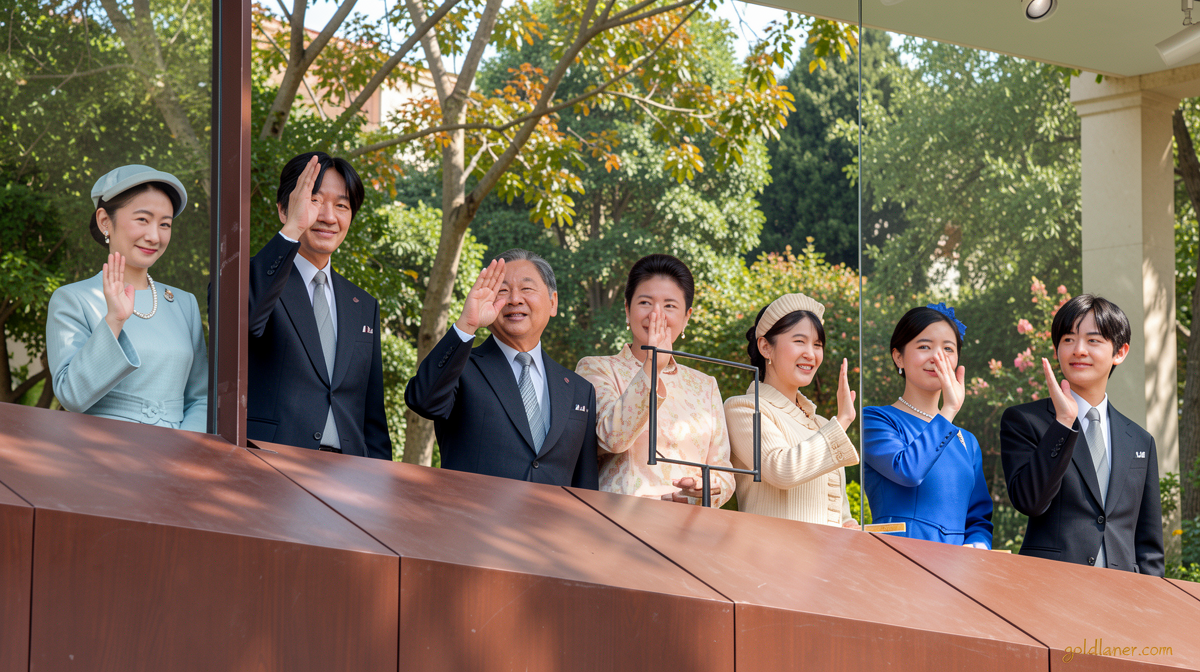
Japan’s Imperial Dilemma: Why Women Are Still Barred from the Throne
Japan is running out of royals – While Japan may soon welcome its first female prime minister, the government’s strategy to prevent a royal succession crisis is simultaneously narrowing the possibility of a woman ascending to the Chrysanthemum throne. With only three individuals currently eligible to inherit the imperial crown—and two of those candidates already past the age of sixty—the monarchy confronts an unprecedented challenge to its continuity. For centuries, Japan’s imperial system has adhered to strict male-only succession, a practice that aligns with the nation’s deeply patriarchal social structure where men continue to hold dominant positions across business and political arenas.
This longstanding tradition now threatens the very existence of the world’s oldest monarchy, which in recent decades has produced more daughters than sons. To address the growing shortage of male heirs, government officials have put forward proposals to restore former branches of the royal family, thereby widening the pool of potential male successors. These legislative changes are currently pending parliamentary ratification. However, the approach has prompted scholars, opposition lawmakers, and ordinary citizens to question why simply allowing women to become emperors has not been embraced as a solution.
Historical Precedent and Legal Barriers
“It is difficult to find any rational basis for refusing to allow a woman to become emperor,” observed Professor Makoto Okawa, an imperial lineage scholar at Tokyo’s Chuo University. Japan’s history includes eight female emperors, who typically ruled when male heirs were too young to assume power. This precedent continued until the Imperial House Law was established in 1889 during the Meiji era, which formally prohibited women from becoming emperors. According to Okawa, despite this law, Japan’s broader constitution does not prevent women from taking the throne, and the exclusion of females cannot be considered an inherent “Japanese tradition.”
“The idea of excluding women in advance as persons incapable of becoming emperor should be understood plainly as misogyny,” said Okawa.
Multiple surveys indicate that the Japanese public remains largely receptive to the concept of female emperors. Kana Sakakura, a Japanese resident, pointed out that European nations like the United Kingdom possess extensive histories of female monarchs. “I suppose when you really compare it to other countries, it does feel like Japan still has an atmosphere where women taking on leadership roles in society is avoided,” she remarked.
Political Resistance and Proposed Solutions
Nevertheless, the movement for female succession has encountered substantial resistance. Prime Minister Sanae Takaichi and her Liberal Democratic Party stand as some of the most vocal opponents to reforming the succession rules. During parliamentary deliberations earlier this year, Takaichi maintained that restricting eligibility to male descendants of the imperial lineage remained “appropriate.” The government’s proposed amendments, anticipated to become law within the current month, fail to include any provision allowing a princess to ascend to the throne. Furthermore, the children of princesses who marry commoners—something nearly inevitable given the shrinking royal family—cannot inherit the crown either.
Although the imperial family’s functions are primarily ceremonial, it serves as a potent symbol of national unity for Japan’s population of 123 million people. According to the US State Department’s Office of the Historian, US Army General Douglas MacArthur, who supervised Japan’s post-World War II reconstruction, described the emperor in a telegram as “a symbol which unites all Japanese,” adding that “Destroy him and the nation will disintegrate.”
The Shrinking Royal Family
In pre-war Japan, identifying a successor presented fewer complications. The imperial household was considerably larger and included collateral branches called Oke, which provided alternative candidates should the primary bloodline fail to produce an heir. Everything shifted in 1947. As Japan struggled to rebuild its war-devastated economy, the Imperial House Law underwent revision to reduce the size of the imperial family and cut royal expenditures. This reform limited imperial membership to the immediate relatives of Emperor Hirohito, eliminating eleven collateral branches and creating conditions for the present-day shortage.
The original royal household of 67 members contracted to just 16, a decline worsened by the rule requiring female members to depart the imperial family upon marrying a commoner. The latest government initiative aims to permit the imperial family to “adopt” members of these former collateral branches who are at least fifteen years old, unmarried, and without children. Such adopted members’ offspring would qualify for the throne.
Currently, Emperor Naruhito, aged 66, has one daughter, the highly beloved Princess Aiko. Legally prohibited from inheriting due to her gender, the 24-year-old princess has no children. Even should she eventually have a son, that child would remain ineligible to succeed to the throne under existing regulations.