
Attorneys for Tyler Robinson urge judge to block death penalty over prosecutor’s comments to media about ballistics evidence
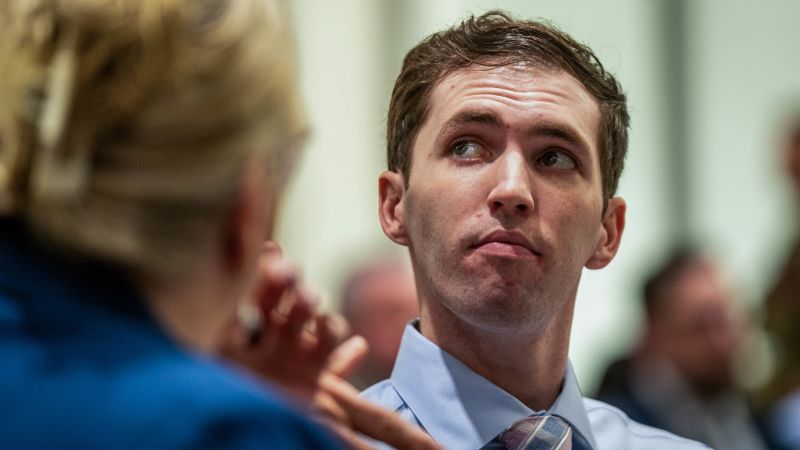
Utah Court Hears Dispute Over Death Penalty Amid Prosecutor’s Media Comments
Attorneys for Tyler Robinson urge judge – During a recent hearing in a Utah district court, attorneys representing Tyler Robinson, the accused killer of prominent conservative activist Charlie Kirk, pressed for the death penalty to be suspended. Their request centered on a series of remarks made by Christopher Ballard, a spokesperson for the Utah County Attorney’s Office and a key prosecutor in the case, during media interviews. The defense argued that these comments violated a pretrial publicity order, which restricts the parties from making public statements about the case unless specific exceptions apply.
Defense Claims Media Statements Breach Pretrial Rules
Robinson’s legal team, led by Richard Novak, contended that Ballard’s interviews in late March and early April were “extremely reckless” and undermined the fairness of the trial. The focus of Ballard’s remarks was a bullet fragment analyzed during the autopsy, which the defense had highlighted in a filing as inconclusive. Novak emphasized that the prosecutor’s statements to the media could prejudice the jury, especially since they were not made under the order’s permitted exceptions. “I find no credibility in Mr. Ballard’s sworn testimony that he only intended to communicate with the media generally about bullet fragment analysis,” Novak stated during the hearing.
“I find no credibility in Mr. Ballard’s sworn testimony that he only intended to communicate with the media generally about bullet fragment analysis,” Novak said.
Ballard, who testified on Friday, defended his actions by asserting that the interviews were necessary to clarify the meaning of the ballistics report. He claimed the defense had misrepresented the findings in a public filing, which noted that the Bureau of Alcohol, Tobacco, Firearms and Explosives (ATF) could not definitively link the bullet found at the scene to the rifle allegedly used by Robinson. However, the prosecutors argued that the defense’s filing omitted a crucial detail: the ATF’s inability to exclude the bullet as coming from the rifle. This, they maintained, was the core point Ballard sought to address through media outreach.
Publicity Order and Legal Implications
The pretrial publicity order, which limits public statements by the prosecution and defense, was a central point of contention. Ballard testified that his comments were intended to correct misinformation generated by the defense’s filing and that he adhered to the rule’s allowances. Specifically, he referenced a professional standard permitting attorneys to comment on public information when there is a risk of prejudicial pretrial publicity. “The goal of these interviews was to respond to the specific media inquiries that were being generated by the misinformation in the filing,” Ballard explained.
If the court finds Ballard in contempt for breaching the order, the defense insists that the state should be barred from pursuing the death penalty. “The number one remedy should preclude the state from seeking death against Robinson,” Novak argued. Additional consequences, such as mandatory continuing education or bar association referral, were also mentioned as possible outcomes. The defense’s concern stems from the potential for media influence to sway public opinion and affect the jury’s impartiality.
Death Penalty Announcement and Pending Rulings
Prosecutors had previously announced their intent to seek the death penalty in Robinson’s case, which includes charges of aggravated murder, felony firearm use, obstruction of justice, and witness tampering. Robinson, who has not yet entered a plea, now faces a critical juncture as the court prepares to rule on the matter. The judge’s decision will determine whether the death penalty remains an option, a move that could significantly impact the trial’s trajectory.
The hearing also addressed another issue: the admissibility of hearsay evidence during the upcoming preliminary hearing. Defense attorney Michael Burt argued that a video deposition of a key witness should not be allowed, citing the witness’s inability to be cross-examined in real time. Ballard countered by stating that the preliminary hearing’s purpose is limited to establishing probable cause, and that cross-examination rights are not as expansive in this stage of the process. “If this court granted the defendant’s motion, it would be going where no other court has gone before,” Ballard noted, suggesting a potential shift in legal precedent.
“If this court granted the defendant’s motion, it would be going where no other court has gone before,” Ballard said.
The judge, Tony Graf, is expected to issue rulings on both the death penalty issue and the hearsay evidence matter by June 22. This decision will be pivotal for Robinson’s case, as it could either preserve the death penalty option or set a new standard for pretrial publicity. The case has drawn significant attention since the public killing of Charlie Kirk on a Utah university campus in September 2025, which sparked widespread media coverage and public discourse.
The dispute highlights the tension between transparency and fairness in high-profile trials. While the media plays a vital role in informing the public, Ballard’s statements to outlets like CNN and local news channels have raised questions about their impact on the jury. Novak’s team stressed that the pretrial publicity order was designed to protect Robinson’s right to a fair trial, a principle they believe is being compromised by the prosecutor’s communication strategy.
Ballard’s defense hinges on the argument that his media comments were necessary to counteract the defense’s portrayal of the ballistics evidence. He maintained that the ATF’s findings were not as one-sided as the defense claimed and that his remarks aimed to correct misunderstandings. This narrative, however, has not entirely satisfied the defense, which remains concerned about the potential for media bias to influence the proceedings.
As the court weighs these arguments, the case has become a focal point for debates about judicial procedures and the role of the media in shaping public perception. The outcome could set a precedent for how prosecutors handle public statements in similar cases, particularly when the evidence is complex or contested. With the preliminary hearing scheduled to begin on July 6, the judge’s decision will also determine the next steps in Robinson’s legal journey, potentially affecting the strength of the prosecution’s case.
The broader implications of the ruling extend beyond this specific trial. Legal experts have pointed out that the issue of pretrial publicity is increasingly relevant in cases involving public figures or sensationalized crimes. The court’s stance on whether such publicity can be mitigated through media restrictions will influence future trials and the balance between justice and public awareness. For Robinson, the decision could mean the difference between a capital punishment sentence and a lesser penalty, depending on the judge’s interpretation of the prosecutor’s actions.
As the trial progresses, both sides continue to refine their arguments. The defense’s focus on Ballard’s media statements underscores their belief that the prosecution’s transparency is being used strategically to shape the narrative. Meanwhile, the prosecutors emphasize the necessity of communicating with the media to ensure the public is informed about the case’s critical evidence. The judge’s upcoming rulings will serve as a litmus test for how the legal system navigates these competing interests in the modern era of media-driven justice.
