
An ICE officer fired at an SUV fleeing a car stop in Pennsylvania. That’s not how it should happen, policing experts say
An ICE Officer Fired at SUV in Pennsylvania Car Stop
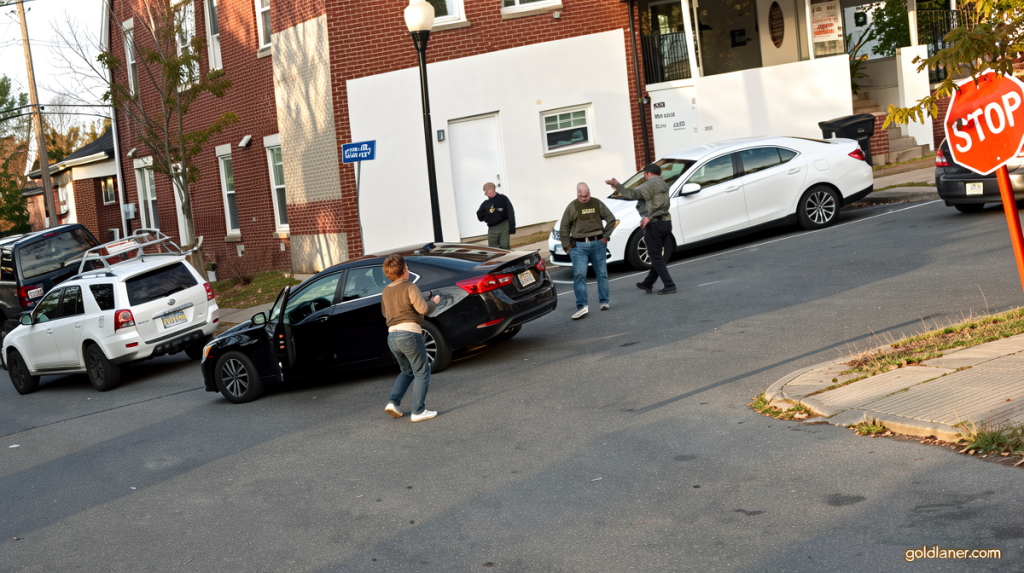
An ICE officer fired at an SUV – In the early morning of July 1, federal immigration officers in Harrisburg, Pennsylvania, pulled over a white SUV. An unmarked Immigration and Customs Enforcement car stopped in front of the SUV to block its path, while other law enforcement vehicles parked behind it, according to surveillance video obtained by CNN affiliate WGAL. “Get out of the car now,” one officer said after he approached the driver’s side. When the driver did not emerge after officers repeatedly ordered him out of the SUV, an officer shattered the window. The SUV then drove away, appearing to clip the ICE vehicle stopped in front of it before turning the wrong way down a one-way street. An ICE officer fired his gun as the SUV drove away from the officers and hit a parked car.
Expert Analysis Reveals Tactical Errors
In a statement, an ICE spokesperson said the driver – who the agency said had a criminal history of assault, hit-and-run, and a domestic incident – had “weaponized his car and rammed an ICE law enforcement vehicle.” An ICE officer discharged his weapon, and the driver escaped, the statement said. It’s the latest example of how surveillance footage can undermine the government’s public statements, and a law enforcement expert told CNN it clearly demonstrates some of the poor tactics being used by ICE officers.
“The vehicle pulls in front to stop the car from fleeing, but isn’t even effective at doing that. It’s not even properly positioned to do that because the guy’s pretty easily able to get around him,” said Kenneth Corey, former chief of department for the New York Police Department.
Corey noted that the SUV took a little sideswipe damage but didn’t ram its way out. The officers missed multiple opportunities to conduct the car stop more safely, he said, likely due to their inexperience handling such situations – which could be contributing to similar confrontations across the country. “I think that just goes to the lack of practice in these situations where the agents are almost having to kind of make it up as they go along,” Corey said.
“While they received some training a number of years ago on how to do this, it’s not something that they’ve really executed well in the real world.” The incident in Harrisburg occurred days before an ICE agent fatally shot a 52-year-old man during a car stop in Houston. Less than a week later, another ICE agent killed a 25-year-old man during a vehicle stop in Maine. Neither victim was the intended target of the immigration enforcement operations.
The killings prompted community vigils for the victims and renewed outcry over the Trump administration’s aggressive tactics. Following the shooting in Maine this week, the agency issued a pause on most vehicle stops conducted by ICE agents, which was swiftly overturned by President Donald Trump, who has made mass deportations a cornerstone of his second term. Vehicle stops were not always a major component of the agency’s actions, experts told CNN, as agents would typically take people into custody from a local jail or a targeted location, such as a residence or workplace.
But car stops have ramped up during Trump’s immigration crackdown, as his administration set a goal of making 2,000 immigration-related arrests a day. “They didn’t really try to pick people up off the street the way they are now,” Corey said. “So now you’ve shifted these tactics into really what’s more akin to local policing.” Like all federal law enforcement officers, ICE agents would learn how to properly conduct vehicle stops when they first joined the force, but experts said the agency’s recent change in tactics hasn’t come with any additional training.
“There’s basic protocols at the academy, but you haven’t done this for 8, 9, 10 years,” former acting ICE director John Sandweg said, referring to experienced agents. There also have been recent concerns about the onboarding and training of new federal immigration officers, which were exacerbated after the administration reduced the required training days for ICE agents – who receive far less training than almost any other federal agents with a badge and a gun, according to a CNN analysis. “I really feel for the agents,” Corey said.
“There’s been this change in approach without the commensurate retraining and practice that’s kind of needed.” A spokesperson for the Department of Homeland Security, which oversees ICE, told CNN this week the agency will implement additional training, including for high-risk vehicle stops and crowd control. The agency also re-extended its training program to 71 days, the spokesperson said, adding previous graduates will get “follow-on training.” In November 2024, CNN joined a team of immigration enforcement agents as they moved to detain a convicted criminal in Flushing, Queens. The ICE team detailed the hours they spent researching the case and surveilling the man’s residence before several agents staked out the home to take
