8 protesters accused by feds of antifa ties get up to 100 years in Texas immigration center shooting

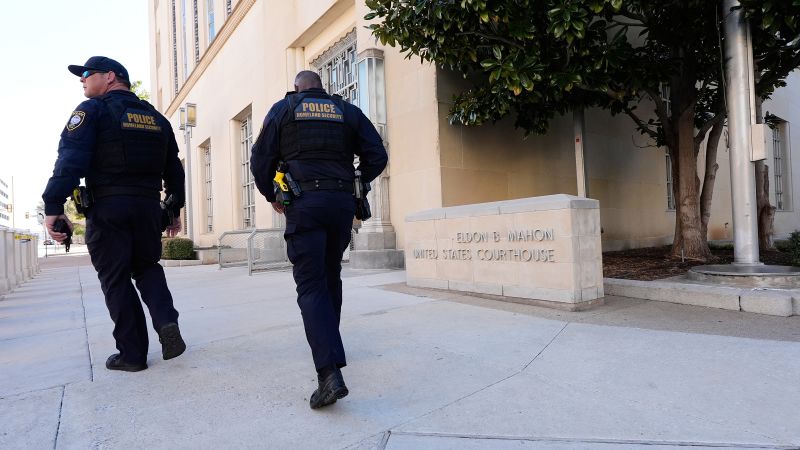
Federal Charges and Sentences for Texas Immigration Center Shooting Protests
8 protesters accused by feds of antifa – On Tuesday, eight individuals involved in a July 4 protest outside a Dallas-area immigration detention center were handed federal prison sentences, with one receiving the maximum 100-year term. The Justice Department alleged that these defendants, accused of antifa connections, committed an act of terrorism by opening fire during the demonstration, which resulted in a police officer being wounded. The case has sparked debate over the balance between free speech and the use of force in public protests, as well as the political motivations behind the charges.
Prosecutors Frame the Shooting as an Attack on Democracy
The incident occurred at the Prairieland Detention Center, where protesters clashed with law enforcement. One defendant, a former US Marine Corps reservist, was sentenced to 100 years in prison after being convicted of shooting the officer. US District Judge Reed O’Connor, who presided over the case, described the event as “an assault on democracy,” emphasizing the need for severe punishment to deter similar actions. “The need to deter this type of conduct is high,” he stated during the sentencing. O’Connor’s remarks underscored the administration’s view that the protest was not a peaceful expression of dissent but an organized attack.
“The need to deter this type of conduct is high,” said US District Judge Reed O’Connor. “What happened wasn’t a protest but an assault on democracy.”
The remaining seven defendants received sentences ranging from 30 to 70 years. Prosecutors argued that the group was affiliated with antifa, a decentralized network of far-left activists known for confronting far-right groups like neo-Nazis and white supremacists. The organization, which has no formal structure, was designated as a domestic terrorist group by President Donald Trump through an executive order last fall. However, critics note that the US lacks a direct equivalent to the State Department’s list of foreign terrorist entities, raising questions about the legal justification for the label.
Family Members and Supporters Challenge the Sentencing
Family members and advocates gathered outside the federal courthouse in Fort Worth to express their disapproval of the lengthy sentences. Hope Song, the mother of Benjamin Song, who received the heaviest penalty, contested the prosecution’s claim that her son intentionally targeted the officer. “He didn’t intend to hurt anyone,” she asserted. “The shots were not aimed to kill, but to intimidate.”
Other defendants and their families also pleaded for leniency, citing their lack of violent intent. Autumn Hill, a participant in the protest, described the event as “more like a party than a confrontation,” noting that she and others were unaware of the potential for escalation. “We didn’t expect any violence or property damage,” Hill said. “It was all about raising awareness for detained immigrants.”
“This is a bunch of kids and young adults who really have a really big heart and really wanted their voice to be heard,” said Phillip Hayes, the attorney for Benjamin Song. “It was never intended that anybody get hurt. It was never intended that any shots would be fired.”
Hayes argued that the shooting was a result of the officer’s aggressive actions, claiming that Song’s bullets were “suppressive fire” and that a ricochet struck the officer after he pulled his gun. “My client’s life has been impeccable,” Hayes emphasized. “He was a former Marine, a good student, and someone who cared deeply about justice. The judge gave as much as he could, ignoring his positive qualities.”
Antifa’s Role and Political Context
Prosecutors maintained that the defendants were active members of antifa, a movement that has been a target of the Trump administration’s rhetoric. While antifa is not a single entity, it serves as an umbrella for militant groups that oppose fascism and advocate for social justice. The label of “domestic terrorist” has been used to justify harsher penalties, even though the legal framework for such designations is less defined than for international groups.
Trump’s executive order in November 2025 marked antifa as a domestic threat, aligning it with the broader strategy to criminalize left-wing activism. This move has drawn criticism from legal experts and civil rights advocates, who argue that it may stifle legitimate protests under the guise of terrorism. “Antifa is not a monolith,” said one analyst. “It represents a range of ideologies, from anti-capitalism to racial justice, and its actions are often defensive rather than offensive.”
Legal Strategies and Broader Implications
Some of the defendants opted for guilty pleas to avoid a trial, admitting to providing material support to terrorists. This strategy, while pragmatic, has raised concerns about the overreach of federal charges. Critics warn that the case could set a precedent for prosecuting protest activities as acts of terrorism, potentially undermining First Amendment protections for free speech and assembly.
Benjamin Song’s attorney, Phillip Hayes, is preparing an appeal against the 100-year sentence, arguing that the evidence does not fully support the claim of premeditated violence. “This was a spontaneous demonstration,” Hayes said. “The officer’s actions provoked the response, and the law should reflect that context.”
Meanwhile, the broader implications of the case have drawn attention to the political climate surrounding immigration. Federal prosecutors in Minnesota recently charged 15 individuals with obstructing the Trump administration’s immigration policies, alleging they were antifa members who disrupted government operations. These charges include blockades, ice-throwing incidents, and other forms of civil disobedience, which prosecutors say were coordinated efforts to hinder deportations.
As the sentences take effect, the debate over antifa’s role in American politics continues. While some see the group as a threat to national security, others view it as a vital force for challenging systemic injustice. The Texas case highlights the tension between law enforcement and activists, with the outcome potentially shaping future protests across the country.