There’s a tiny piece of Britain in the Mediterranean. And its border has just vanished

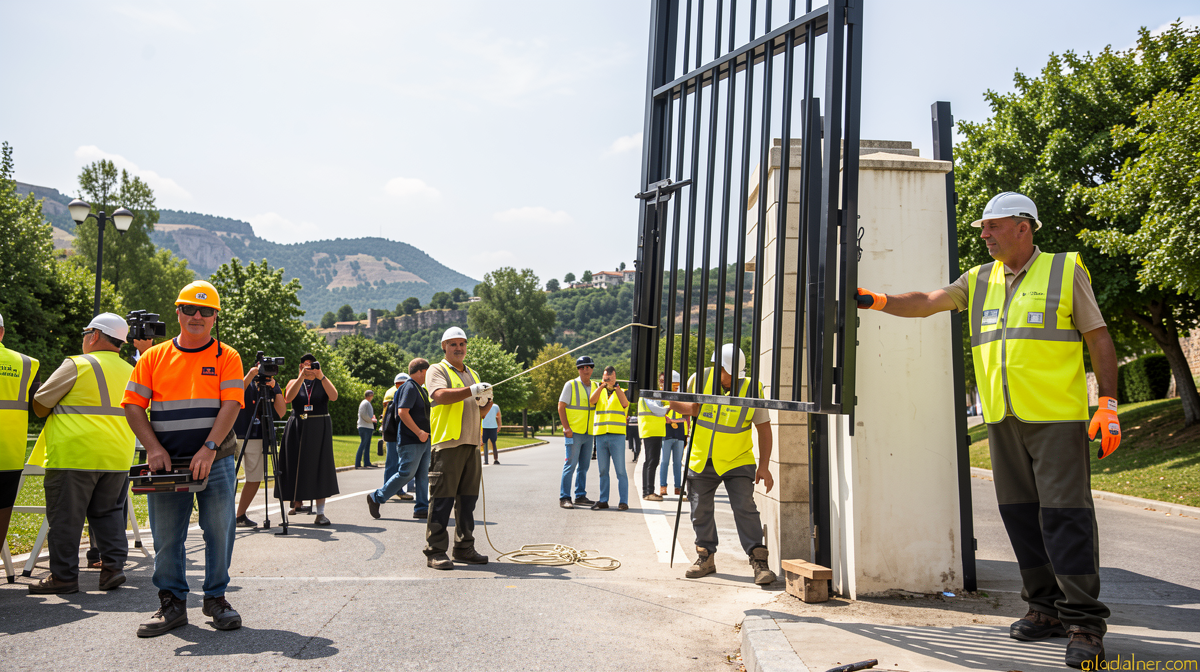
Border Between Gibraltar and Spain Officially Opens After Years of Negotiation
There s a tiny piece of Britain – Commuters and travelers who regularly move between the southernmost point of Spain and the British overseas territory of Gibraltar will experience a transformed journey starting this Wednesday. The physical boundary that once separated these two regions has been dismantled, allowing people to pass freely without the previous restrictions. The formal inauguration occurred at midnight on Tuesday, following the removal of the long-standing border fence that had defined the area for decades.
This development represents a significant milestone in the relationship between the European Union and the United Kingdom, enabled by a historic treaty that addresses longstanding questions about Gibraltar’s status. The agreement emerged after extensive post-Brexit discussions that spanned several years, finally resolving uncertainties about how the territory would operate within European frameworks.
A Strategic Crossroads Transformed
Gibraltar, home to approximately 38,000 residents, occupies a crucial position at the southern tip of the Iberian Peninsula. This British territory sits in a strategically important location, just a few miles from Morocco where the Atlantic Ocean converges with the Mediterranean Sea. The region’s maritime waters have yielded archaeological evidence of 124 shipwrecks, underscoring its historical significance as a crossroads between continents.
Celebrations erupted shortly after midnight as crowds moved freely between La Línea de Concepción in Spain and Gibraltar in both directions. The festive atmosphere was enhanced by many visitors wearing Spanish soccer jerseys, following Spain’s triumph over France in the World Cup semifinal on Tuesday. The timing created a perfect convergence of sporting joy and diplomatic achievement.
“What you feel here is the brotherhood between the two people,” Gibraltar’s Chief Minister Fabian Picardo told Spanish broadcaster RTVE.
From Uncertainty to Agreement
When Britain departed the European Union in 2020, the future relationship between Gibraltar and the bloc remained uncertain. Subsequent negotiations regarding a comprehensive deal to maintain the flow of people and goods across the border progressed slowly. However, 2025 marked a turning point when the EU and the UK announced an agreement addressing these critical issues.
The treaty, signed on Tuesday by representatives from both sides along with Gibraltar’s government, significantly eases border crossings. Stephen Doughty, the UK Foreign Office Minister, emphasized that the agreement protects Gibraltar’s long-term economic interests. Maroš Šefčovič, the EU’s trade representative, expressed satisfaction with the outcome.
“It has taken four years of patient, complex negotiation, but the outcome speaks for itself,” Šefčovič said.
“It is a very special feeling to see a fence come down.”
Economic and Social Implications
Without this agreement, Gibraltar could have faced a hard land border requiring full passport checks, creating substantial economic challenges. The territory depends heavily on approximately 15,000 Spaniards—nearly half of Gibraltar’s workforce—who cross the frontier daily for employment. The removal of the border fence ensures continued access for these essential workers.
Mendez Segura, a 51-year-old home care worker, experienced the change firsthand on Wednesday. “I’ve been crossing over and working in Gibraltar all my life with my identity card,” she explained. “I know you’ll be able to cross without it, but it’s just what I’m used to.”
The benefits extend beyond daily commuters. Families visiting relatives on either side of the border, children attending football matches and extracurricular activities, and tourists exploring both regions will all experience smoother travel without frontier queues.
“People who are visiting family in Spain, or whose Spanish family is visiting them in Gibraltar. Children who are going to football matches and extracurricular activities, either in Spain or in Gibraltar. They will be able to do that without having to worry about frontier queues,” Picardo told The Associated Press.
Digital Fortress: New Border Technologies
The agreement effectively incorporates Gibraltar into the EU’s Schengen free travel area. At Gibraltar’s airport and port, both UK and Spanish border officials will conduct entry and exit checks, mirroring the arrangement at Eurostar train stations in London and Paris where dual officials verify passports.
Gibraltar was ceded to Britain in 1713, though Spain has maintained its sovereignty claim throughout the centuries. While the treaty removes the border fence, it does not settle the territory’s contested status. Notably, in Britain’s 2016 Brexit referendum, 96% of voters in the Rock supported remaining in the EU.
Travelers arriving from countries outside the Schengen Area, including the UK, must now navigate the EU Entry-Exit System (EES), which replaced traditional passport stamps with biometric data collected through photographs and digital fingerprints. With the physical barrier gone, Gibraltar officials have installed live facial recognition cameras at entry points and throughout the territory.
Chief Minister Picardo announced that the territory will deploy additional closed-circuit television cameras and has enhanced police presence along with resources for customs and coast guard agencies.
“The fortress has become a digital fortress now,” Picardo said.