Trump signs executive order asking for access to new AI models before they launch

Trump Signs Executive Order for Early AI Model Access to Strengthen Cybersecurity
Trump signs executive order asking for access – President Donald Trump finalized an executive order on Tuesday aimed at granting the government early access to cutting-edge AI models before they are released to the public. The directive, which seeks to address emerging cybersecurity threats, mandates that AI developers voluntarily share advanced models with federal agencies up to 30 days prior to their public launch. This move is intended to allow experts to assess potential risks to critical infrastructure and national security before the models enter widespread use.
Response to AI Security Concerns
The executive order follows growing alarm over the security implications of powerful AI systems, such as Anthropic’s Mythos model, which has raised eyebrows among policymakers and financial markets. Industry leaders and government officials have expressed worries about how these models could be exploited to breach data systems or disrupt essential services. Trump’s administration argues that proactive oversight is necessary to safeguard the nation’s digital landscape.
According to a White House statement, the order reflects a strategy to “collaborate with industry” while balancing innovation and security. The goal, as outlined by the administration, is to ensure that the United States maintains its leadership in AI technology and cybersecurity. “This approach empowers us to act swiftly in response to evolving threats,” a spokesperson added, emphasizing the importance of flexibility in AI development.
Timeline and Industry Feedback
The executive order was originally slated for release on May 20, but the timing was shifted just hours before the scheduled signing. A leaked version from May had proposed a 90-day review period, which some AI companies felt was too lengthy given the rapid pace of technological advancements. Industry insiders told CNN that shorter timelines would reduce bureaucratic hurdles and encourage faster deployment of AI tools.
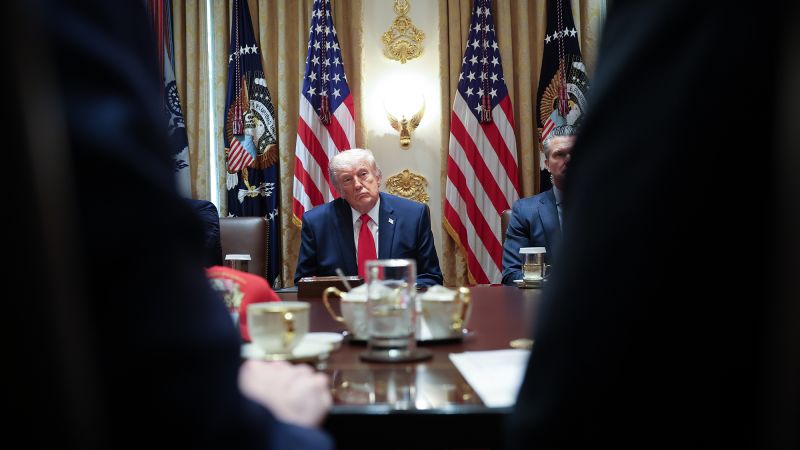
The revised order was pushed through after a Monday meeting with Trump’s top advisors and cabinet members. During the discussion, officials reportedly emphasized the need for a more agile framework that would allow the government to respond quickly to emerging risks. This compromise, however, has sparked debate about the extent of regulatory control over AI development.
Voluntary Sharing and Cybersecurity Clearinghouse
Under the new directive, AI firms are asked to share their most advanced models with the government for evaluation. The voluntary nature of this process means companies can choose whether to participate, though the order encourages cooperation to strengthen national defenses. A key provision calls for the establishment of a “cybersecurity clearinghouse,” which would serve as a central hub for exchanging information about potential vulnerabilities and threats.
Trump stressed that the order does not impose mandatory licensing or approval requirements. “Nothing in this directive shall be interpreted as requiring AI developers to seek government permission before releasing their models,” he clarified. This assurance is meant to reassure companies that the policy is not a barrier to innovation, but rather a tool to enhance security.
Industry Collaboration and Key Players
Major AI companies, including Anthropic and OpenAI, have been directly involved in shaping the order. Anthropic, which faced scrutiny after its Mythos model was flagged for potential risks to classified military systems, has been working closely with the Pentagon. The company was recently added to a list of entities deemed a “supply chain risk” due to its handling of AI guardrails on sensitive data.
OpenAI’s global affairs officer, Chris Lehane, praised the executive order as a “significant step forward” in aligning AI safety with innovation. “This demonstrates a commitment to ensuring that technological progress and security measures evolve in tandem,” Lehane said. He added that the policy supports the development of safety frameworks through democratic processes, informed by technical experts and stakeholders.
“As AI capabilities continue to advance, we believe effective safety frameworks should continue to be developed through democratic institutions, informed by technical expertise and broad stakeholder input, to promote accountability and public trust,” Lehane emphasized.
Microsoft President Brad Smith also endorsed the initiative, stating that it “advances innovation while protecting the security of the American public.” Smith highlighted the importance of public-private partnerships in addressing cybersecurity challenges, noting that the order could serve as a model for future regulatory efforts.
Context and Implications
Trump’s administration had previously taken a more hands-off stance on AI regulation. However, the emergence of models like Mythos has prompted a shift toward greater oversight. These systems, according to experts, can significantly enhance the speed and scale of cyberattacks, making early intervention crucial. “Advanced AI models have the potential to amplify cyber threats,” said a cybersecurity analyst, adding that the 30-day review period could help identify risks before they are exploited on a large scale.
Anthropic has already shared its Mythos model with select partners and governments, allowing them to test its capabilities and prepare defenses. The company plans to release the model to all customers “in the coming weeks,” according to its announcement. This selective access has been a point of contention, with critics arguing that it gives certain entities an unfair advantage in securing AI tools.
Historical Context and Policy Evolution
Earlier this year, the Department of Commerce’s National Institute of Standards and Technology (NIST) had announced a similar initiative, urging tech firms to share unreleased AI models for national security and public safety evaluations. However, this plan has since been removed from the Commerce Department’s website, signaling a potential change in direction under the new executive order.
Trump’s delay of the original order on May 20 was attributed to his desire to refine its provisions. During a press briefing that day, he cited concerns about the draft’s “certain aspects” that he felt could hinder AI development. “I thought the order might act as a blocker, and I want to make sure it doesn’t,” Trump stated, highlighting his focus on maintaining momentum in technological progress.
The revised policy is seen as a middle ground between rapid innovation and cautious regulation. While it grants the government access to AI models, it also allows companies to retain control over their release schedules. This balance is critical in an industry where breakthroughs happen frequently, and delays could impact competitive advantage. Critics, however, argue that even a 30-day review period may not be sufficient to address all cybersecurity challenges, especially as AI systems grow more complex.
As the executive order takes effect, its impact on AI development and government oversight will be closely watched. The policy not only sets a precedent for how AI is regulated but also underscores the growing importance of cybersecurity in the digital age. With the nation’s critical infrastructure increasingly reliant on AI-driven systems, the order aims to provide a proactive framework for managing risks while fostering technological advancement.
Industry Reactions and Future Outlook
Reactions from AI companies have been mixed. While some welcome the order as a necessary step, others worry about the implications of voluntary sharing. For example, Anthropic’s blacklisting by the Pentagon has raised questions about how the executive order might affect its relationships with government agencies. “The government’s focus on security is commendable, but it’s essential that these measures do not stifle innovation,” said a representative from a rival AI firm.
Despite these concerns, the order has been praised for its pragmatic approach. It allows the government to intervene early without imposing strict controls on developers. This flexibility could be a key factor in its success, as it adapts to the dynamic nature of AI technology. As the policy unfolds, its effectiveness in balancing security and innovation will depend on how well it is implemented and how companies respond to the new requirements.
The executive order marks a pivotal moment in the U.S. approach to AI regulation. By integrating cybersecurity concerns into the development process, it sets the stage for a more coordinated effort between the government and private sector. This initiative not only addresses immediate threats but also positions the country to lead in the global AI landscape while safeguarding its digital future.