
Every day is soccer jersey day
The Soccer Jersey as a Fashion Statement
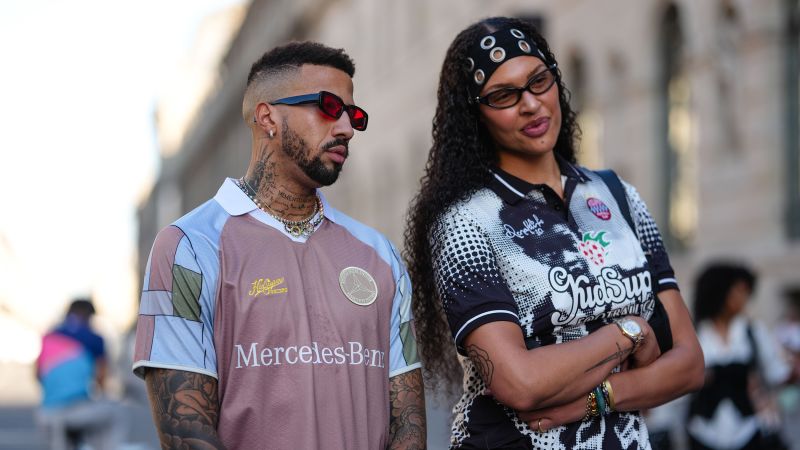
Every day is soccer jersey day – In the summer of the World Cup, soccer jerseys have transcended their traditional role as sportswear, becoming a symbol of cultural relevance and style. Once reserved for die-hard fans, these garments now serve as versatile fashion pieces, appealing to a broader audience eager to embrace their bold designs. From collaborations with pop stars to limited-edition collections by major retailers, the soccer jersey is redefining its place in modern fashion.
Celebrity Collaborations and Brand Innovations
The intersection of soccer and fashion has been highlighted by high-profile partnerships. Olivia Rodrigo, for instance, joined forces with Spotify to create a retro FC Barcelona jersey featuring her signature monogram. The design, a nod to the club’s iconic red-and-blue vertical stripes, sold out quickly, reflecting the growing demand for soccer-inspired apparel. Meanwhile, the Gap has launched two summer collections that celebrate football culture through creative interpretations of team jerseys. Nike, too, has entered the scene with Latin American-themed “statement” jerseys, blending cultural heritage with contemporary aesthetics.
Interestingly, some soccer jerseys are not tied to specific teams. These designs either pay homage to classic team silhouettes or take a more abstract approach, making them suitable for everyday wear. This shift is evident in the recent release of retro striped New York City jerseys by Mayor Zohran Mamdani. Initially priced at $50 as part of an affordability campaign, the jerseys have now fetched over $1,000 on luxury resale platforms like Grailed. Their unique design replaces the traditional team badge with a soccer ball emblem, emphasizing the city’s connection to the global sport.
Aesthetic Appeal Over Sport-Specific Function
The soccer jersey’s appeal lies in its ability to harmonize with diverse wardrobes. Unlike baseball or basketball jerseys, its simple pullover structure allows for easy layering or pairing with other items. Vibrant hues and striking graphics further elevate its status as a statement piece. As fashion critic Markus Ebner noted, “That pink Inter Miami jersey, I feel like a cool girl might wear that on the dance floor in New York. Not because she’s an Inter Miami fan; because it’s pink and it’s cool.” This sentiment underscores how the jersey’s design has become more important than its sports context.
While soccer remains the world’s most popular sport, its adoption in the United States has been slower. Phil Oh, a fashion photographer, observed that a decade ago, there were lingering stereotypes about jersey wearers. Terms like “footy” were often used by hipsters to mock the game, while die-hard fans dismissed casual wearers as pretentious. Today, however, the jersey has shed these associations, gaining traction as a symbol of mainstream appeal. This evolution has been driven by both cultural shifts and the strategic marketing of streetwear brands.
The Early Days of Soccer Jersey Fashion
Streetwear pioneers were among the first to recognize the jersey’s potential beyond sports. In 2005, Supreme partnered with Umbro to release a soccer jersey, a bold move at a time when the sport was still niche in the U.S. Soccer broadcasts were limited to specialized channels, yet this collaboration signaled a growing interest in the sport’s visual elements. Fast forward to the early 2010s, and soccer jerseys began appearing in the wardrobes of celebrities. Snoop Dogg, for example, became known for mixing jerseys from rival teams, a choice that drew mixed reactions from traditionalists.
The trend gained momentum when Drake wore a pink Juventus away jersey in 2016. The move was so unusual for a rapper of his stature that the jersey is still listed on eBay as a “Juventus x Drake” item. This event marked a turning point, demonstrating that soccer jerseys could be both functional and fashionable. As the sport’s visibility increased, so did the jersey’s versatility, paving the way for its mainstream integration.
From Nerd Culture to Mainstream Adoption
The soccer jersey’s journey from a niche hobby to a global fashion phenomenon is exemplified by Cult Kits, a vintage soccer jersey retailer. Co-founder Josh Warwick noticed a significant change in the past few years. “The jerseys were being bought by people who weren’t just soccer nerds or fans looking for rare finds,” he recalled. This shift is particularly evident at Cult Kits’ pop-up events, where customers like young women in their early 20s have embraced “random” pieces, such as a neon yellow Blackburn Rovers away shirt from 1996. These choices highlight the jersey’s role as a canvas for personal style rather than a purely sports-oriented item.
As the U.S. market for soccer jerseys expands, it has overtaken the UK to become Cult Kits’ largest consumer base. This growth reflects a broader cultural embrace of the sport and its associated aesthetics. Designers, both established and emerging, are now remixing classic jerseys, incorporating brand logos in place of traditional sponsorships. Labels like Miaou, Nahmias, and Ksubi have contributed to this trend, showcasing how soccer’s visual identity is being reimagined for fashion-conscious audiences.
Fast Fashion’s Role in the Trend
Fast fashion retailers have also capitalized on the soccer jersey’s popularity. H&M recently partnered with Lotto to release a collection featuring soccer-inspired designs, while ASOS now offers knockoff versions of national team jerseys. These affordable options have made the trend accessible to a wider demographic, further fueling its adoption. The demand for such items has led to a surge in both vintage and replica markets, with platforms like Fanatics and Nike reissuing 1990s classics. Ebbets Field, a specialty store, even sells new gear from the defunct North American Soccer League, including reproductions of the bright yellow and green kits that once defined the era.
As soccer jerseys become more integrated into everyday fashion, they are also gaining a new kind of appreciation. No longer confined to stadiums, these garments are being worn in urban settings, from runways to nightclubs. This transformation mirrors the rise of other sportswear staples, such as polos and rugby stripes, which have similarly evolved into mainstream fashion. The soccer jersey’s adaptability ensures its continued relevance, bridging the gap between sports and style in ways previously unimaginable.
The Future of Soccer as a Fashion Force
The soccer jersey’s ascent into fashion suggests a deeper cultural shift. Where once the sport was seen as a niche interest, it is now a powerful symbol of global identity. This is particularly true in the U.S., where its adoption has grown steadily. The combination of iconic designs, celebrity endorsements, and brand innovation has solidified the jersey’s place in the fashion world. As more designers and retailers explore its potential, the soccer jersey is poised to remain a defining element of the season’s style landscape, proving that the game’s influence extends far beyond the pitch.
