
What it takes to be chosen as a World Cup referee – and how to ref the final
The Road to the World Cup Final: A Referee’s Journey
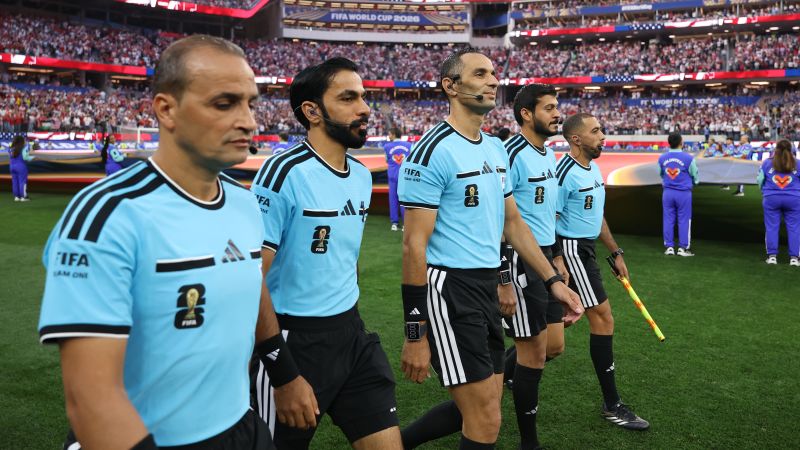
What it takes to be chosen – In the high-stakes arena of the World Cup, where 48 nations vie for global supremacy, a parallel journey unfolds for those tasked with ensuring fair play: the referees. This year’s tournament has seen the selection of 52 main referees, 88 assistant referees, and 30 video assistant referees (VARs), forming a 170-member team—the largest ever assembled for the event. The expanded format, now featuring 48 teams and 104 matches, has elevated the demand for officials, creating a more complex and rigorous selection process. While the spotlight is often on the players, the referees’ path to the World Cup is equally demanding, requiring years of dedication, exceptional skill, and a willingness to sacrifice personal life for the sport.
A Global Elite: Diversity and Representation
Selected from 50 FIFA member nations across all continental confederations, the referees reflect a growing emphasis on inclusivity. Eight of them hail from the United States, and six are women, marking a significant step forward in gender diversity following FIFA’s historic decision to include female officials in the Qatar 2022 edition. This diversity not only broadens the talent pool but also ensures that the World Cup’s governing body, FIFA, represents a more global perspective in its officiating decisions.
However, the journey to this elite group is fraught with challenges. Consider the case of a Somali referee who was denied entry to the United States just days before the tournament due to “vetting concerns.” Such hurdles highlight the scrutiny officials face, particularly those from regions with political tensions. Meanwhile, in China, the absence of a national team from the tournament has thrust one referee into the spotlight as the country’s sole representative, a role that carries immense emotional weight for the individual and their supporters.
From Seminars to Semifinals: The Selection Process
The selection of referees for this World Cup began immediately after the conclusion of Qatar 2022, with FIFA launching a comprehensive evaluation. Candidates were required to attend seminars on the latest rules and technologies, undergo fitness tests to ensure physical readiness, and demonstrate prior experience in high-profile international matches. Their performances over the past three years were closely monitored, with data from domestic and international competitions serving as critical indicators of their suitability.
“In every important match ahead of the World Cup, we have one or two observers,” explains Renato Faverani, a former assistant referee who worked four matches at the 2014 World Cup, including the final between Germany and Argentina. These observers assess not just individual decisions but also how officials perform as a team, evaluating consistency, communication, and adaptability under pressure. “Afterwards, you receive an evaluation, which is then compared with other referee teams,” Faverani adds, underscoring the competitive nature of the selection process.
For many referees, the path to the World Cup is not just about technical prowess but also about navigating personal sacrifices. Leif Lindberg, one of the two assistant referees at the 2002 final between Brazil and Germany, recalls the toll of balancing match duties with a full-time job. “Most referees have been through at least one divorce,” he says, reflecting on the demands of the profession. His own experience includes two marriages, a testament to the long hours and emotional strain that come with officiating at the highest level.
Conflicts of Interest and the Knockout Challenge
Once selected, referees face another layer of scrutiny. FIFA has implemented strict protocols to avoid conflicts of interest, prohibiting officials from taking charge of matches involving their own country. This rule ensures impartiality but also complicates the appointment process for the knockout stage, where teams are eliminated in a single-elimination format. Unlike the group stages, where the list of referees is predetermined, the final rounds require last-minute decisions based on real-time performance and availability.
“It was a very special moment to follow our national team and hope they would lose,” Lindberg, a retired Swedish referee, recalls. “If they reached the semifinals, I would have had to go home.” His words highlight the unique pressure faced by referees in the knockout stages, where personal ties to a nation can create emotional stakes. Sweden’s early exit in the 2002 round of 16, though unfortunate for the team, proved fortunate for Lindberg, who was able to officiate the final without conflicting with national pride.
The Emotional High: Being Named for the Grand Finale
Receiving a World Cup final assignment is a career-defining moment, often accompanied by an overwhelming mix of emotions. Renato Faverani, who had already officiated the 2013 UEFA Champions League final, recalls the day he learned he would be part of the final crew. “Returning from a practice session near his hotel, Faverani found all the referees assembled and seated inside a huge hall. Then FIFA President Sepp Blatter stood at the front, unfurled a sheet of paper, and began reading from it.” The suspense was palpable as Blatter called out names, culminating in Faverani’s own being announced.
“For two or three hours, it was the best moment,” Faverani says. “Then, the pressure and responsibility arrived. You just hope the match comes quickly because the pressure is very high.”
This moment of revelation is not unique to Faverani. Former referee Howard Webb of England, who oversaw the 2010 final in South Africa, also remembers the thrill of being chosen for the World Cup’s most iconic match. “It was my first World Cup game – and South Korea’s first World Cup game ever (at home), too,” Lindberg shares, describing the roar of 50,000 fans in red jerseys during the 2002 final. The atmosphere, he notes, was electric, a reminder that the final is not just a game for players but a spectacle for millions around the world.
Yet, the joy of being selected for the final is quickly tempered by the weight of responsibility. Referees must prepare meticulously for the match, refining their understanding of the Laws of the Game and adapting to the unique demands of the final. “What fans often don’t realize is how the process begins days before kickoff,” Faverani says, emphasizing that the final requires more than just knowledge of the rules—it demands precision, composure, and the ability to make split-second decisions that can alter the course of a tournament.
As the World Cup progresses, the selection of officials becomes a dynamic process. Referees are appointed three to four days before each game, with decisions based on recent form and performance. This fluid approach ensures that the most capable individuals are matched with the most critical matches, though it also means that even the most seasoned officials must stay alert and ready for the unexpected. The final, in particular, is a high-stakes assignment, requiring a referee to rise above the chaos of 104 matches and deliver a performance that will be etched in history.
For those who make it to the final, the experience is a culmination of years of hard work and sacrifice. While the thrill of the moment is unforgettable, the reality of the job remains demanding, with officials often required to travel across continents and endure grueling schedules. The World Cup is not just a showcase for players but a proving ground for referees, whose decisions shape the outcome of the greatest competition on Earth. As the tournament approaches its climax, the pressure on these officials intensifies, but so does their determination to uphold the integrity of the game.
