
How the new World Cup ball helped knock Croatia out with use of technology
How the new World Cup ball helped knock Croatia out with use of technology
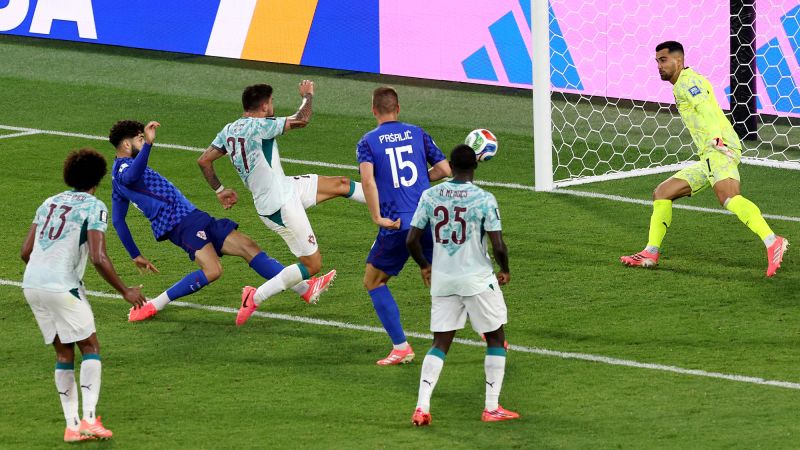
How the new World Cup ball – The World Cup quarterfinal between Croatia and Portugal was marked by a pivotal moment that has sparked intense debate. A controversial decision by the video assistant referee (VAR) in the final seconds of the match led to Croatia’s elimination, with Portugal advancing to the Round of 16. The incident, which occurred in the 103rd minute, hinged on a seemingly minor detail: a brief contact with the ball that went unnoticed by the human eye but was captured by advanced technology embedded in the game’s newest spherical asset.
A last-minute twist in the game
Portugal’s journey to the Round of 16 was set in motion by a dramatic goal in stoppage time. Gonçalo Ramos, the young forward, delivered a decisive strike to give his team a 2-1 lead, a moment of triumph that briefly silenced the Croatian supporters. However, the celebration was short-lived. Just as the crowd erupted, the VAR system intervened, prompting a review of the goal. This decision, which overturned the score, left Croatia in disbelief and Portugal’s players jubilant.
The controversy centered on Mario Pašalić, a Croatia midfielder who had received a cross from Igor Matanović. At first glance, Pašalić appeared to be in a valid position to score. But the key factor was the trajectory of the ball as it traveled to him. A minuscule touch by Matanović—so slight it could have been missed entirely—shifted the ball’s path, placing Pašalić just beyond the offside line. This subtle interaction, captured by sensors within the Trionda ball, became the deciding factor in the VAR review.
The Trionda ball’s technological leap
FIFA’s introduction of the Trionda ball, the first to incorporate sensors for real-time data, has transformed the way referees assess critical moments. Unlike previous World Cups, where offside decisions relied solely on visual observation, this year’s matches benefit from a system that can detect even the tiniest interactions. The sensors inside the ball register every touch, sending instantaneous feedback to the VAR team. This innovation allows officials to scrutinize plays with precision, often revealing details that would have been impossible to catch on the fly.
The technology is akin to what is already in use in other sports, such as cricket, where ball-tracking systems have long aided umpires. However, its application in soccer represents a significant milestone. The Trionda ball’s sensors not only track the ball’s movement but also provide a visual representation of contact, known as the “heartbeat graphic,” which highlights the exact point of interaction. This graphic, displayed during replays, gives referees and officials a clear, objective reference to make split-second calls.
FIFA quickly addressed the situation, stating that the sensor data confirmed Matanović’s contact with the ball. The decision to disallow Croatia’s goal was described as a “correct” call, emphasizing the system’s reliability. Yet, the outcome raised questions about the balance between technology and the human element of the game. For Croatia, the ruling felt like an injustice, while Portugal’s players celebrated what they called a “technological advantage” in their favor.
Reactions and the future of decision-making
Croatia manager Zlatko Dalić expressed frustration, arguing that the decision undermined the game’s spirit. “It kills the emotions. It kills everything within you,” he said, per TNT Sports. “It’s not easy to deal with all of this. Football should be fair, and the decisions should be such, but we’ve gone on too far about VAR.” His remarks reflect a growing concern among critics that excessive reliance on technology might diminish the organic flow of play.
Meanwhile, Portugal’s Roberto Martínez praised the system, stating, “The message is very clear. The balls now have a chip, and it’s very clear that’s why the VAR intervened. It’s not a subjective opinion.” Martínez’s perspective aligns with the belief that technology enhances fairness by eliminating human error. However, the controversy highlights the polarizing nature of VAR, as some fans and analysts argue it introduces a new layer of scrutiny that can disrupt the game’s rhythm.
While the Trionda ball’s technology proved decisive in this instance, its impact on the broader soccer landscape remains a topic of discussion. Critics, including some neutral observers, contend that the ball’s speed and responsiveness have made it harder to judge offside positions. The heartbeat graphic, though useful, may also create an overreliance on data, reducing the role of intuition in refereeing. Nonetheless, FIFA remains optimistic, framing the technology as a breakthrough that ensures accuracy in high-stakes moments.
Broader implications for sports innovation
The Trionda ball’s success in this match has drawn attention beyond the World Cup. The NBA recently announced plans to test a similar sensor-equipped ball in its summer leagues, signaling a trend toward integrating technology into traditionally subjective sports. This development underscores the growing demand for precision in decision-making, even as it sparks debates about the game’s essence.
For Croatia, the loss was a bitter pill to swallow. Fans threw bottles onto the pitch during the delay caused by the VAR review, a gesture that symbolized their frustration with the system. Despite the goal being correctly ruled out, the emotional toll of the decision lingered. The incident, however, also demonstrated the power of technology to resolve close calls with clarity, a benefit that many supporters of Portugal and FIFA would argue outweighs the drawbacks.
As the tournament progresses, the Trionda ball’s role in shaping outcomes will continue to be scrutinized. The sensor technology, while revolutionary, is not without its challenges. For instance, the ball’s ability to detect contact at high speeds raises questions about its sensitivity. Will it accurately capture all touches, or could it misinterpret subtle interactions? These uncertainties are part of the ongoing evolution in sports technology, where innovation is met with both celebration and skepticism.
The VAR decision in this match serves as a microcosm of the larger conversation about technology in soccer. While some see it as a necessary tool to uphold fairness, others view it as a disruption to the game’s spontaneity. The Trionda ball, with its embedded sensors, has become a focal point in this debate, proving that even the smallest touches can carry monumental consequences. As the World Cup continues, the interplay between human judgment and technological precision will remain central to the tournament’s narrative.
Ultimately, the ruling against Croatia highlights the potential of the Trionda ball to revolutionize officiating. By providing objective data, the technology ensures that critical decisions, like the one in this match, are made with greater confidence. Yet, it also raises the question: how much is too much? For now, the answer seems to be that the Trionda ball has made it impossible to ignore the role of technology in shaping the fate of teams on the global stage.
