
Why America is obsessed with a grandpa in high-waisted pants who is building sidewalks
Why America is Obsessed with a Grandpa in High-Waisted Pants Who is Building Sidewalks
A Viral Crusade for Safer Streets
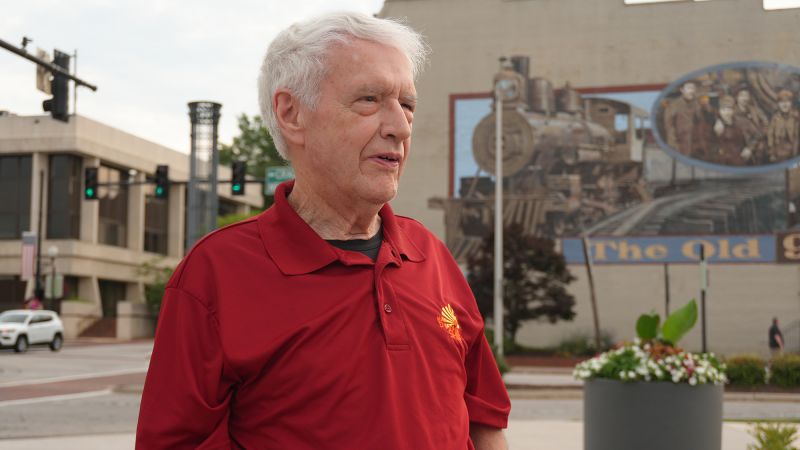
Why America is obsessed with a grandpa – In a world where viral trends often revolve around celebrities or digital sensations, a simple act of civic duty has captured the public’s imagination. Gary Miller, a 78-year-old cardiologist and local politician in Danville, Virginia, has become an unexpected symbol of effective governance through his four-year effort to install sidewalks along Kemper Road. The campaign, which has sparked widespread online discussion, centers on a seemingly mundane yet vital issue: ensuring safe passage for pedestrians in a community long overlooked by urban planners.
“I go that way and go after dark,” Miller said. “I was honestly afraid I was going to hurt somebody.”
Miller’s journey began with a personal concern. As a longtime resident of Danville, he noticed how children often had to cross busy roads to reach the grocery store, a task that felt perilous to him. The thought of a young child being struck by a car while navigating the streets of his neighborhood, particularly in areas with limited infrastructure, became a driving force. His quest wasn’t just about improving safety—it was about reclaiming a sense of community and accountability in local government.
The turning point came when Miller’s efforts were showcased in a video that went viral on social media platforms. During his re-election campaign, the clip gained traction, capturing the attention of millions. The video, which highlighted his dedication to the cause, quickly amassed over four million views on TikTok and X, with nearly 175,000 likes on Instagram. The footage depicted Miller in his signature attire—gray slacks tucked high above his waist, a turquoise Under Armour polo, and slip-on leather moccasins—as he walked the streets of Danville, emphasizing the importance of sidewalks to public safety.
“When you think about public safety, the first thing to come to your mind may not be sidewalks,” Miller said to the camera. “A street with a sidewalk is a safer street and a healthier neighborhood.”
The video’s charm lies in its simplicity. Miller, with his ageless appearance and unpretentious approach, embodies a vision of leadership that feels refreshingly authentic. His style has been a talking point online, with users commenting on his “biblically accurate waistline” and even joking that “he’s hiding the sidewalk in his pants.” Yet, beneath the humor is a deeper resonance: the public’s yearning for leaders who focus on tangible, everyday issues rather than abstract policies.
Miller’s campaign has also tapped into a broader sentiment in American politics. With national leaders often criticized for vague promises and a lack of concrete action, citizens are craving examples of effective governance. The “Yes in My Backyard” movement, which advocates for housing and transit projects, has embraced Miller as a kindred spirit. His straightforward, no-frills approach mirrors that of Zohran Mamdani, the telegenic New York City mayor, who is young enough to be Miller’s grandson. Both men represent a shift toward leadership that prioritizes practical solutions over political theatrics.
Disadvantaged Areas and the Road to Safety
But Miller’s work is more than just a feel-good story. Danville, like many American cities, was originally designed for cars, with pedestrians often treated as an afterthought. This design choice has left socioeconomically disadvantaged areas particularly vulnerable. According to the Danville Metropolitan Planning Organization’s 2025 safe streets plan, the city’s roads are worst for pedestrians in neighborhoods where infrastructure is lacking. Each year, 12 people are killed and 95 seriously injured in traffic crashes across Danville, a population of about 42,000, making it one of Virginia’s most dangerous metro areas for road safety.
Miller’s focus on Kemper Road, a historically disinvested neighborhood predominantly inhabited by Black residents, highlights the intersection of race, infrastructure, and equity. The installation of 1,600 feet of new sidewalks and crosswalks has not only reduced risks for pedestrians but also transformed the area into a space for commerce and community interaction. For many, the project symbolizes a long-overdue commitment to improving quality of life in underserved communities.
“What happened here?” a puzzled Miller asked, arms spread wide, as he stepped off a sidewalk into a grassy lot.
His video’s success underscores a growing frustration with the pace of infrastructure development in America. Citizens are increasingly tired of waiting for projects that seem to stall or get derailed by bureaucratic hurdles. Miller’s ability to deliver results has made him a rare figure of hope, one who embodies the idea that small, targeted efforts can yield meaningful change. His story resonates because it’s relatable—no grand speeches, no flashy campaigns, just a dedicated individual addressing a local problem with measurable impact.
A Nation in Search of Tangible Solutions
The public’s reaction to Miller’s video also reflects a broader cultural shift. In an era dominated by social media and performative politics, people are drawn to leaders who prioritize action over appearance. “The American voter cries out for an old man with hiked-up pants who has never once opened ‘The InstaFace’ and just wants to solve something tangible,” a user on X remarked. This sentiment is echoed by scholars like Michael Pollack, a professor at the Cardozo School of Law, whose new book, Sidewalk Nation: The Life and Law of America’s Most Overlooked Resource, explores the critical role sidewalks play in daily life.
Pollack explained that sidewalks are more than just paths for walking—they are essential for commerce, public discourse, community gatherings, and even policing. Yet, in many municipalities, responsibility for maintaining sidewalks is fragmented, often shifting to private owners rather than local governments. Miller’s video has become a powerful reminder of what can be achieved when leadership is focused on the basics. “It was some of the best political media I’ve seen,” Pollack said, noting that the simplicity of the message made it accessible and impactful.
As Danville continues to see progress in its infrastructure efforts, Miller’s story serves as a beacon for other cities. His goal is to extend the sidewalk initiative to other neglected parts of the city, where residents still face the same risks. “I can name a half dozen other places where people are forced to go out into the street to get where they’re going,” he said, highlighting the ongoing need for civic engagement and prioritization of public needs.
In a nation that often debates the value of infrastructure, Miller’s campaign reminds us that even the smallest improvements can have profound effects. His journey from a concerned citizen to a viral icon illustrates the power of local action and the growing demand for leaders who deliver results. Whether it’s through a simple sidewalk or a larger policy shift, the message is clear: when government focuses on the essentials, it can inspire a nation to rethink its priorities.
