
Spain, Morocco halt deadly rush on Spanish enclave after 49,000 cross in a day
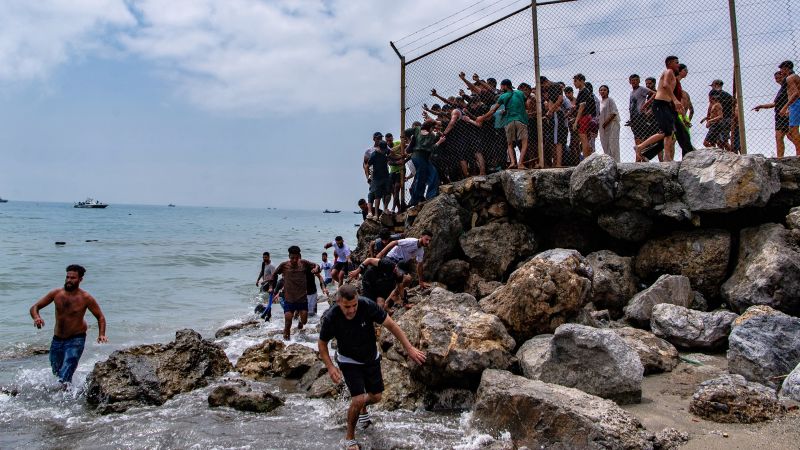
Spain Morocco Halt Deadly Rush as 49,000 Cross Ceuta in Record Day
Goldlaner.com – Spain Morocco halt deadly rush on Spanish territory as authorities from both nations moved quickly to secure the boundary of Ceuta on Friday. The dramatic intervention followed an unprecedented single day in which approximately 49,000 migrants reached the enclave through maritime and land routes. The massive influx resulted in tragic consequences, with at least nineteen bodies recovered from surrounding waters.
The surge into Ceuta—a Spanish-controlled peninsula extending into the Mediterranean from Moroccan territory—sparked considerable debate across European nations. Italy’s leadership announced intentions to potentially withdraw from the European Union’s Schengen open-border arrangement, citing growing concerns over border security management.
Immediate Border Security Response
Moroccan officials positioned water cannon vehicles at Ceuta’s entry points, actively pushing back crowds attempting to enter. Evidence of violent confrontations was visible nearby, where the burnt wreckage of a bus alongside seven automobiles lay scattered. Spanish government representatives indicated their intention to deport individuals who entered without authorization as rapidly as circumstances permitted.
This expulsion effort comes despite recent judicial decisions that have introduced limitations to existing “border rejection” protocols, which previously enabled swift removals. Prime Minister Pedro Sanchez planned to travel to Ceuta on Friday accompanied by Interior Minister Fernando Grande-Marlaska to assess the situation firsthand.
Historical Context and Contributing Factors
Ceuta and Melilla, another Spanish autonomous territory located in northern Morocco, represent the European Union’s sole terrestrial connections to the African continent. Each municipality houses roughly 85,000 residents. While periodic migration waves have occurred in both locations, the arrival of nearly 50,000 people within twenty-four hours marks an extraordinary event.
Spanish officials characterized the situation as the most severe migration challenge since at least 2021. Territorial Policy Minister Angel Victor Torres identified several elements potentially driving the current surge. Among these was a Supreme Court decision issued earlier in the month, which determined that migrants intercepted at sea while attempting to reach Ceuta or Melilla cannot be immediately returned under special administrative procedures.
Torres told a local radio station the Spanish government had reacted immediately to the surge and would proceed to eventually return the migrants, while respecting court rulings and migrants’ rights.
On-the-Ground Developments
Thousands of migrants continued flowing into the Moroccan town of Fnideq throughout the night, despite enhanced security deployments that successfully prevented most crossing attempts. Even with the primary barrier appearing sealed, various groups navigated along the coastline searching for alternative passages around the fence. Some individuals prepared to swim across remaining gaps.
“I was late,” said Brahim, a 32-year-old who provided only his first name. He explained that he had traveled from Tangier with hopes of passing through the main gate, only to discover it had been effectively closed.
Among those attempting to cross were women and children originating from both Morocco and Sub-Saharan African nations situated further south. Spain’s Guardia Civil police association, AUGC, posted on social media platform X that insufficient police personnel had been stationed to monitor the fence during Thursday’s surge, preventing them from stopping the flow.
“Migratory policies require a deep revision that addresses the reality of the south border and guarantees the respect of the dignity and human rights of the migrants and refugees who arrive to Ceuta,” said a joint statement by several local migrant groups, saying resources in Ceuta were insufficient.
European Political Repercussions
Migration remains a contentious topic throughout Europe, where right-wing political movements have gained substantial momentum over the past decade following a 2015 crisis. That earlier emergency saw more than one million individuals traverse the continent primarily on foot, seeking asylum, with the majority fleeing conflicts in Syria.
Italy’s right-wing Prime Minister Giorgia Meloni declared her nation ready to implement exceptional measures to protect borders and citizen safety, including potentially suspending the Schengen Area with Spain. Meanwhile, Spain’s Socialist administration maintains its position regarding illegal crossings while emphasizing that immigrants contribute positively to society.
Frequently Asked Questions
What caused the Spain Morocco halt deadly rush in Ceuta?
The surge was triggered by a combination of factors including a recent Supreme Court decision that limited immediate returns of migrants intercepted at sea, combined with favorable weather conditions and increased migration pressure from Sub-Saharan African nations.
How many migrants crossed Ceuta in a single day?
Approximately 49,000 migrants crossed into the Spanish enclave in one day, marking one of the largest single-day migrations in the region’s recent history.
What measures did Spain and Morocco take to stop the rush?
Moroccan officials deployed water cannons and positioned additional security personnel at entry points. Spain announced plans for rapid deportations and Prime Minister Sanchez visited Ceuta to coordinate the response with Interior Minister Fernando Grande-Marlaska.
What are the implications for the Schengen Agreement?
Italy’s Prime Minister Giorgia Meloni has indicated potential suspension of the Schengen Area with Spain, citing border security concerns. This could set a precedent for other EU nations considering similar measures.
