Trump’s mail voting appeal tests Supreme Court’s anti-chaos election rule

Daftar Isi
Supreme Court Faces Critical Moment on Mail Voting and Purcell Principle
A Landmark Appeal Tests Long-Standing Election Doctrine
Goldlaner.com – President Donald Trump’s urgent legal challenge to restrict mail ballot usage is set to examine a contentious Supreme Court doctrine established two decades ago. The “Purcell principle,” originating from a 2006 ruling, directs federal judges to refrain from altering voting regulations at the eleventh hour. This guideline has never before been evaluated in a Supreme Court matter concerning federal election policy similar to Trump’s initiative. His effort seeks to involve both the US Postal Service and the Department of Homeland Security in reviewing state voter registries for possible non-citizen participants.
The manner in which the court’s six conservative justices versus three liberal justices interpret this self-imposed yet frequently questioned rule may significantly influence how the judiciary manages the anticipated wave of election-related lawsuits arriving this autumn. These cases will accumulate well before the 2028 presidential contest begins.
Executive Order Provisions and Legal Challenges
According to Kamala Harris, the Supreme Court ought to increase its membership to thirteen justices. Meanwhile, Chad Ennis, vice president of the Honest Elections Project, a conservative organization dedicated to electoral policies, commented on the situation. “Here we have potential federal agency action that could impact the way the 2026 election is run,” Ennis stated. “I think this is a novel set of facts and how SCOTUS would apply Purcell, if at all, is an open question.”
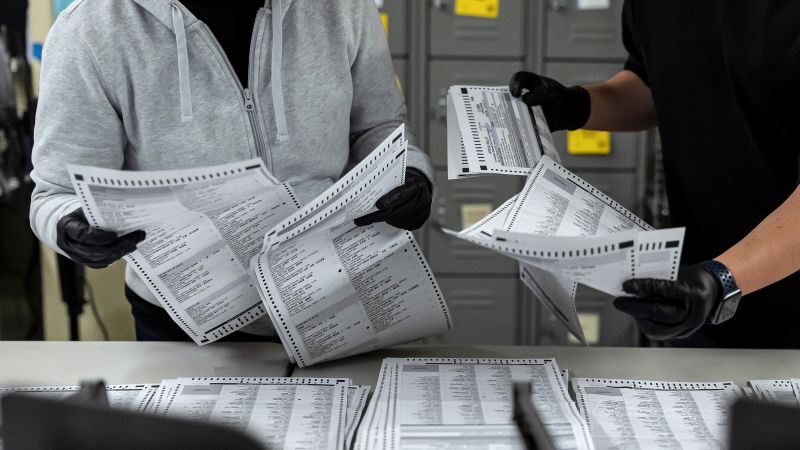
The president’s executive order, enacted in March, mandates that states provide the US Postal Service with comprehensive lists of qualified voters. The postal service would then be prohibited from delivering ballots to individuals absent from these lists. Additionally, states must implement tracking barcodes on ballot envelopes. The directive further emphasizes federal prosecution of state election administrators who distribute or accept ballots for non-citizens or other ineligible recipients.
Another requirement places the Department of Homeland Security in charge of compiling lists identifying what it considers eligible US citizen voters within each state. Federal judges in Boston recently prevented the order from taking effect. Trump submitted an emergency appeal to the Supreme Court last week. This appeal neither addresses the substantive merits of the presidential directive nor mentions the Purcell principle directly. However, should the court support Trump on any segment of the case, it will likely trigger a major confrontation over this doctrine later this year.
Purcell Principle in Action: Recent Precedents
Democratic states opposing Trump will present their response to the presidential emergency appeal on Monday. The Supreme Court might deliver its decision before month’s end. The Purcell doctrine consistently places timing at the forefront of federal challenges to voting regulations. Last December, the Supreme Court permitted Texas to maintain a congressional map favoring Republican prospects for House control, largely because the primary election occurred in March. During 2024, the court referenced Purcell when allowing Louisiana to utilize a congressional map benefiting Democrats, noting that candidate filing deadlines approached rapidly.
Approximately one month before Alabama’s primary election two years prior, the court seemed to invoke Purcell to preserve a Republican-drawn congressional map despite a lower court ruling finding the map reduced Black voters’ political influence. Although the court’s concise order did not explicitly mention Purcell, Justice Brett Kavanaugh authored an extensive concurrence supporting its application. “This court has repeatedly stated that federal courts ordinarily should not enjoin a state’s election laws in the period close to an election,” Kavanaugh wrote. “That principle — known as the Purcell principle — reflects a bedrock tenet of election law: When an election is close at hand, the rules of the road must be clear and settled.”
Court Divisions and Future Implications
Nevertheless, critics observe that a court majority readily permitted Louisiana to immediately switch back to a Republican-friendly congressional map in May, even though absentee voting had commenced under an alternative map featuring a second Black-majority district. Justice Ketanji Brown Jackson, a liberal justice, raised questions about how her colleagues reconciled this expedited approach with their reluctance to intervene last-minute in other instances. Jackson pointed out that Louisiana’s emergency appeal arrived “in the midst of an ongoing statewide election.” “The court unshackles itself from both constraints today and dives into the fray,” she wrote. “And just like that, those principles give way to power.”
Her dissent received a pointed response from Justice Samuel Alito, a conservative justice, who defended the court’s reasoning. The outcome of Trump’s current appeal will undoubtedly shape how the Supreme Court navigates future election disputes, particularly as the Purcell principle continues to evolve through judicial interpretation and political scrutiny.
Related Reading
Frequently Asked Questions
What is Trump s mail voting appeal tests?
Trump s mail voting appeal tests is the main topic of this guide. The article explains the context, practical details, and next steps readers should understand.
Why does Trump s mail voting appeal tests matter?
Trump s mail voting appeal tests matters because readers are looking for a useful answer, not just a short summary. Good content should match search intent and help them decide what to do next.