Rubio and Miller warn of the ‘mortal threat’ of ‘far-left terror’ in speech to 67 countries

Rubio and Miller Warn of Far-Left Terror Threat to Global Stability
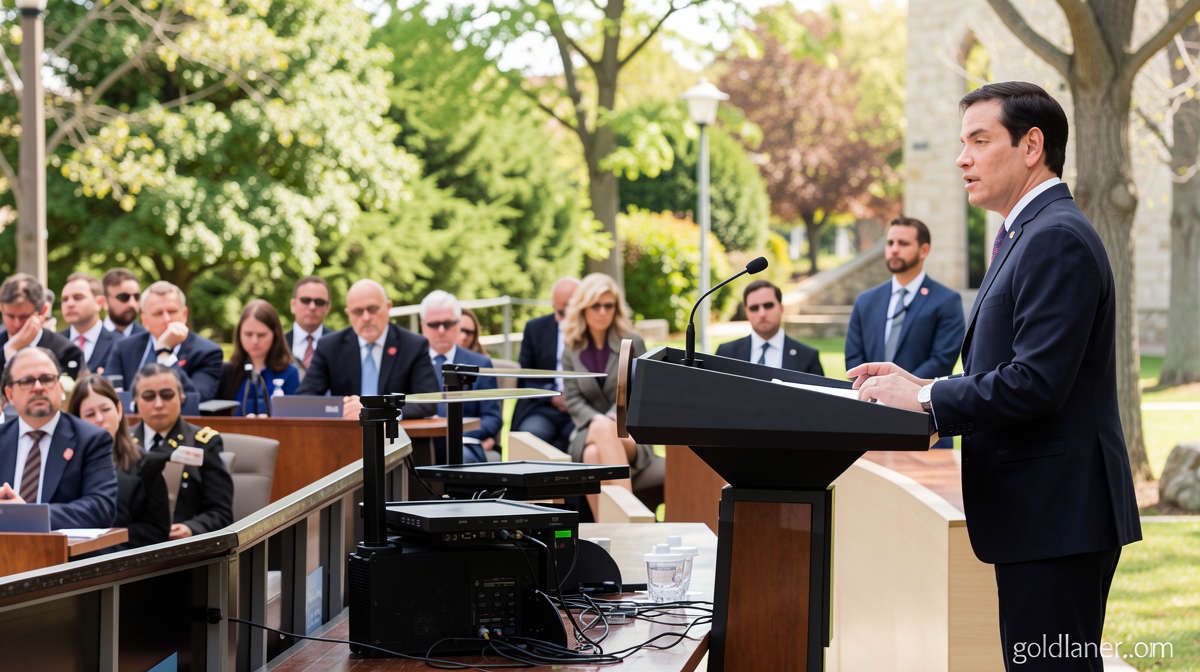
Rubio and Miller warn of the mortal – Secretary of State Marco Rubio and senior White House adviser Stephen Miller delivered a stark warning on Thursday, describing what they termed a “mortal threat” posed by far-left political terrorism. Speaking to diplomats from 67 nations at the State Department, the two officials urged international partners to help “defend” their civilizations against what Miller called the “fatal cancer of civilization.” During the address, Rubio and Miller warn that unchecked left-wing violence could transform democratic institutions into something resembling a gulag. Miller emphasized that America’s political, legal, and judicial frameworks would fail if terror threats remain unaddressed. He went further to characterize Antifa demonstrators as “deformed,” suggesting their physical appearance reflected their “inner hatred.”
Building a Global Counterterrorism Response
The administration’s focus on far-left extremism represents a significant shift in counterterrorism priorities. “The greatest risk that we have is that our institutions have grown too soft and too cowardly to be able to defend themselves against a mortal threat,” Miller told the assembled representatives. He urged nations to protect their civilizations with the same urgency as defending one’s own home. Rubio called on attending countries to collaborate on identifying and mapping this emerging threat while rebuilding counterterrorism architecture. “Through intelligence and information sharing, through coordinated law enforcement strategy, through financial targeting and disruption, we will dismantle these networks brick by brick,” Rubio declared. Treasury Secretary Scott Bessent added that his department was expanding efforts to identify organizations exploiting charitable structures for illicit financing related to alleged far-left terrorism.
“We looked at terrorism of all stripes, including left-wing terrorism, but the reality and the data indicate that left-wing extremism is not and has not been the type of threat that far-right terrorism or jihadist violence have posed.” — Ian Moss, former deputy coordinator for counterterrorism
Despite the administration’s heightened focus, critics argue the threat has been politicized. Multiple former officials noted that far-left extremism does not match the severity of threats posed by ISIS or far-right extremists. Notably, the latter group was entirely absent from the administration’s May counterterrorism strategy. Critics expressed concerns that the strategy aims to amplify perceived threats and target political opponents of President Donald Trump. Rubio countered that the threat had been dismissed “as a right-wing fever dream, or worse, as a dangerous fascist conspiracy,” but insisted its resurgence is “an undeniable reality” comparable to 1970s left-wing attacks.
The ministerial drew 67 countries, primarily from Europe, with additional representation from Asia and the Western Hemisphere. Israel stood as the only Middle Eastern nation in attendance. Many delegations were led by ambassadors or technical officials rather than foreign ministers, with scheduling cited as a primary reason for the lower-level attendance. Invitations were issued only at the beginning of July.
Several experts told CNN that the administration’s portrayal exceeds the actual threat level. Ian Moss, now an attorney with Jenner & Block, pointed out that other forms of violent ideological extremism—particularly Islamist violence and right-wing extremists—remain significant concerns both domestically and internationally. Michael Duffin, a former senior counterterrorism official, echoed these sentiments, suggesting the ministerial serves broader domestic political purposes beyond genuine security concerns.
As Rubio’s convening of the ministerial highlights, the issue has become a key domestic focus for the Trump administration. The event also comes amid growing speculation about the top US diplomat’s potential political future. Whether the far-left terror narrative will endure beyond the current administration remains to be seen, but for now, Rubio and Miller warn that global cooperation is essential to addressing what they characterize as an existential challenge to Western civilization.