Josh Shapiro says he has ‘profound’ differences with Mamdani-backed candidate

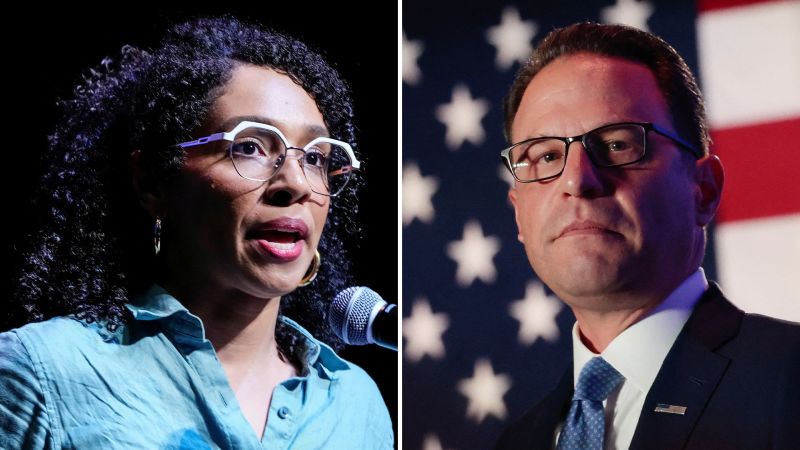
Josh Shapiro Highlights Profound Differences with Mamdani-Backed Candidate
Josh Shapiro says he has profound – During a CNN interview with Dana Bash, Pennsylvania Governor Josh Shapiro voiced significant concerns about a candidate backed by New York City Mayor Zohran Mamdani. The conversation followed Tuesday’s primary elections, which underscored rising tensions within the Democratic Party as the midterms near. Shapiro specifically critiqued Darializa Avila Chevalier, a 32-year-old democratic socialist who defeated Rep. Adriano Espaillat, chair of the Congressional Hispanic Caucus, in her district. Their race centered on the U.S.-Israel relationship, a topic that has intensified ideological splits in the party.
Avila Chevalier’s Shift in Priorities
Recent analysis by CNN’s KFile revealed a deleted X account linked to Avila Chevalier, showcasing thousands of posts advocating for the abolition of police, prisons, and borders. The account also supported the nationalization of industries and the seizure of private property. These statements raised questions about her stance on Israel’s right to exist, which she had previously endorsed. Avila Chevalier’s attendance at a pro-Palestinian rally shortly after Hamas’ October 7, 2023, attack further fueled debates about her alignment with broader Democratic goals.
“I’ve seen a lot of similarities not just in the way things are done, but also in the very institutions that are enacting that violence. The tear gas dropped on Palestinians in Gaza in 2014 was the same tear gas used against Black protesters in Ferguson,”
Avila Chevalier said during a debate against Espaillat. She framed her rally participation as a response to what she called an “outsized reaction” to the attack, warning it could result in the deaths of “thousands” of Palestinians. Despite her victory in a district historically leaning toward moderate candidates, her views have cemented her as a leading voice on the party’s left wing, challenging traditional positions.
Shapiro’s Emphasis on Ideological Alignment
Shapiro underscored his differences with Avila Chevalier, stating that their philosophies were fundamentally at odds. “Her district voted for her, but Josh Shapiro says he has profound differences from that candidate based on the policies she supports,” he told Bash. While acknowledging voters’ choice, Shapiro questioned whether her platform reflected shared Democratic values. He described her as a candidate who, though aligned with socialist principles, had seemingly moved toward more radical positions.
As Shapiro seeks reelection in Pennsylvania and is viewed as a potential 2028 presidential contender, he pointed to the recent primary as evidence of the party’s internal debates. “Democrats were ready to fight over what we believe in,” he noted, comparing the current divide to the 1992 election, when Bill Clinton was nominated to challenge George H.W. Bush. Shapiro argued that this ideological split is essential for defining the party’s core identity in the coming years.
Impact on Democratic Unity
Avila Chevalier’s influence extends beyond her electoral win. She organized campus protests at Columbia University, where students demanded greater focus on Palestinian treatment in Gaza. According to the Hamas-controlled area’s health ministry, over 70,000 Palestinians have died since the conflict began. These protests symbolize the Democratic Party’s leftward movement, with Avila Chevalier representing a new wave of candidates challenging conventional wisdom.
“I’ve been very open about who I am and what motivates me to serve,” Shapiro said, emphasizing his connection to Pennsylvania voters. “Josh Shapiro says he has profound differences from candidates who prioritize radical policies over national unity,” he added, highlighting his belief in balancing progressive ideals with practical governance. This statement reinforced his position as a unifying figure in the party, even as he criticized Avila Chevalier’s approach.
Strategic Implications for the Midterms
Shapiro’s criticism of Avila Chevalier has sparked discussions about the implications for the upcoming midterm elections. By supporting his own slate of Pennsylvania Democrats, he aims to secure up to four additional seats. His strategy emphasizes aligning with voters who prioritize pragmatic solutions over sweeping ideological shifts. “This race is about choosing leaders who can unite the party and move forward,” Shapiro said, framing the debate as a test of Democratic cohesion.
Avila Chevalier’s rise also reflects the growing influence of progressive voices in the party. While her victory in a historically moderate district is notable, it signals a broader trend toward left-leaning candidates gaining traction. Shapiro’s focus on profound differences with her highlights the challenge of maintaining party unity as diverse perspectives shape the political landscape. As the midterms approach, both candidates’ approaches will likely define the direction of the Democratic Party’s future.