Killings by immigration agents were a big problem for Trump — and now they’re back

Immigration Enforcement Deaths Resurface as Political Challenge for Trump Administration
Recent Fatal Encounters Echo Minneapolis Controversy
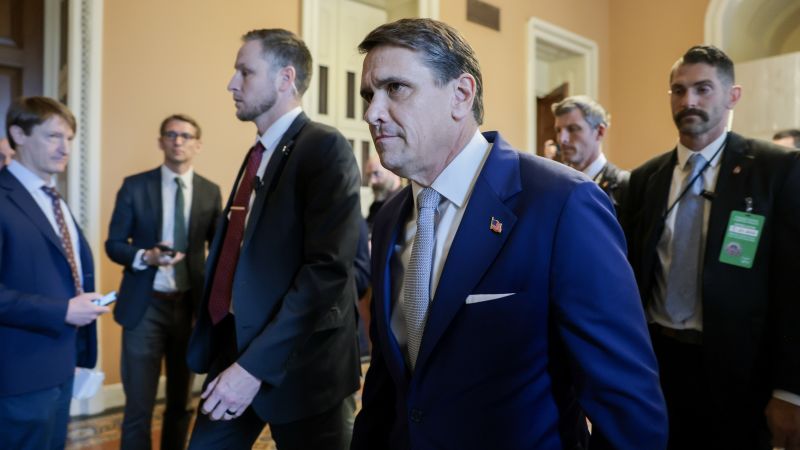
Killings by immigration agents were a big – Among the defining moments of President Donald Trump’s second presidential term, few have prompted as significant a policy recalibration as the January deaths of two demonstrators in Minneapolis. Those fatalities, occurring during federal efforts to intensify immigration enforcement, ultimately resulted in the departure of two senior officials, including Homeland Security Secretary Kristi Noem. The White House quietly conceded that enforcement tactics had escalated beyond acceptable boundaries.
Public opinion data confirmed the political damage inflicted by those incidents. Yet the administration now faces a potentially similar crisis emerging at a politically sensitive juncture. Following a period marked by relative calm regarding major deportation disputes, federal law enforcement officers have been involved in two separate shooting deaths within a single month. The first occurred in Texas, followed by another incident in Maine on Monday.
Similar to the Minneapolis cases involving Renee Good and Alex Pretti, these recent episodes threaten to challenge both public patience with Trump’s immigration priorities and the government’s institutional credibility. The Department of Homeland Security has a pattern of making questionable or outright incorrect statements about such events, and scrutiny is intensifying once again.
Questionable Official Accounts and Political Fallout
Particularly noteworthy is the DHS position regarding the Maine shooting. The department has not asserted that the deceased individual posed any threat to officers’ lives. Instead, officials maintain that the man was running from the scene and that the Immigration and Customs Enforcement officer was “fearing for public safety.” Such reasoning rarely justifies the use of lethal force.
The political implications remain substantial. Minneapolis continues to cast a long shadow over immigration enforcement policy. Despite Trump’s documented achievements in bringing illegal border crossings down to unprecedented levels, the president remains considerably behind in public opinion on immigration matters.
A Reuters-Ipsos survey conducted last month revealed that 55 percent of Americans disapproved of Trump’s immigration approach, compared to 37 percent approval. Additionally, 51 percent believed immigration policy was heading in the wrong direction, while only 35 percent felt it was on the right track. These figures closely mirrored results from a February poll taken shortly after the Minneapolis deaths.
Quinnipiac University research indicated modest improvement since February, with Trump’s immigration standing moving from 21 points negative to 13 points negative. Nevertheless, the president remained underwater on this critical issue.
ICE Unpopularity Persists Amid Renewed Scrutiny
ICE, responsible for both recent shootings, maintains historically low approval ratings even prior to these latest incidents. A Marquette Law School poll from May demonstrated that 61 percent of Americans held unfavorable views of the agency, compared to just 36 percent with favorable opinions. This roughly six-in-ten disapproval rate matched findings from other polling organizations in January following the Minneapolis killings.
The mere presence of ICE in national headlines appears detrimental to the Trump administration given the agency’s enduring unpopularity. Polling data extending back twelve months—long before the Minneapolis incidents—showed ICE reaching previously unrecorded levels of public disapproval. Americans apparently harbored concerns about deportation execution for an extended period.
The January deaths elevated this preexisting concern at precisely the wrong moment for the administration. That represents the central political risk posed by the Maine and Texas incidents. Several factors distinguish these cases from Minneapolis. Most notably, neither recent shooting produced substantial video documentation, unlike Minneapolis where numerous protesters captured the events on camera.
Agents involved in both recent shootings apparently lacked body cameras, despite post-Minneapolis initiatives to equip such personnel. The Minneapolis footage not only contradicted initial administration claims but also led Americans to overwhelmingly conclude that immigration agents bore responsibility.
Republican Senator Susan Collins of Maine has stated that her state’s shooting “raises sufficient critical questions,” prompting her to request that DHS halt non-urgent vehicle stops—a measure the department appears to have accepted. Both Collins and Maine Senator Angus King, an independent who works with Democrats, are advocating for mandatory body cameras and prohibiting ICE from conducting internal investigations.
It has become increasingly evident that the Trump administration has exceeded acceptable boundaries with its deportation program. Americans broadly liked the idea