
Judge rejects bid to stop UFC fight at White House
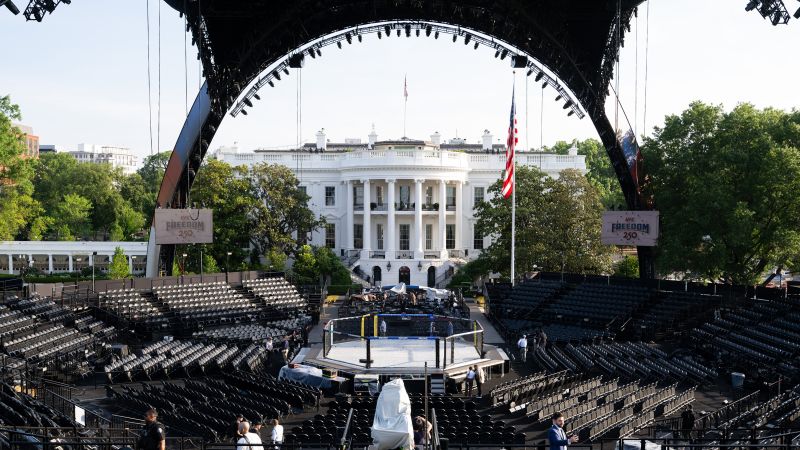
Judge Rejects Attempt to Block UFC Fight at White House
Judge rejects bid to stop UFC fight – In a recent legal decision, a federal judge ruled against a bid to halt the upcoming UFC fight at the White House. The ruling, issued by US District Judge Amit P. Mehta on Friday afternoon, dismissed the request from two Virginia residents who sought to prevent President Donald Trump from hosting the event this weekend. The case was filed last weekend by the plaintiffs, a political activist and a Vietnam War veteran, who contended that the privately organized fight violated federal regulations by taking place on the South Lawn and the Lincoln Memorial—sites typically reserved for government-sanctioned events.
The judge concluded that the plaintiffs lacked the legal standing necessary to challenge the event. Standing, in legal terms, refers to the right of a party to bring a case to court based on a direct and personal injury. Mehta noted that while the plaintiffs argued the event’s location was improper, they had not demonstrated a clear harm to themselves. This decision means the administration’s claim that halting the fight would cause significant damage to organizers and participants—such as Trump, the fighters, and thousands of spectators—remains unaddressed.
The UFC event, set for this weekend, has already cost over $60 million in production, labor, construction, and promotion expenses, according to court documents. The White House management and administration director, Joshua Fisher, stated in a sworn declaration that the federal government is providing emergency services, including law enforcement, security, and perishable food items for the expected 4,000 South Lawn guests and 120,000 Ellipse attendees. The judge acknowledged the substantial financial risk of a last-minute court order, citing the $60 million investment as a key factor in his ruling.
“The potential loss of those dollars resulting from a last-minute, court-ordered stoppage cannot be ignored,”
the judge wrote. The plaintiffs, however, argued that the event’s purpose was not aligned with the 250th anniversary of American independence, which is the basis for the federal exemption they cited. They claimed the fight was being held to commemorate Trump’s birthday, which coincides with the anniversary, and thus should have followed standard permitting procedures. This includes conducting an environmental assessment, a requirement they said the administration failed to meet.
The legal battle hinges on the interpretation of a federal rule that allows certain events around the country’s 250th birthday to bypass specific regulatory steps. The plaintiffs’ attorneys emphasized that the rule applies to events celebrating the nation’s founding, not those honoring an individual. They pointed out that the UFC fight, while hosted at the White House, is primarily organized by private entities and does not qualify as an “official” government event. “The event is neither ‘for the celebration of the 250th anniversary of American Independence’ nor, crucially, being ‘planned, organized, and executed’ by the federal government,” the lawyers wrote in court papers.
Trump’s administration, in its defense, highlighted that the event is a collaboration between private organizers and federal agencies. The documents submitted by the DOJ stated that temporary structures, such as the “claw”—a stage and platform erected for the fight—are common on the White House grounds and do not require congressional approval. “Temporary structures are ubiquitous on the White House grounds, erected for nearly every special event, yet nobody has ever before suggested that Congress somehow needs to pass legislation for every concert tent or Easter egg roll kiosk,” the legal team argued. This line of reasoning aims to counter the plaintiffs’ claim that the event is an overreach of executive power.
Despite the judge’s rejection of the bid to block the event, the lawsuit remains active. The plaintiffs had sought a temporary injunction to delay the fight while further legal proceedings unfold. The administration, however, maintains that the fight is already in motion and that a delay would disrupt preparations. Workers are expected to begin dismantling the “claw” on Monday, signaling the event’s proximity to its scheduled start.
Political and Legal Implications
The case has sparked broader discussions about the balance between private enterprise and public use of federal landmarks. Critics argue that the White House, as a symbol of national government, should be reserved for official functions, not commercial ventures. Supporters, on the other hand, highlight the economic benefits of hosting the fight, including the $60 million investment and the potential for increased media exposure.
The plaintiffs’ focus on Trump’s personal connection to the event adds a layer of political controversy. They noted that Trump has reportedly purchased stock in UFC’s parent company, suggesting a financial stake in the event’s success. This detail, they argue, undermines the claim that the fight is a purely public celebration. “The event will instead enrich Trump, who has a financial interest in the UFC,” one of the plaintiffs’ lawyers stated in their filing.
Mehta’s decision to defer judgment on the event’s legality underscores the complexity of the case. While the judge dismissed the standing argument, he left open the question of whether the event violates other federal laws. The administration has not yet provided a detailed breakdown of the costs associated with federal services, leaving room for further debate. Some lawmakers have raised concerns about how much taxpayers will be expected to fund for private events hosted at the White House.
Public Reaction and Future Considerations
The ruling has elicited mixed reactions from the public. Advocacy groups supporting the administration praised the decision, calling it a victory for private sector collaboration with the federal government. Others, however, criticized the judge for allowing what they view as a partisan event to proceed without scrutiny. “This is not just about a UFC fight—it’s about using the White House as a platform for political gain,” said one opposing voice, citing the event’s timing and Trump’s involvement.
Legal experts have also weighed in on the implications of the case. Some argue that the ruling sets a precedent for future events, allowing private entities to use federal properties with minimal oversight. Others believe the decision reinforces the flexibility of federal regulations, especially for events tied to national commemorations. The case may serve as a test for how the government manages the intersection of public space and private interests.
As the event approaches, the focus shifts to its execution. The UFC has been working to finalize details, including security protocols and crowd management strategies. The White House’s role in providing logistical support, such as emergency equipment and food services, has been framed as a necessary collaboration rather than a concession to private interests. However, the plaintiffs remain determined to challenge the event’s legality, with plans to continue their legal arguments in the coming weeks.
Ultimately, the decision highlights the ongoing debate over the use of federal landmarks for private or political purposes. While the judge’s ruling allows the fight to proceed, it leaves unanswered questions about the broader implications for governance and public accountability. The case may become a landmark example of how federal rules are interpreted in the context of high-profile events, with its outcome potentially shaping future policies on the use of national symbols for commercial or political ends.
