Iran plays by Trump’s rules to deepen his war dilemma

Teheran Turns Trump’s Tactics Against Him in Strait of Hormuz Standoff
Iran plays by Trump s rules – Donald Trump appears to be encountering his own diplomatic playbook turned against him by Iran. On Monday, the American president voiced frustration over what he perceives as Tehran’s unreliability in honoring a recent agreement, criticizing the Islamic Republic using language reminiscent of his own signature rhetorical style. Speaking to Fox News, Trump declared that the memorandum of understanding which temporarily halted hostilities had been finalized, only for Iran to violate it. “It was a done deal, and then they broke it. They always break it,” he stated, seemingly unaware of the irony given his own pattern of abandoning international commitments, most notably the Paris Climate Accord on two separate occasions.
A History of Broken Promises
Observers have long connected America’s present challenges to Trump’s initial term decision to withdraw from the Obama administration’s nuclear agreement with Iran. Yet the current situation reveals a more complex dynamic. Later that same day, an exasperated Trump announced plans to levy charges on vessels navigating the critical Strait of Hormuz. Iran responded with characteristic wit, offering terms that surpassed even the “Art of the Deal” author’s proposal. Foreign Minister Abbas Araghchi took to X to write: “POTUS is absolutely right,” suggesting that Trump had inadvertently validated Tehran’s stance on charging for passage through this essential maritime corridor. Araghchi continued with pointed sarcasm: “20% is of course too much. We will be fair.”
The Stalemate Deepens
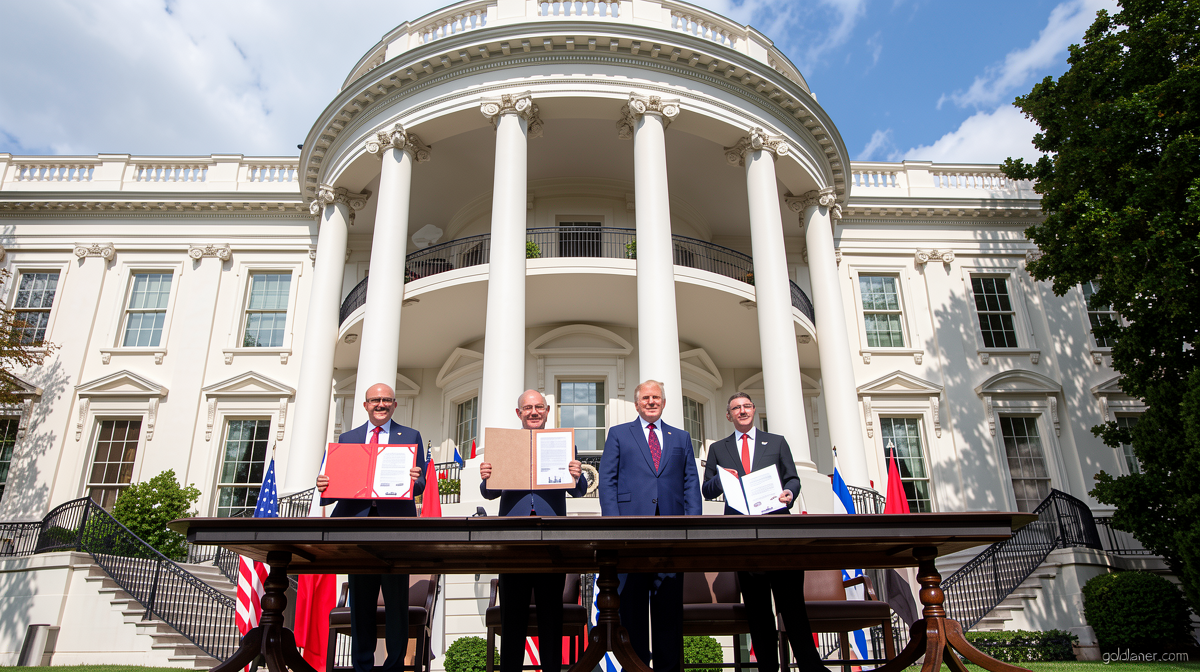
Trump is discovering that Iran negotiates firmly and maintains its own reading of the memorandum’s provisions. Compounding his difficulties is the lack of clear explanation to American citizens regarding why he restarted a conflict he had previously proclaimed as concluded. Several weeks following his dramatic signing ceremony for the MOU—where he claimed to have permanently resolved Iran’s nuclear ambitions and ushered in Middle Eastern peace for three millennia—Trump altered his position. During an appearance on Hugh Hewitt’s radio program, the president characterized the agreement as merely a “test” that Iran failed, dismissing its significance. What once impressed supporters as sophisticated four-dimensional diplomacy now resembles an impasse.
The memorandum collapsed primarily because Iran moved to protect what it considers its greatest achievement in the conflict: effective dominance over the strait. This development underscored a difficult truth for Washington: despite Trump’s threats and military capabilities, Tehran continues to shape the confrontation’s trajectory. The fundamental equation persists—the Islamic Republic leverages geographic advantage and a nuanced grasp of its constrained resources to outmaneuver a superior military power.
Negotiation Missteps and Future Challenges
The current crisis emerged partly from the administration’s hasty pursuit of an MOU containing ambiguous language. Trump’s negotiation team, headed by Vice President JD Vance, seemingly overlooked insights that historians and diplomats quickly recognized: Iran would exploit the agreement to secure additional leverage. The document required Tehran to “make arrangements” for commercial vessel passage through the strait over sixty days and collaborate with Oman regarding “the future administration and maritime services.” While this appeared to satisfy American objectives for normal strait operations, Iran interprets it as validation of its post-agreement control.
This error built upon an earlier miscalculation—the assumption that Iran would not close the strait entirely. The fact that this remains contentious a month after the MOU’s establishment indicates that the sixty-day deadline for comprehensive negotiations, including nuclear matters, proved overly optimistic. The administration’s difficulty in influencing Iranian behavior raises the stakes for evaluating Trump’s decision to resume military engagement. Questions persist regarding whether attacks on Iranian positions and the reinstated naval blockade will prove more effective than previous attempts. Iran demonstrated that merely a handful of missiles and drones sufficed to disrupt strait traffic once again. Additionally, rapidly escalating economic pressures—oil and diesel prices climbed on Monday—may or may not persuade the president to concede, given his explicit statement last month that he would not tolerate significant political or financial consequences.
One encouraging possibility is that these renewed tensions might signal both nations attempting to solidify their respective interpretations of the MOU, potentially creating groundwork for subsequent diplomatic engagement. Trump, for instance, has not indicated any willingness to accept potentially substantial American casualties that could accompany an invasion of Iran’s oil-rich regions.