I’ve spent years studying economic data. These Americans taught me what ‘affordability’ really means

Understanding True Affordability Through Personal Stories
A Journey Across America’s Economic Landscape
I ve spent years studying economic – My recent reporting expedition spanned four distinct cities and covered 5,000 miles of American terrain. Through three dozen conversations with everyday Americans, I discovered something profound about the nation’s economic narrative. The story isn’t found in aggregate statistics alone—it lives in the daily struggles of ordinary people trying to make ends meet.
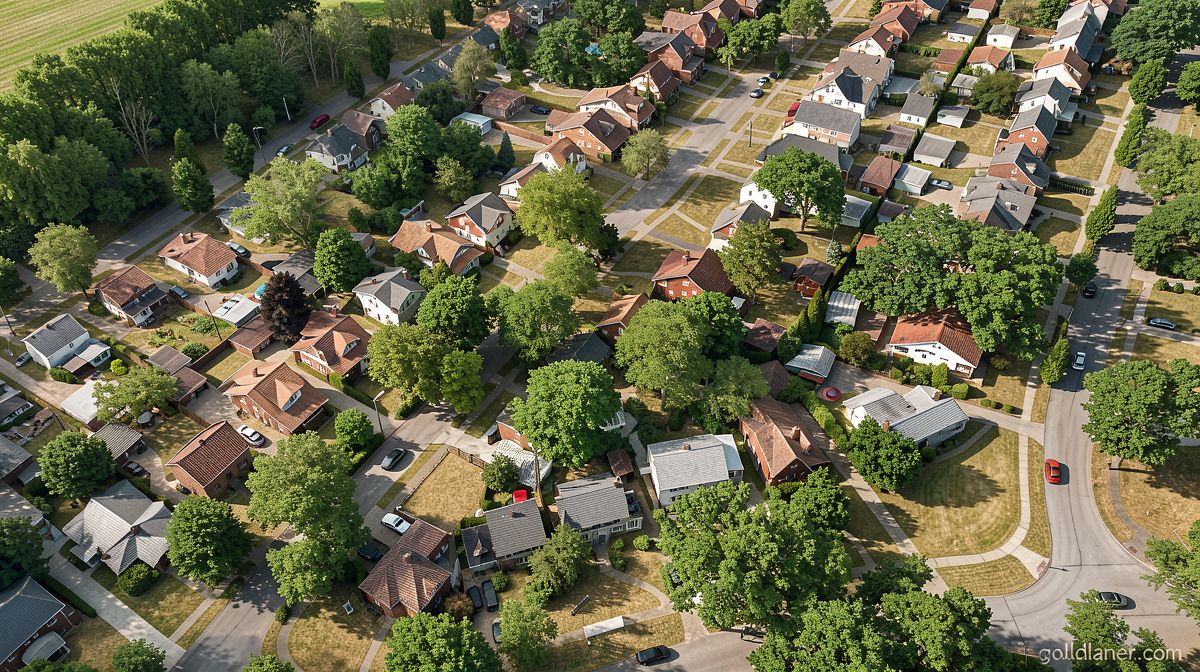
During one particular drive through Parma, Ohio, Jolene Simecek shared an observation that stopped me in my tracks. As she navigated her car past newly constructed neighborhoods, she explained how these fresh subdivisions rarely remain available long enough for prospective buyers to submit offers. This pattern reflects a broader reality for many Americans her generation who have accepted renting as their permanent housing solution.
“What kind of pressure does that put on you?” I asked.
Jolene’s family never accumulated the kind of generational wealth that gets passed down through inheritance. Instead, she learned to work harder and longer hours, often spending sixteen-hour stretches away from home. Despite this relentless effort, the mathematical equation simply doesn’t balance for her or for countless others navigating similar circumstances.
“It’s not fun. I wanted a yard for my kid. Just the normal American dream — a house, a picket fence, a yard. And it just seems like that’s more and more out of touch. Not reality.”
The Personal Cost of Economic Shifts
At forty-two years old, Jolene represents a generation caught between expectation and reality. She has been working since she was thirteen years old, demonstrating an early understanding of financial responsibility. Recently, she made a significant personal sacrifice—relinquishing her apartment and accumulating fifteen thousand dollars in debt to pursue nursing education. This decision reflected her confidence in healthcare’s ongoing staffing shortages.
The consequences of this choice brought her back to her sister’s basement, where she now shares living space with two children aged five and three. As we drove past her former apartment building, she explained the financial pressures that compelled her departure. Over a seven-year period, her monthly rent nearly doubled from seven hundred eighty-five dollars to almost sixteen hundred dollars for identical living space. Meanwhile, her earnings remained completely stagnant.
“I’ve already paid a quarter million dollars in rent in my life,” she said. “I should already have the home with the equity paid off.”
Perhaps most poignantly, she added:
“But I didn’t make the right decisions.”
Connecting Personal Stories to National Trends
Jolene and I share the same age, graduated from the same class, and come from the same state—just from opposite regions. Her side of Cleveland contrasts with my side of Toledo. For years, our life trajectories ran parallel before diverging at an unexplained point. She followed every conventional path we were taught to follow, yet finds herself living in her sister’s basement.
This realization prompted me to recall an old saying: “There but for the grace of God go I.”
The term “affordability” has become ubiquitous in contemporary discourse, yet it often reduces complex human experiences into simplified data points designed for polling purposes. This buzzword frequently detaches itself from the actual individuals experiencing the gradual deterioration of America’s economic foundation.
While stock markets establish new records weekly and corporate earnings demonstrate consistent strength, those with limited resources continue falling further behind. The pathways to economic mobility that once defined American success are becoming increasingly scarce for ordinary families.
This project, titled “Priced Out in America,” explores these structural challenges through intimate personal narratives. The streaming series follows families navigating the affordability crisis, revealing how systemic forces have permanently transformed the United States economy.
For those interested in learning more, Phil Mattingly will host a live question-and-answer session on July 22 at 5 PM ET, addressing audience inquiries about the rising cost of living and its impact on American households.